


Israel is changing the way it absorbs new immigrants as a younger and increasingly diverse generation of olim arrives with different expectations about government services, employment and community life, Aliyah and Integration Ministry Director-General Deganit Sankar-Lange said during ynet Global’s Aliyah Live Summit.
Rather than expecting new immigrants to navigate a largely uniform bureaucratic system after landing, Sankar-Lange said the ministry is increasingly trying to meet them before they arrive and tailor support to their individual circumstances.
Aliyah and Integration Ministry Director-General Deganit Sankar-Lange
(Video: Lior Sharon, Tal Azulay, Tal Saar)


“The way we serve olim is different today,” she said. “Many of them are young people who know technology, so we use a variety of service channels — the internet, WhatsApp and others.”
The shift, she said, reflects a broader change in the population considering aliyah, particularly from Western countries including the United States, Britain, France, Australia and South Africa.
The ministry has placed greater emphasis on those countries amid what Sankar-Lange described as a sharp rise in antisemitism, while expanding programs designed to make the transition to Israel begin well before an immigrant boards a plane.
That includes opportunities to begin studying Hebrew before arrival and more guidance during the pre-aliyah process.
The objective, she said, is to make the move “softer and easier” and reduce the uncertainty that often surrounds such a major life decision.
From government counter to WhatsApp
For Sankar-Lange, innovation in aliyah does not simply mean introducing new technology.
“When you talk about innovation, you usually talk about digitization or technology,” she said. But in aliyah, she argued, innovation also means changing the relationship between government and the individual immigrant.
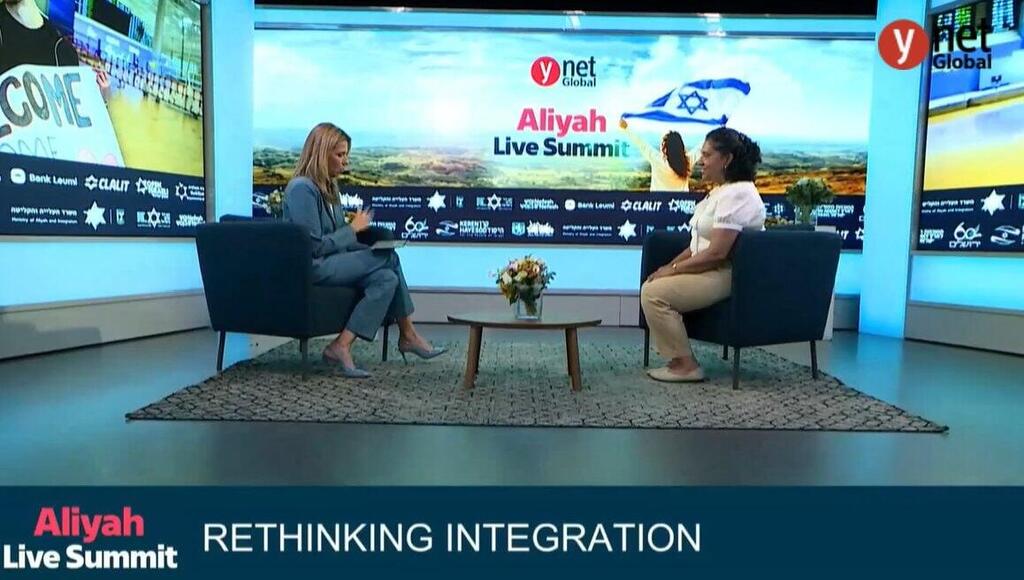
Aliyah and Integration Ministry Director-General Deganit Sankar-Lange
In the past, much of that relationship centered on face-to-face interaction with government counselors. That model still exists, but Sankar-Lange said it no longer reflects how many younger immigrants expect to communicate.
The ministry therefore uses multiple digital channels while continuing to support immigrants for years after they arrive.
That change is not only about convenience. Faster, easier communication can shape an immigrant’s first experience of Israeli institutions and make the process of integration less intimidating.
Sankar-Lange said the ministry was recently ranked second among government bodies for the quality of its service, something she sees as evidence that the approach is working.
“I’m saying this because I’m proud,” she said, “but also because I think that’s the way that helps them integrate and accelerates integration.”
A ‘tailor-made suit’ for each oleh
The deeper transformation, however, is toward individualized absorption.
Asked whether Israel was moving away from offering essentially the same path to every immigrant, Sankar-Lange said the ministry is increasingly working toward what she described as a “tailor-made suit” for each oleh.
“We see ourselves as the HR of Israel,” she said.
The idea is to look not only at how many immigrants are arriving, but at who they are, what skills they bring and what they and their families will need to establish themselves successfully.
She cited a new program aimed at bringing English teachers from North America to Israel as an example.
Under that approach, she said, an immigrant can know before arriving where they will work, where their children will go to school, what employment options are available for a spouse and what Hebrew-language program they will attend.
“It is very personalized,” she said.
The same philosophy is being applied to professions where Israel faces shortages, with the government trying to connect aliyah more directly to employment needs.
Building communities, not only absorbing individuals
The ministry is also putting more emphasis on what Sankar-Lange described as community aliyah — groups of immigrants deciding to move together and establish themselves in the same area.
Israel has used versions of that model for years, particularly with immigrants from France, she said, but it is now becoming more visible among newcomers from Britain, North America and Latin America.
For immigrants, arriving as part of a group can reduce the isolation involved in moving to a new country. For Israel, Sankar-Lange said, such communities can also play a role in strengthening areas in the north and south.
The approach reflects an effort to think about absorption beyond government benefits and paperwork. Community, employment, schools and social connections are increasingly being treated as parts of the same process.
October 7 accelerated the shift
The October 7 attack and the war that followed forced the ministry to accelerate changes already underway, Sankar-Lange said.
She noted that the ministry had already developed experience operating through successive emergencies, including the COVID-19 pandemic and the Russia-Ukraine war, when she said some 75,000 olim arrived in Israel in a single year.
After October 7, the ministry became increasingly proactive in contacting new immigrants who might be affected by attacks.
Officials tracked whether olim were living near areas under fire and contacted them to ask whether they were safe or needed assistance, she said. The ministry also created resilience workshops designed specifically for immigrants coping with the security situation.
Since October 7, Sankar-Lange said, some 66,000 new immigrants have arrived in Israel.
“That amount of olim is like a small city,” she said. “Just imagine that a new city has been built since October 7.”
New challenges for lone soldiers
The war has also changed the ministry’s approach to lone soldiers — immigrants serving in the Israeli military without immediate family in the country.
“Since October 7, the challenges facing lone soldiers have grown significantly,” Sankar-Lange said, pointing in particular to the increased burden of military and reserve service.
The ministry is now working with the Defense Ministry on a more comprehensive system of support covering the period before military service, during service and, increasingly, after discharge.
The goal, she said, is to provide more precise solutions to the challenges created by prolonged service and help soldiers build a life in Israel afterward.
Preparing for another wave
Looking ahead, Sankar-Lange said the ministry expects another significant wave of aliyah in the coming years, with a more diverse profile than previous waves.
That will require further changes, she said, particularly in areas where government support alone cannot solve the problem.
The cost of living and housing remain significant obstacles for immigrants, and Sankar-Lange argued that government agencies, nonprofit organizations and the private sector will need to work together to develop solutions.
Reducing bureaucracy will also remain a priority.
But for Sankar-Lange, the changing aliyah system is not simply a response to rising immigration numbers. It reflects an attempt to rethink what new immigrants expect from Israel — and what Israel needs to offer if it wants them to stay.
“Aliyah is the most optimistic thing we can offer Israel in these difficult days,” she said.
First published: 15:03, 09.08.26