

Rescue teams along the border between Nepal and Tibet continued efforts overnight Wednesday to locate survivors, hours after a massive and sudden flood struck the region, burying villages and towns and sweeping scores of people to their deaths.
The official death toll rose overnight to 160, including 157 in Nepal and three in China, which controls Tibet. But authorities expect the number to rise significantly. Nepal has reported 403 people missing, including 341 foreign nationals, while China said 265 people were unaccounted for. One Israeli is among the missing foreigners.
Stunning footage from Tibet: Massive floodwaters sweep away residents and vehicles
(Video: Reuters)


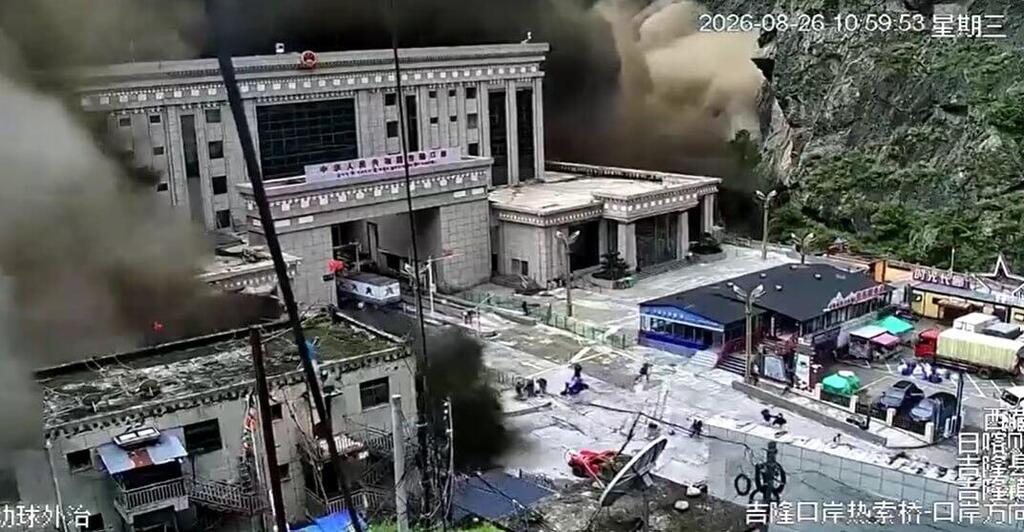
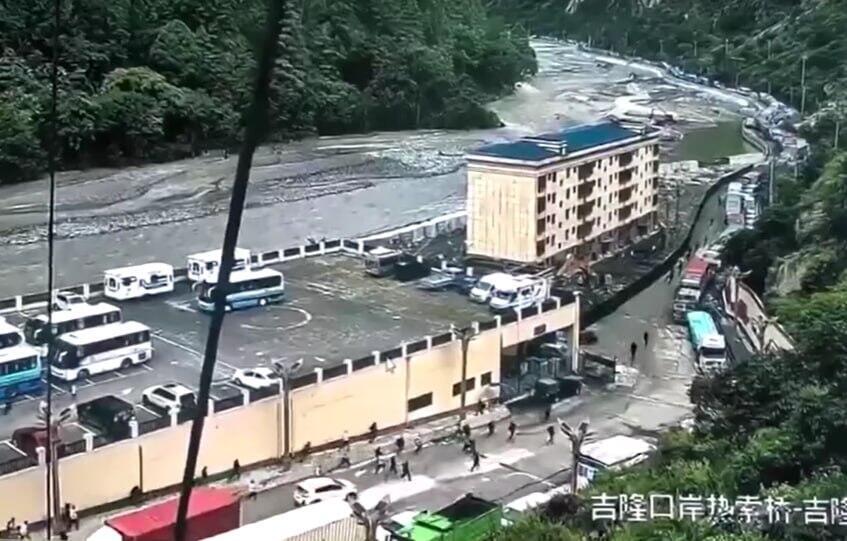
People try to flee and take shelter after spotting the floodwaters racing toward them
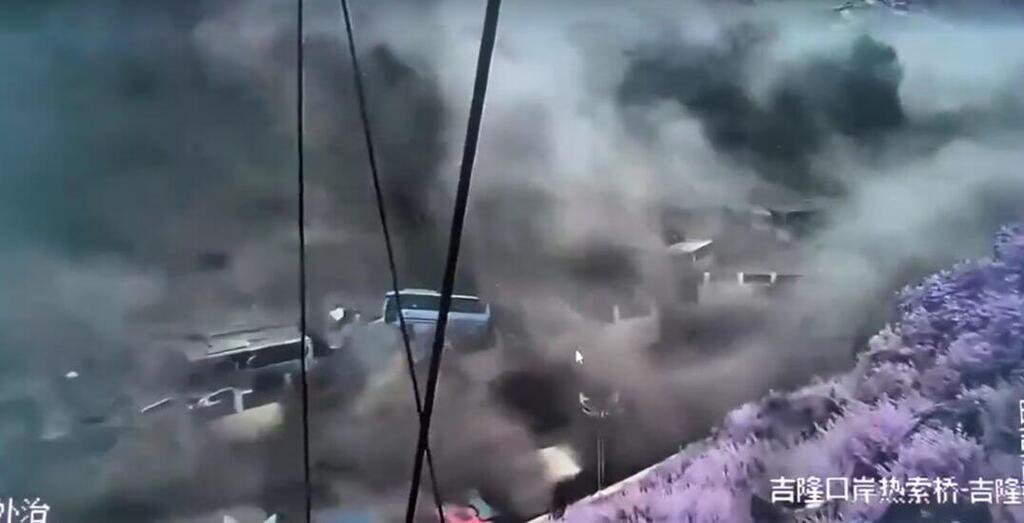
The moment the flood hits the crossing: roads are submerged, buses are hurled aside and reduced to wreckage
The disaster along the Nepal-Tibet border occurred at about 9 a.m. local time, when a huge mass of mud, rocks and ice collapsed into the Lhende Khola River, a tributary of the Bhote Koshi in the Himalayan border region.
The collapse caused the river to overflow, sending a torrent of water through communities on both the Nepalese and Tibetan sides of the border.
Images and videos from the area showed a huge wall of water racing down the slopes, tearing bridges from their foundations and collapsing homes with people inside.
In one video that went viral, recorded by a security camera on the Tibetan side of the China-Nepal border crossing in Gyirong County, people can be seen noticing the enormous torrent approaching at high speed and trying to flee. Moments later, the water surges through buildings, parking areas and access roads, burying and sweeping away everything in its path, including buses and other vehicles that are overturned, crushed and reduced to wreckage.
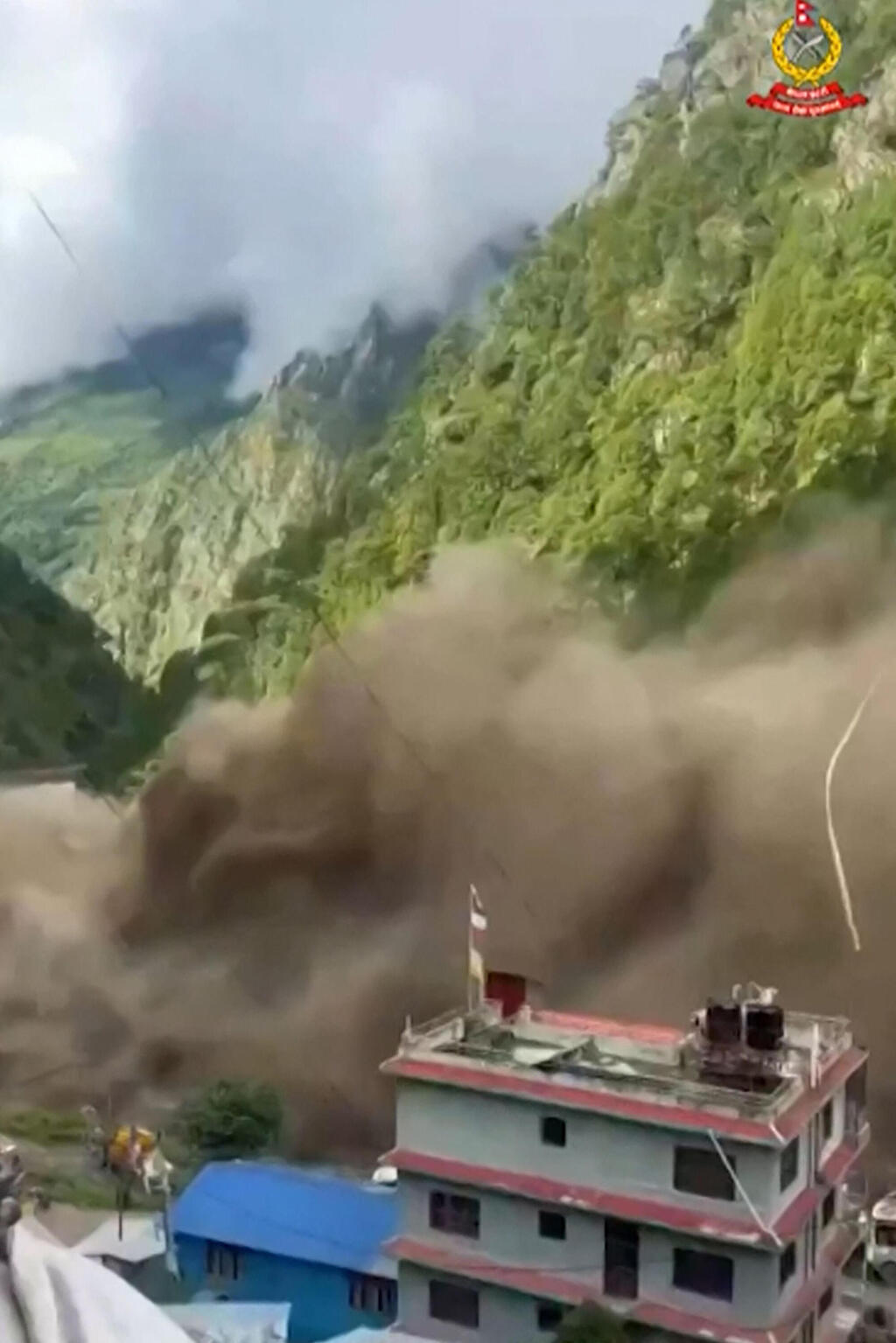
The glacier carried rocks and sediment with it; the moment the torrent hits a village downhill
(Photo: UGC / NEPAL POLICE / AFP)
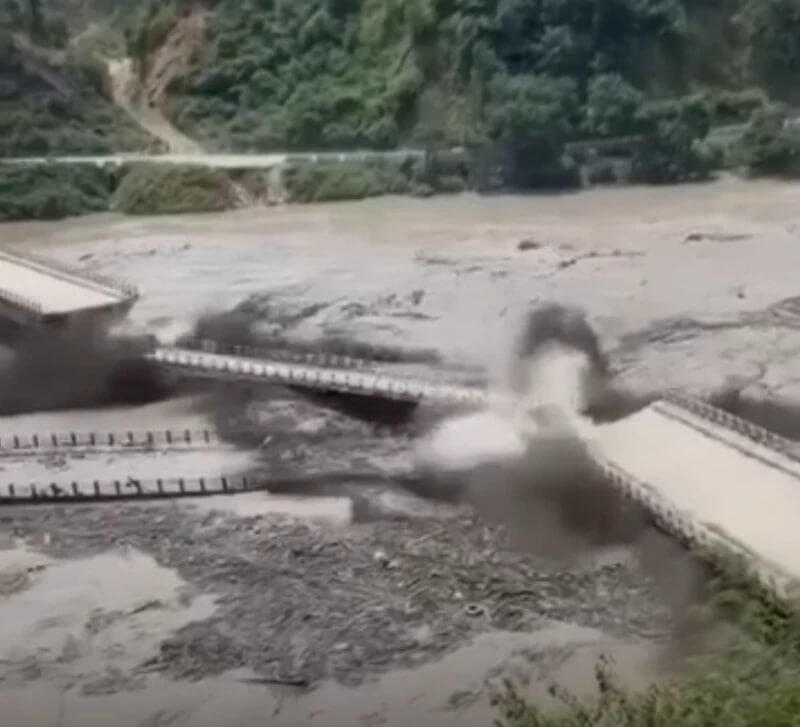
A bridge collapses and breaks in two under the force of the current; at least 18 other bridges also collapsed and were swept away
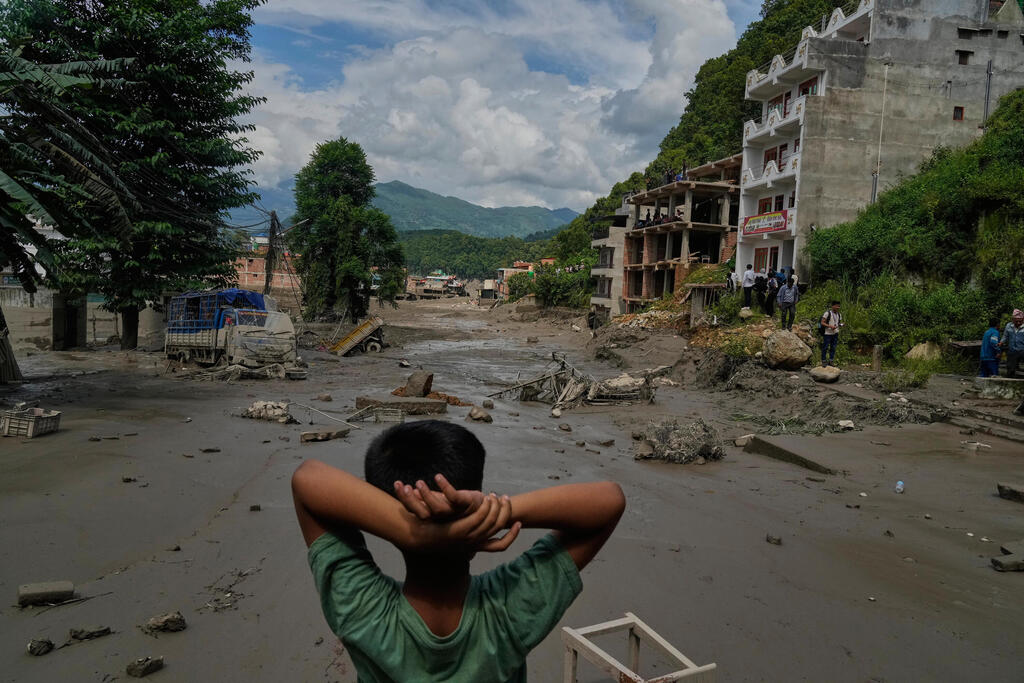
A child looks at the destruction left by the floodwaters
(Photo: Niranjan Shrestha/AP)
Nepalese authorities said Wednesday evening that the death toll in the country had risen to 157, with 403 people still missing.
According to Nepal's tourism authorities, 341 of those missing are foreign nationals, including 133 Indians, 47 Americans, 34 Australians, 33 Britons and 24 Canadians. Others are citizens of South Korea, South Africa, Ireland, the Netherlands, Portugal, Italy and Malaysia.
The high proportion of tourists among the missing is partly because the flood struck Syabrubesi, the starting point for the popular Langtang trek, as well as other areas used by tourists from India and the Indian diaspora traveling on pilgrimage to Mount Kailash in Tibet, a sacred site in Hinduism.
Israel's Foreign Ministry said one Israeli was also among the missing. The man, in his 60s, crossed from Tibet into Nepal on Wednesday morning with an organized group and has not been heard from since.
Chabad emissary in Nepal Chezki Lifshitz said there are currently very few Israelis in the country. He said that although several Israelis who left on treks in recent days have not yet been contacted, they are traveling in areas that were not flooded and there is no reason for concern about them.
Sugam saved his mother, but his sister is unreachable: 'There was no chance at all'
Survivors in Nepal began recounting harrowing moments in which some watched helplessly as loved ones were swept away.
Keshav Prasad Baral, a 68-year-old survivor evacuated to a local hospital, said: "It was a huge gush of mud coming straight towards us. As it got closer, it kept rising higher and higher. When I saw it enter our home, I tried to grab my wife's hand and take her to the terrace. But she was swept away by the mud. Four or five hours later, a helicopter came to rescue me. My wife is still somewhere beneath the mud. She's gone."
Bridge collapses, children scream as floodwaters tear through Nepal village
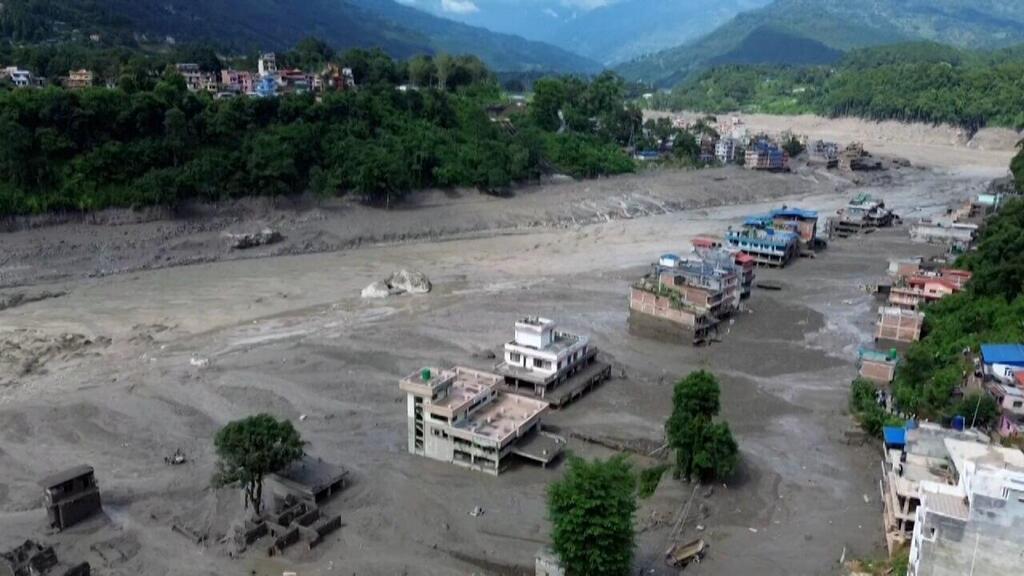
(Photo: Reuters)
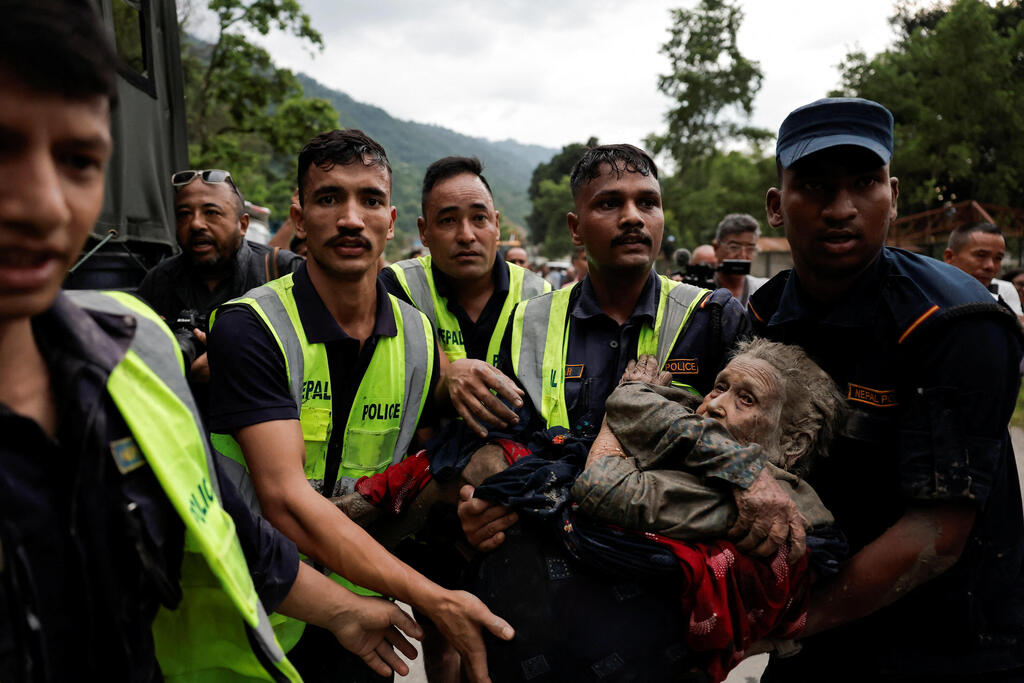
A woman rescued by Nepalese forces
(Photo: REUTERS/Navesh Chitrakar)

A survivor covered in mud is evacuated from a flood zone by the Nepalese army
Nepalese worker Bibek Kumal said he had been digging a pit for a toilet outside a newly built house when the torrent of water, mud and rocks swept him and everything around him away.
Kumal, 24, was working in the town of Bidur downstream when he heard a loud rumbling sound. Four co-workers standing above the roughly 5-foot-deep pit shouted at him to get out and run, but by the time he managed to climb out, they had already fled.
"I started running. Then a wall of water came thundering down as if it was an earthquake," he said from his bed at the National Trauma Center in Kathmandu, with his brother Dinesh sitting beside him.
Kumal said the powerful current carried him downstream through mud and debris until he became caught on a mango tree. "Had there been no mango tree, I would have been washed away to death," he said.
As he clung to the tree, Kumal said he watched the house where he had been working disappear. Police later reached him and brought him to safety. He is now being treated for a leg injury.
The flood struck the Himalayan foothills during the school day. In one widely shared video, children could be seen looking out the windows of a bus at the rushing water and screaming in terror.
Among those who survived was 11-year-old Rihana Lamichhane.
"I was at school. They closed the school because of this and asked us to go home," she said. "As I was crossing the river, suddenly flood water came gushing down."
She suffered injuries to her chest and leg.
"I am happy to be safe. I have no idea what happened to my friends," she said.
Nepal disaster: Raging waters race down slopes and bury homes
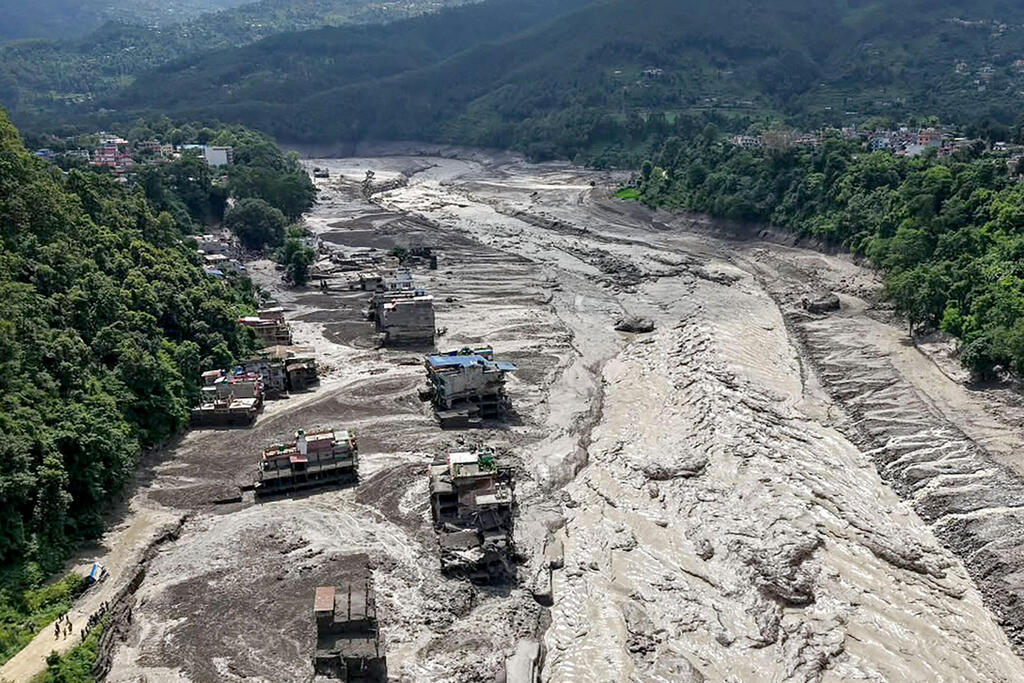
(Photo: Prabin RANABHAT / AFP)

An injured person is evacuated to a hospital
(Photo: PRAKASH MATHEMA / AFP)
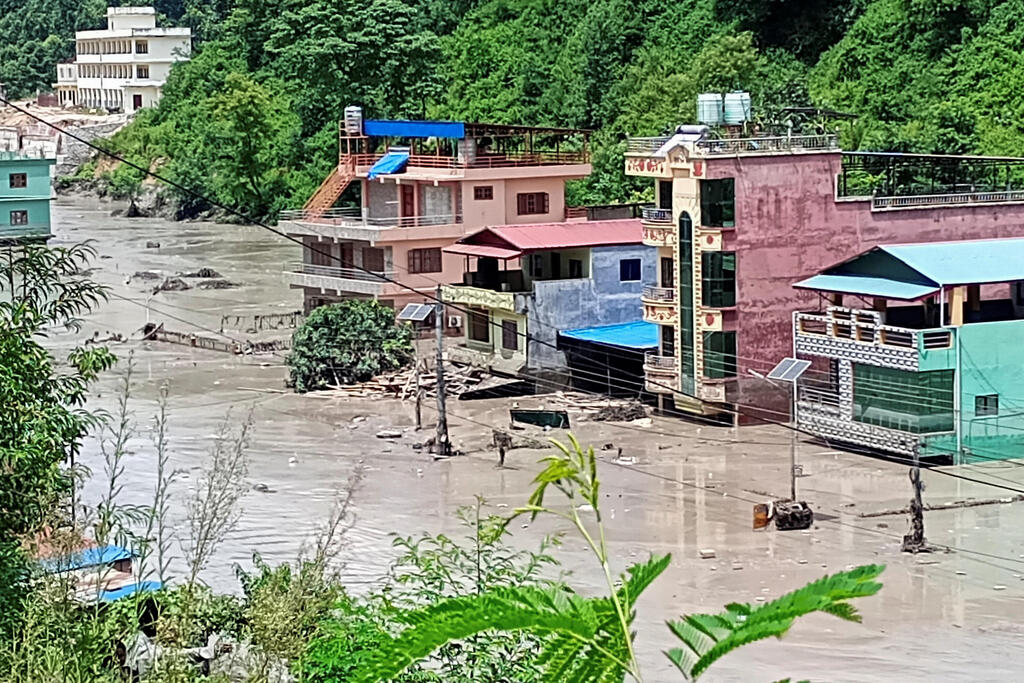
(Photo: REUTERS/Stringer)
A woman identified as Kalpana Malla told the BBC that members of her family were swept away before her eyes.
"My family members were swept away by the flood in front of my eyes," she said.
Her father, mother, sister and children were all caught in the path of the torrent and are now listed as missing.
"They could not escape the flood; there was no chance at all," she said. "This flood took everything, but my son and I climbed the rooftop of a house and survived but couldn’t explain how."
Her son, Sugam Malla, told the BBC that he saved his mother by pulling her by the hand.
"Before that I had given my phone to my sister to remain safe and contact for help, but she is not reachable now, the mobile is switched off. I am worried she must be swept away," he said.
Sonam Dorjee, a trekking guide for international tourists who lives in Rasuwa village at the center of the disaster, told the BBC that the village was hit about an hour after he left for Kathmandu on a previously planned trip.
His sister, her husband and several other relatives are missing.
Dorjee said the flood was so powerful that he could hear the roar of the water while driving away from the village.
"It sounds like an earthquake. My house has collapsed. I have seen a photo," he said.
He said survivors in the village had been left homeless and urgently needed rescue, evacuation, food and medical assistance.
He is now praying that his sister will be found alive.
"There is a 10% chance, we hope," he said.
Glacier plunged 4,000 meters, dragging rocks and sediment with it
Nepalese officials initially raised the possibility that an earthquake in the area triggered the rock and ice collapse that led to the flooding. That followed an announcement by the German Research Center for Geosciences, known as GFZ, that it had detected a magnitude-4.4 seismic event in the area about seven minutes before the torrent was recorded striking Gyirong County in Tibet.
But the U.S. Geological Survey later said the tremor initially identified as an earthquake was actually seismic energy generated by a landslide above ground, rather than the cause of it. The shaking generated by the collapse was equivalent to a magnitude-5.2 earthquake.
Massive Nepal flood buries villages and towns
(Video: Reuters)
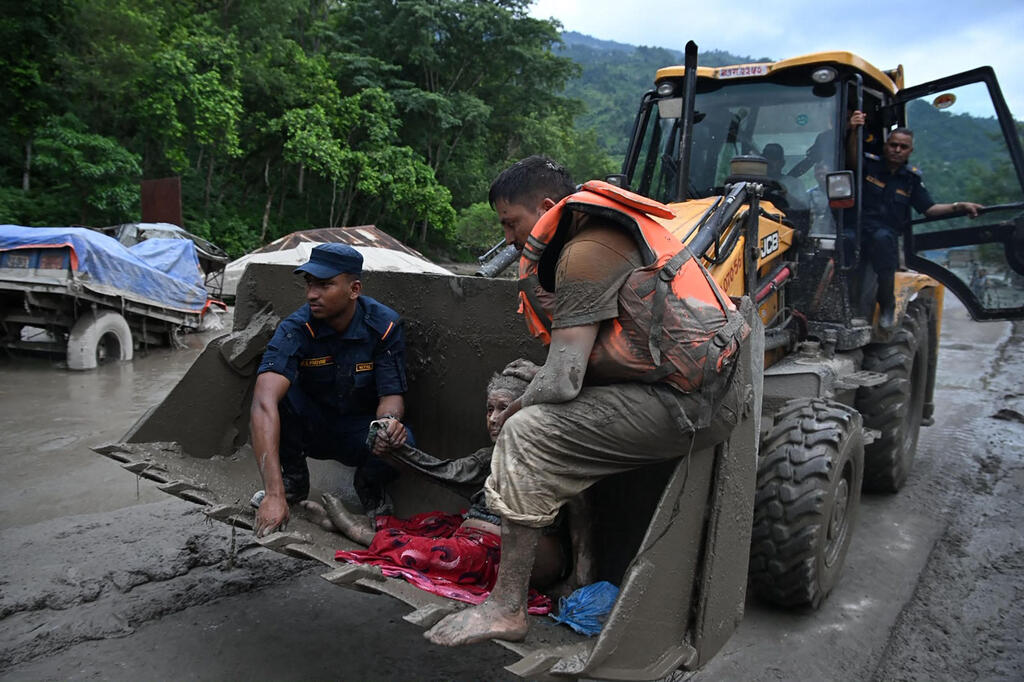
Even tractors were pressed into service to clear towering piles of mud
(Photo: Prakash MATHEMA / AFP)
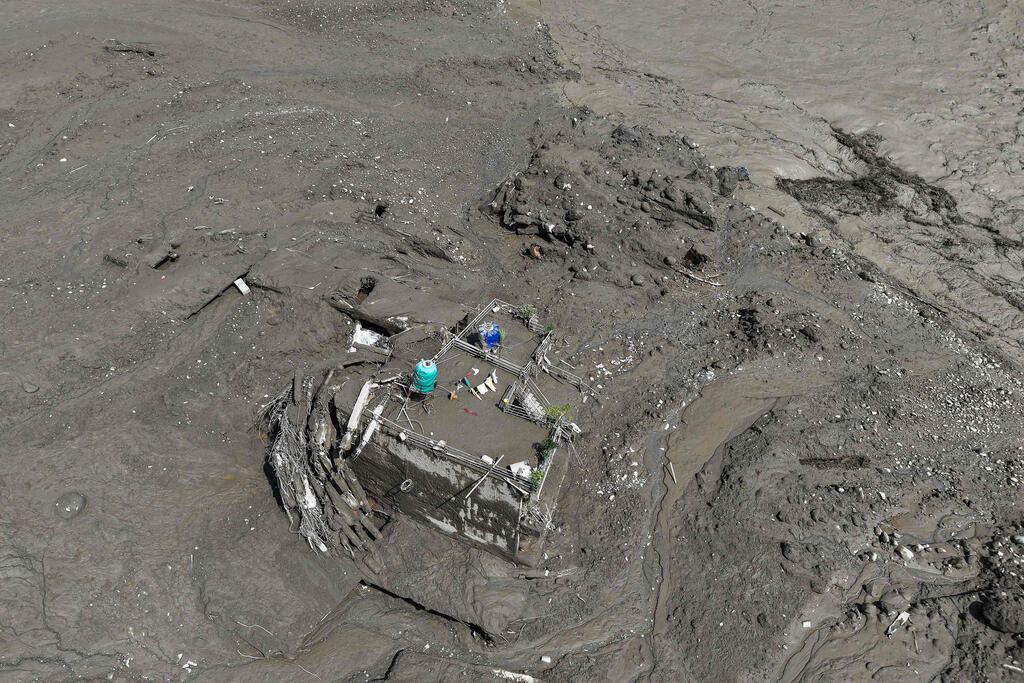
A house buried under mud carried by the landslide
(Photo: Prabin RANABHAT / AFP)
Experts who examined satellite images from Planet Labs said the deadly flash flood was probably caused when the lower section of a glacier broke away and plunged to the valley floor about 4,000 meters, or 13,000 feet, below, carrying with it large quantities of rock and sediment.
It remains unclear, however, what caused the glacier to collapse.
Dan Shugar, an associate professor at the University of Calgary who studies Earth sciences, told Reuters that Planet Labs imagery appeared to show that a large amount of snow had melted in the 24 hours before the disaster.
"Some of the glaciers in the valley were covered in snow yesterday and today they are mostly bare ice," he said. "So in other words (and I haven't seen any weather station data yet), it was probably warm."
Shugar said construction work in the area could also have contributed and would need to be examined. Several major hydroelectric projects are operating in the region.
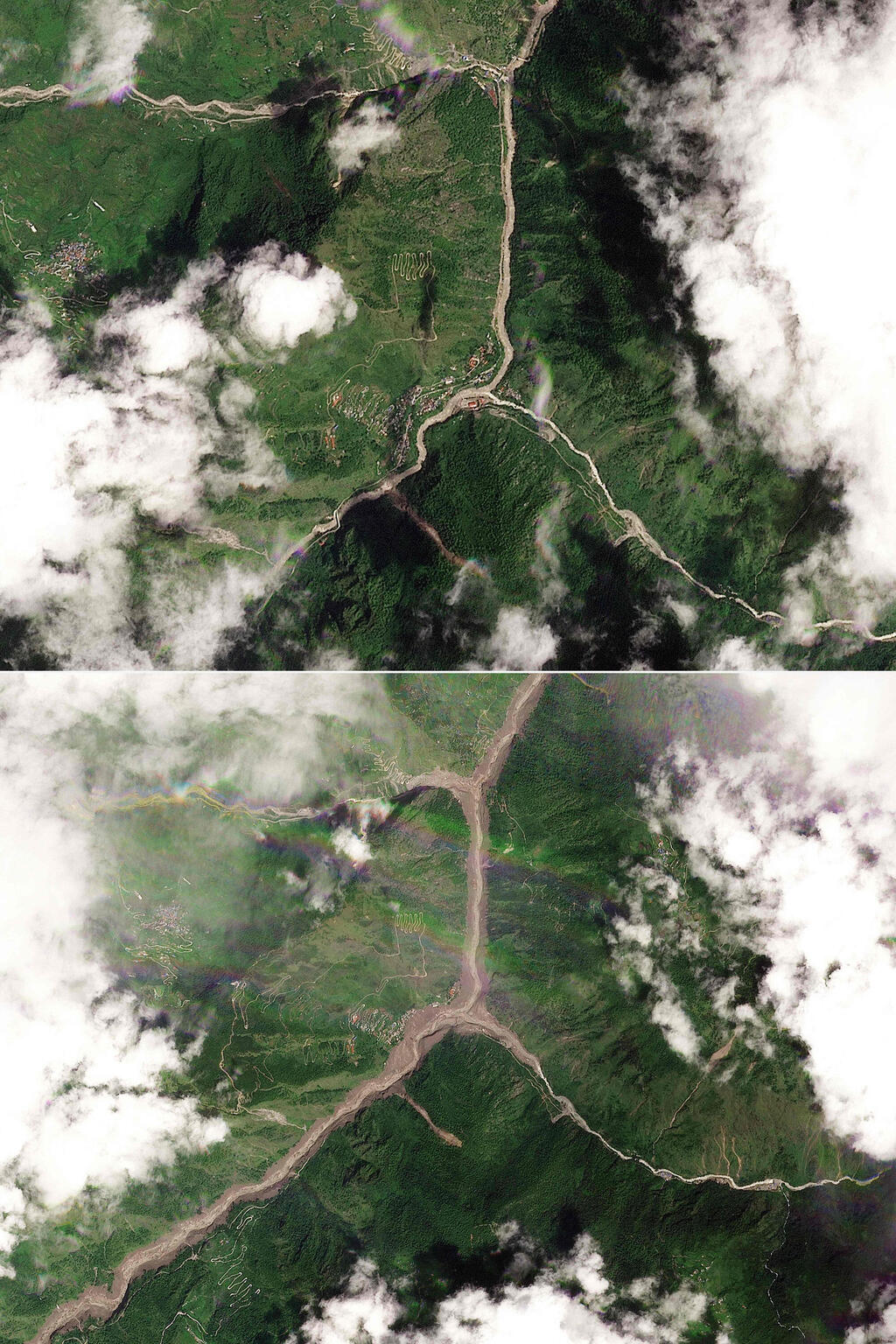
The flood zone and overflowing river: top, Aug. 23 before the disaster; bottom, Aug. 26, hours after the flooding
(Photo: 2026 PLANET LABS PBC / AFP)
The Himalayas, which stretch across Nepal and several neighboring countries, including India, are especially vulnerable to heavy rain, flooding and landslides because the region is warming faster than the global average as a result of human-caused climate change.
Studies have found that extreme weather events, including heat waves and heavy rainfall, as well as glacier melt, have become more frequent in the region.
Researchers in Kathmandu reported earlier this year that glaciers across the Hindu Kush-Himalaya region are melting at an accelerating rate and that the rate of ice loss has doubled since 2000, largely because of rising global temperatures and climate change.
According to a 2023 United Nations report, Nepal's snow-covered mountains lost nearly one-third of their ice volume in just over 30 years because of global warming.
The U.N. also said that year that Nepal's glaciers, located between two major carbon emitters, India and China, had melted 65% faster over the previous decade than in the decade before it.