

Pakistan’s defense minister said Tuesday that the United States and Iran appeared to be nearing an agreement, offering a rare sign of progress in negotiations even as Washington and Tehran continued to trade threats and U.S. forces enforced a blockade of Iranian ports.
Pakistani Defense Minister Khawaja Muhammad Asif told Bloomberg that developments over the past several days suggested the two sides were moving closer to "some sort of an arrangement."
“Things are shaping up again in favor of a peace arrangement or a deal,” Asif said. “The signals in the last two, three days are that we are close to some sort of an arrangement.”
Oil prices fell following Asif’s comments amid renewed hopes for an agreement, Bloomberg reported. The remarks came alongside reports that Pakistani Interior Minister Mohsin Naqvi had arrived in Tehran for talks.
Until now, negotiations had appeared to be stalled.
U.S. President Donald Trump, who said Monday that he was “low keying” on Iran, later renewed his threats against Tehran in a Truth Social post.
“I see that Representatives of the Islamic Republic of Iran are asking for compensation for the damage done to them during the last five month Military Conflict,” Trump wrote. “[I]t is an interesting idea because now I am likewise demanding compensation from Iran, for all of the people that they have killed and gravely wounded with their roadside bombs and many conflicts, for which they are famous, as led initially by General Soleimani, including the families of those killed on the USS Cole, and thousands of others killed in combat.”
Later, speaking to reporters at the White House, Trump was asked what he would do if the latest round of negotiations failed to produce an agreement and whether a broader escalation of the fighting remained an option.
“We have that certainly in that ability if we want to do that,” Trump said.
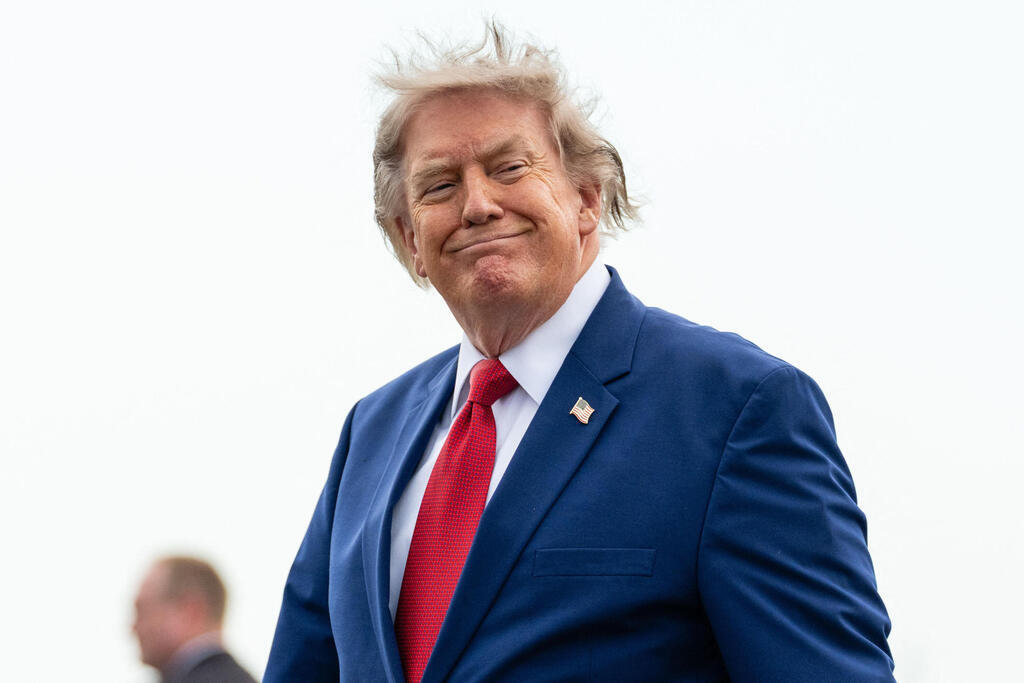
US President Donald Trump
(Photo: Eric Lee / GETTY IMAGES NORTH AMERICA / AFP)
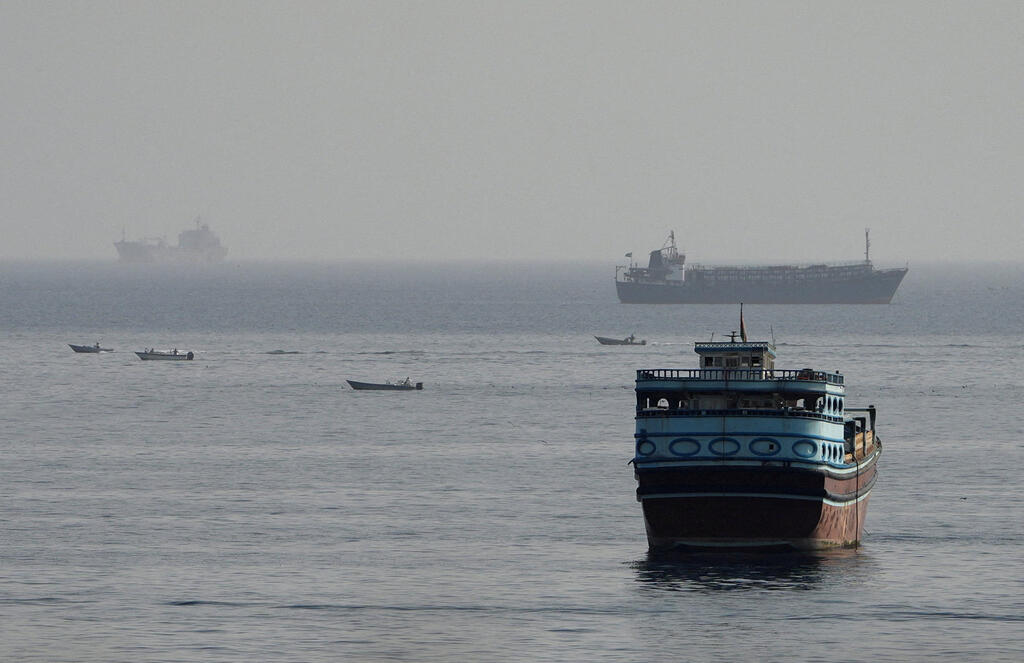
The diplomatic maneuvering came as U.S. forces reportedly attacked a Panama-flagged ship Tuesday morning as it attempted to evade the U.S. blockade of Iranian ports.
The Wall Street Journal reported that a U.S. military helicopter fired a Hellfire missile at the ship's rudder after its crew ignored warnings from American forces enforcing the blockade, citing a U.S. official.
There were no immediate reports of injuries in the incident, which occurred before dawn. The U.S. official said the vessel appeared to have attempted to transfer its crew to another civilian ship following the attack.
A maritime security company separately reported that a Panama-flagged container ship identified as the Vela Nova had been struck by a missile fired from a helicopter as it sailed west through the Gulf of Oman, about 131 kilometers (81 miles) off the coast of Pakistan.
“The missile struck the vessel and caused a fire, which was subsequently extinguished,” the security company said in an initial report.
All 17 crew members were unharmed, according to the company.
The incident underscored the continuing military tensions surrounding the negotiations. The United States has imposed a blockade on Iranian ports that has constrained Tehran’s ability to export oil, adding to economic pressure on the Islamic Republic.
Israel, meanwhile, is closely following reports from Washington that Trump could seek to declare victory and bring the war with Iran to an end even without an agreement dismantling Tehran’s nuclear program, provided Iran agrees to reopen the Strait of Hormuz without restrictions.
The strait, which connects the Persian Gulf with the Gulf of Oman and Arabian Sea, is one of the world’s most important energy corridors and a critical route for global oil and liquefied natural gas shipments.
Israeli officials have expressed concern about the possibility of an abrupt shift in Trump’s approach.
“There is an element of concern because Trump is unpredictable and also tends to change his mind,” an Israeli official said Monday.
The prevailing assessment in Israel is that Trump is reluctant to resume large-scale fighting but wants to maintain economic pressure on Iran, including through the blockade of its seaports and restrictions affecting its ability to export oil.
A senior Israeli official said the current situation was favorable to Israel because it maintained pressure on Tehran without requiring an immediate return to intensive fighting.
“The current situation is the best for us — the blockade remains in place and the economic pressure on Iran continues,” the official said.