


Against the backdrop of the exploding FPV drone threat, the IDF has supplied wire mesh netting to forces in Lebanon. “So far, about 158,000 square meters (1.7 million square feet) of netting have been supplied to the military, while an additional procurement of roughly 188,000 square meters is underway and will arrive later,” the military said. The amount purchased so far is equivalent to the area of about 20 soccer fields.
Meanwhile, Galilee Medical Center in Nahariya updated the condition of the four people wounded in an FPV drone attack in the parking lot at the Rosh Hanikra site, saying one remains in critical condition, one is in moderate condition and two are lightly wounded.
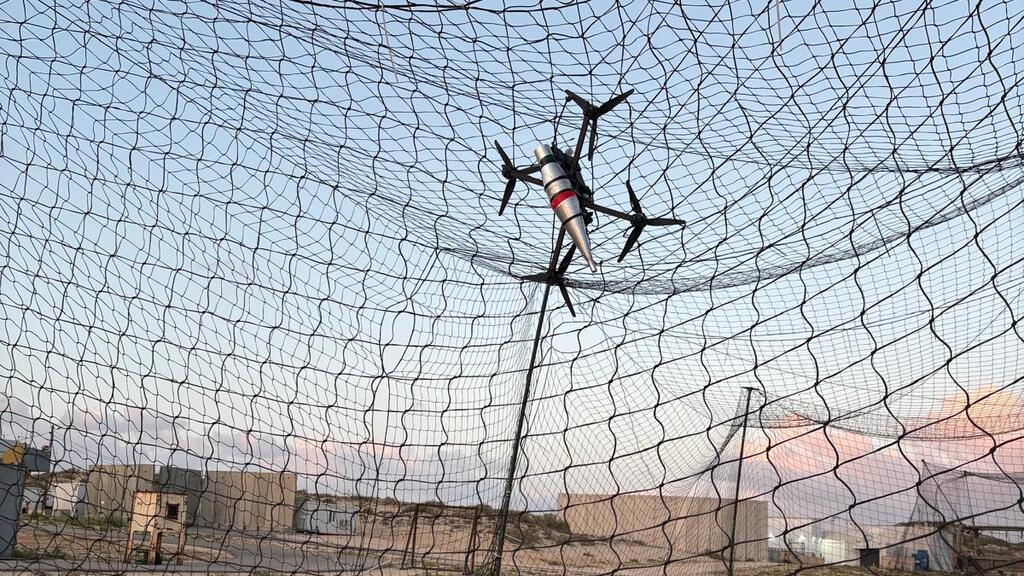
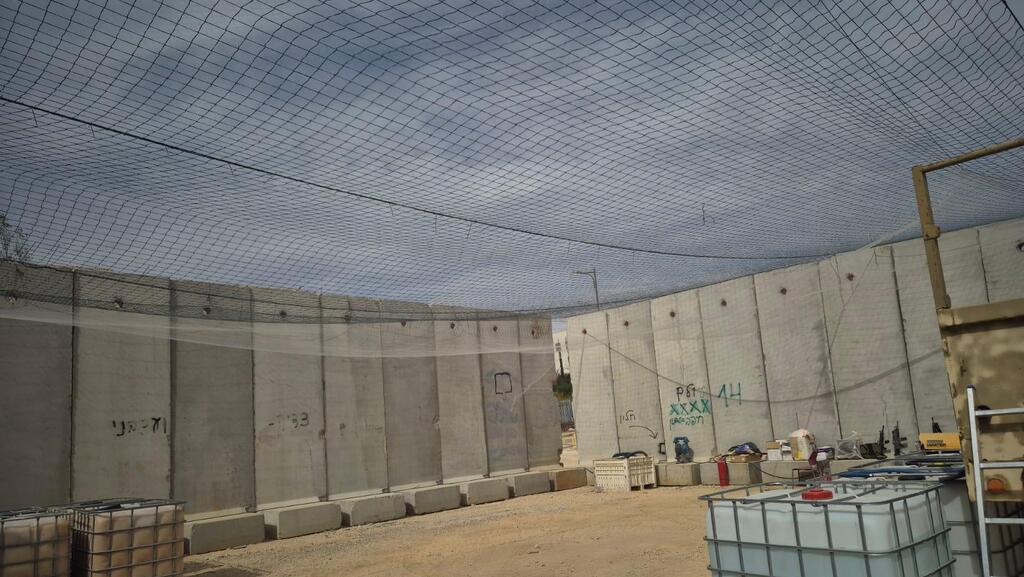
(Photo: IDF)
The threat posed by explosive drones has become one of the deadliest and most complex challenges facing the Israeli military in the fighting in southern Lebanon. Ynet reported the day before yesterday that defense officials realized time was running short and reviewed more than 100 proposals. One of the most significant challenges is detecting the drones. Soldiers in the field have repeatedly reported spotting drones only seconds before impact. Ynet has learned that new “detection kits” will be distributed to combat teams in southern Lebanon. Security officials said candidly that the systems do not guarantee a 100% success rate — perhaps not even 90% — but they are expected to give troops the precious seconds needed to take cover.
More “advanced” solutions being examined by the defense establishment involve drones designed to counter Hezbollah’s explosive drones. Six different models are in advanced testing stages, with a range of methods under consideration: from drones carrying warheads that explode near the enemy, to drones that deploy nets, to a method known as “iron against iron,” in which a drone rams an enemy drone with force and knocks it down.