

U.S. Ambassador to the United Nations Mike Waltz has accused the world body of failing to police its independent human rights experts, saying senior UN Secretariat officials privately acknowledge that special rapporteurs including Francesca Albanese “are out of control" and "a discredit to the UN.”
“This is a broken system that must be fixed,” said Waltz.
Gallery
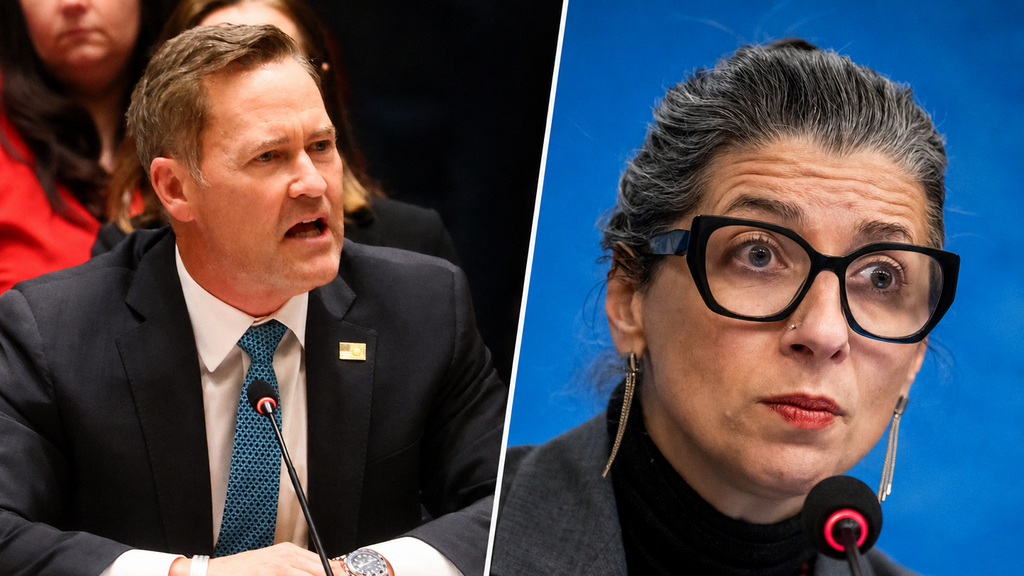
Mike Waltz and Francesca Albanese
(Photo: Fabrice COFFRINI / AFP, Michael M. Santiago / GETTY IMAGES NORTH AMERICA / AFP)
His comments follow unusually blunt remarks by outgoing UN Secretary-General António Guterres, who told the Financial Times last week that the Secretariat does not control the independent experts appointed by the UN Human Rights Council.
“We have many [rapporteurs] that are totally out of control, from the point of view of the Secretariat,” Guterres said, according to the interview.
The distinction is significant. Special rapporteurs are independent experts appointed by the Human Rights Council rather than employees of the UN Secretariat. They serve in their personal capacity, are not UN staff and are intended to operate independently of governments and the UN bureaucracy. Their opinions therefore do not necessarily represent those of the United Nations itself.
They are nevertheless required to comply with a Human Rights Council code of conduct that calls for independence, impartiality, objectivity, integrity and good faith. The code was adopted by the Council in 2007.
That structure also means the secretary-general does not simply have the authority to dismiss a rapporteur. Mandate holders are appointed through the Human Rights Council system, generally for three-year terms that may be renewed once.
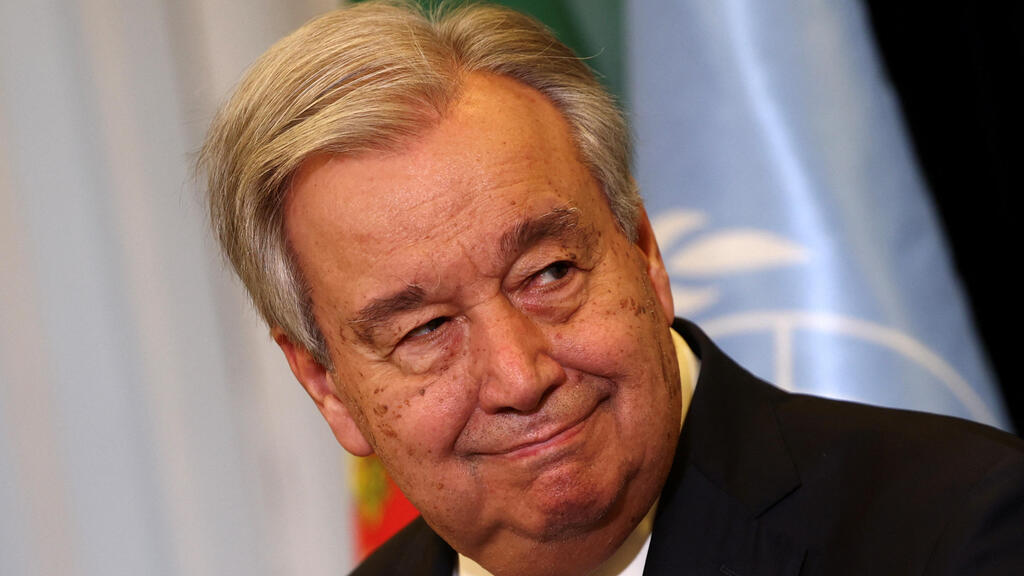
UN Secretary-General António Guterres
(Photo: REUTERS/Pedro Nunes)
Waltz’s criticism therefore focuses not only on Albanese but on what he describes as a broader accountability failure within the UN human rights apparatus.
The latest dispute centers on Albanese, the UN special rapporteur on the situation of human rights in the Palestinian territories occupied since 1967 and one of the organization’s most controversial independent experts.
Guterres had previously described Albanese privately as a “horrible person,” according to former U.S. antisemitism envoy Deborah Lipstadt. His spokesman has also said the Secretariat “doesn’t agree with much of what she says.”
Lipstadt said in early 2025 that Guterres had used the description in private conversations with her on more than one occasion.
Albanese responded to the latest controversy by claiming the Secretary-General “never meant what the pro-Apartheid scavengers spread” and accusing critics of being “genocide enablers.”
UN Watch Executive Director Hillel Neuer noted that Albanese herself has said she has “never heard from” Guterres, arguing that she was therefore in no position to interpret his private views.
“Albanese has functioned as Hamas’s de facto spokesperson at the UN,” said Neuer. “Iran's regime and its terrorist proxies routinely praise her. But numerous democracies have called for her removal, condemning her for Holocaust inversion and other ethical violations, making her the first UN human rights official in history to be so denounced. The United States sanctioned her. Guterres called her a horrible person in private. Now Ambassador Waltz confirms it: senior UN officials knew she was out of control. A human rights system that cannot remove its most notorious antisemite is not independent. It is broken.”
The United States initially sanctioned Albanese in July 2025. Then-Secretary of State Marco Rubio said the action was imposed over her efforts involving the International Criminal Court and accused her of seeking action against U.S. and Israeli nationals without the consent of either country, neither of which is a party to the Rome Statute.
The sanctions subsequently became the subject of a U.S. court battle. In May 2026, a federal judge temporarily blocked them after finding that Albanese was likely to succeed on claims that the measures violated her free-speech rights. The Treasury Department briefly removed her from its sanctions list.
Days later, however, a federal appeals court issued an administrative stay allowing the government to enforce the designation again while the litigation continued, and Albanese was returned to the sanctions list. The appeals court stressed that its procedural decision was not a ruling on the merits of the dispute.
The controversy has also highlighted the unusual institutional position occupied by UN special rapporteurs. Although their mandates carry the imprimatur of the Human Rights Council and they receive logistical and technical support from the Office of the UN High Commissioner for Human Rights, they are deliberately insulated from direct control by the UN Secretariat.
That independence is designed to allow experts to investigate governments and institutions without political interference. Critics including UN Watch argue, however, that the system lacks sufficiently effective mechanisms for disciplining mandate holders who allegedly violate professional standards.
UN Watch reiterated its call for Albanese’s immediate removal and urged the creation of stronger accountability mechanisms before Guterres leaves office in December.
The organization argues that Guterres’ acknowledgment that many rapporteurs are “totally out of control” strengthens the case for reforming a system in which independent experts can attract intense criticism while remaining largely beyond the direct authority of the UN’s senior leadership.