

President Donald Trump announced Thursday that the Pentagon will no longer livestream the firing squad execution of Nidal Malik Hasan, the former U.S. Army psychiatrist convicted in the 2009 Fort Hood shooting, reversing a controversial plan that drew criticism from both Republicans and Democrats, including Vice President JD Vance.
In a social media post, Trump said broadcasting the execution "might have been a strong deterrent for the World to witness how America deals with Terrorists and SCUM like Hasan." However, he acknowledged that "many very good and well meaning people would rather not watch him die, through streaming, or through any other visual device."
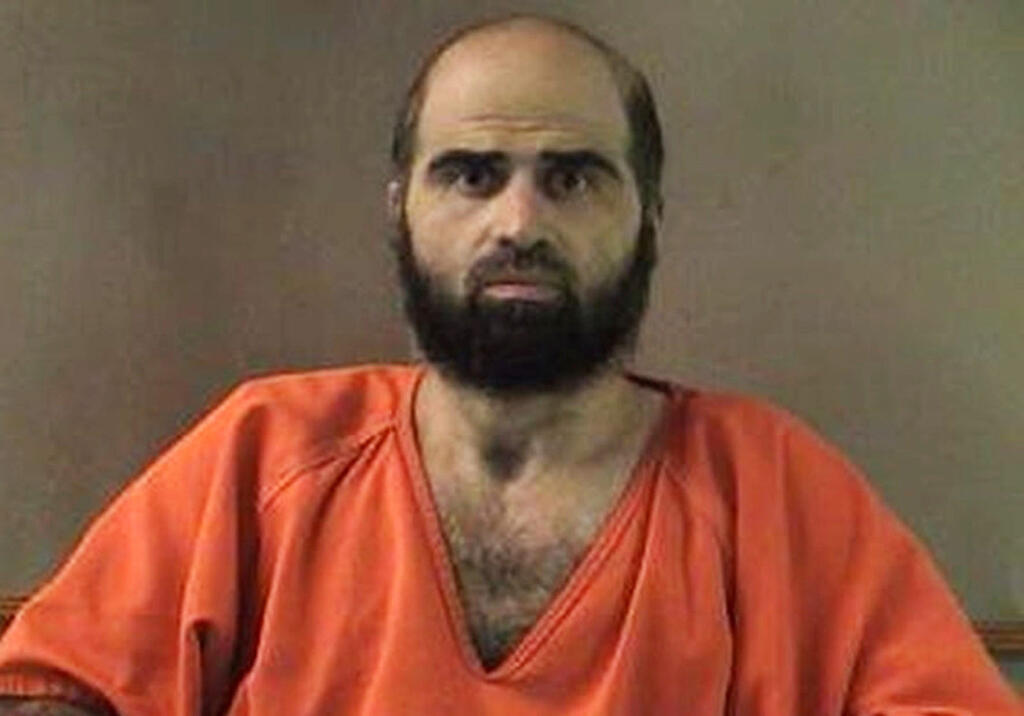
Nidal Malik Hasan
(Photo: AP)
Hasan's execution is scheduled for December 3, according to the Pentagon. Trump said immediate family members of the victims would still be permitted to witness it in person if they wished.
The reversal follows an announcement earlier this month by Defense Secretary Pete Hegseth that Hasan's execution would be public, with the Pentagon subsequently confirming plans to livestream it. The proposal prompted bipartisan criticism, including warnings that footage of the execution could be exploited by extremist groups to encourage radicalization. The Pentagon declined Thursday to provide further details beyond the president's statement.
Vance, a Catholic, had previously questioned whether the public execution would actually take place. Asked how the decision aligned with his Christian faith, he emphasized the gravity of Hasan's crimes while distancing himself from the planned broadcast.
"So whatever the controversy is about the method of the execution, I hope that people don't forget that this is a guy who brutally murdered a lot of innocent people," Vance said. He added: "Now, that said, I mean, look, if it's ultimately livestreamed, I'm not going to be watching it."
The Catholic Church has long opposed capital punishment, and Archbishop Paul S. Coakley, president of the U.S. Conference of Catholic Bishops, condemned the proposed livestream as a "barbaric promotion of a culture of death and must be reconsidered." Other senior Republicans, including House Speaker Mike Johnson, also expressed reservations about broadcasting the execution.
Trump has continued to defend the decision to execute Hasan by firing squad, although he had previously distanced himself from Hegseth's plans to make the event public. Asked about the controversy last Friday, Trump said officials were still deciding how to proceed.
"He will be killed. He will be, through firing squad. I really don't care how he goes, as long as he goes. And I think the death penalty is a very worthy way of going for him," Trump said at the time.
Hasan, then an Army major and psychiatrist, carried out the November 5, 2009, shooting at Fort Hood, Texas, opening fire inside a medical building where soldiers were waiting for vaccinations and clearance ahead of deployment. Shouting "Allahu akbar," Arabic for "God is great," he fired a laser-sighted handgun at soldiers, including those fleeing toward a parking lot.
He later said he had intended to prevent American soldiers from deploying to Afghanistan and killing fellow Muslims, but a military judge barred him from using that argument as a defense during his 2013 trial. Hasan was paralyzed from the waist down after being shot by law enforcement officers and now uses a wheelchair.
Hasan could still pursue legal action that might substantially delay his execution, although his conduct during the trial has raised questions about whether he would seek such a postponement.
The execution, if carried out, would mark a rare use of capital punishment by the U.S. military. No American service member has been executed by firing squad since World War II, and the military's last execution took place on April 13, 1961, when Army Pvt. John Bennett was hanged.