


On the third day of Operation Roaring Lion, the Israeli Air Force said Monday evening it had drawn lessons from its actions during Operation Rising Lion in June of last year as it continued strikes against Iran’s ballistic missile array.
During the current operation, the military is operating at significantly greater intensity. After just two days of fighting, more than 3,000 munitions have already been dropped on Iran — a pace five times faster than the previous operation, which lasted 12 days.
Footage of a fighter pilot evading an Iranian missile launched at him over the skies of Tehran
(Video: IDF)


Even so, at the end of the campaign against Iran, ballistic missiles and launchers are still expected to remain on Iranian territory, many of them concealed underground in various parts of the Islamic Republic. The IDF, however, say they are working to significantly degrade Iran’s capabilities, including its ability to reconstitute its forces after the war. The military says it is also acting against Iran’s nuclear program.
Those statements stand in contrast to comments made by Prime Minister Benjamin Netanyahu after last June’s operation, when he told Israelis that “we have removed the threat of ballistic missiles from above us.” Military officials, for their part, have not endorsed that claim and stress they never said Iran’s reconstitution capabilities had been eliminated.
The Air Force began intensively addressing the Iranian issue about two years ago, in January 2024, establishing an “Iran Division” within its operational planning framework. At the same time, an Iran-focused deep operations department was set up within the Air Force Intelligence Directorate.

For months, the Air Force accumulated knowledge on Iran and conducted operational planning after years, from 2015 to 2022, in which it dealt only minimally with the Iranian threat in depth. Officials said there were significant gaps to close. In April 2024, the sides recorded their first direct clash.
In October of that year, following the killing of Hezbollah Secretary-General Hassan Nasrallah, tensions escalated further between Israel and Iran, which launched about 200 missiles at Israeli territory. The Air Force concluded that Iran had not been deterred after the first confrontation. The exchange of blows led to preparations that continued until Operation Rising Lion in June 2025.
That operation, officials said, found the Air Force at a point where the operational achievement was still incomplete. “It was emergency treatment, and its achievements were accordingly limited,” the military said. Although senior figures were killed in that operation, primarily military officials and nuclear scientists, Iran managed to recover within six months and return to a position very similar to its starting point before Rising Lion.
Air Force officials believe the lack of a complementary American or international diplomatic process to reinforce the military gains allowed Iran to resume work on its nuclear program. This time, they said, the campaign is not being waged amid intense fighting on multiple fronts, enabling a concentrated effort on the Iranian issue.
Cockpit footage: What the bombing in Iran looks like
(Video: IDF)
Regarding cooperation between the Israeli and U.S. militaries, officials said that until the wave of protests in Iran and the regime’s killing of civilians, there were gaps between the sides over the war’s objectives. The United States did not at the time consider the possibility of toppling the Iranian regime, but that option is now on the table.
After an opening strike that caught Iran by surprise, the Air Force is focusing on significantly suppressing Iran’s missile and rocket fire systems to prevent damage to Israel. The force is maintaining air superiority — including over Tehran — and aims to reduce the threat to minimal, isolated launches per day toward Israel’s civilian areas, allowing it operational breathing room to act deep inside Iran. Such activity, officials noted, would enable strikes on Iran’s military industry, as well as nuclear-related targets and regime assets.
The Air Force said its Intelligence Directorate has been significantly strengthened and accumulated extensive knowledge, helping forces achieve a high level of readiness. As for the required duration of the operation, Air Force officials believe that with two weeks, and provided air freedom of action is maintained, they could maximize damage to Iran.
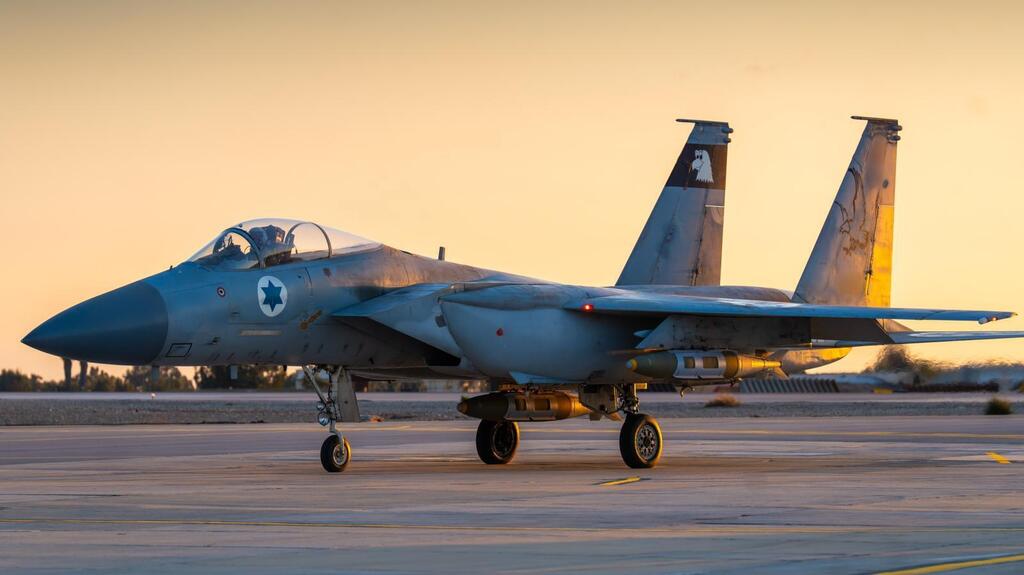
Fighter jets land after a wave of strikes in Tehran
(Photo: IDF)
Regarding how the confrontation could end, officials say there are several possibilities, including the emergence of alternative leadership in Iran or chaos that would bring about the end of the war and a prolonged process shaping what follows. Looking to the day after, Air Force officials stressed that regardless of which regime is in power, rebuilding efforts would be lengthy and complex, as the Islamic Republic’s current assets will no longer be intact.
On the Lebanese front, amid escalating tensions with Hezbollah, the Air Force sees an opportunity, as Lebanon’s president and government are confronting the Shiite militant group. However, the IDF assesses that the Lebanese army cannot disarm Hezbollah on its own and that external assistance will be required, as has been seen repeatedly in recent months.