

The government is once again weighing the possibility of applying sovereignty over parts of the West Bank, a move that has been promised many times in the past but never carried out. New discussions at the highest levels suggest the political climate may create a rare opening for such a step, according to details of a closed-door meeting obtained by Ynet.
Last week, Prime Minister Benjamin Netanyahu convened a small forum of senior officials to debate the matter. The meeting, not secret but largely unnoticed at the time, included Strategic Affairs Minister Ron Dermer, a close confidant who manages ties with Washington and Gulf states, Foreign Minister Gideon Sa’ar, Finance Minister Bezalel Smotrich, National Security Adviser Tzachi Hanegbi and Cabinet Secretary Yossi Fuchs.
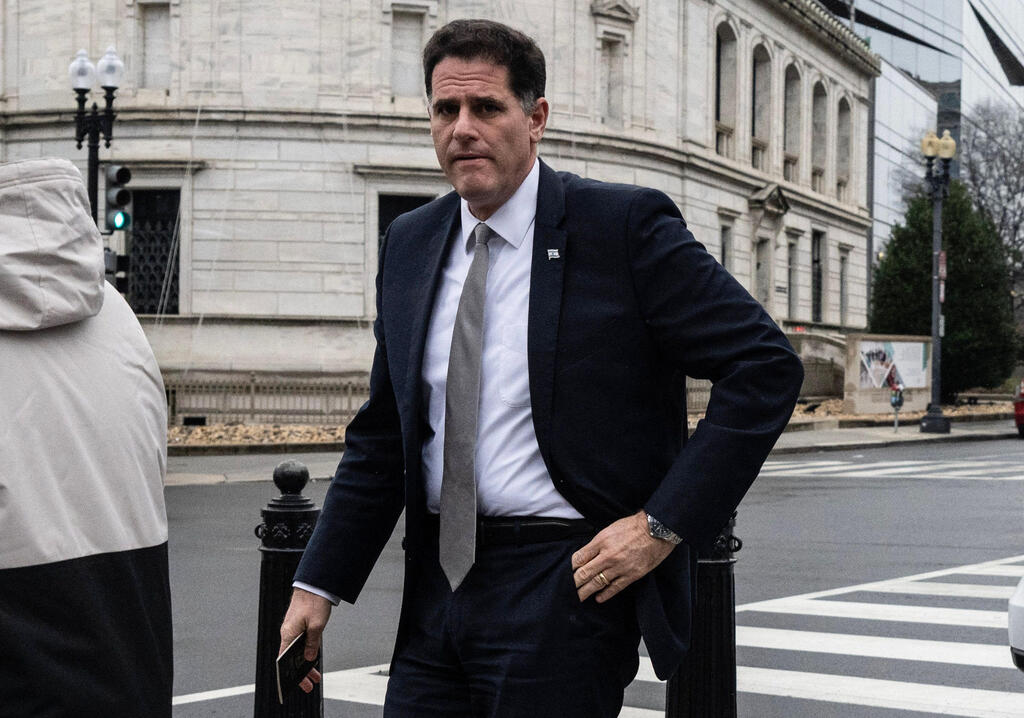
According to participants, Dermer voiced clear support for annexation. “There will be sovereignty in Judea and Samaria,” he was quoted as saying, using the biblical name for the West Bank. “The question is over which parts.” He had made similar remarks two weeks earlier during a broader Cabinet session in which ministers Orit Strock, Smotrich and Yariv Levin pressed for the move ahead of September’s UN General Assembly, where France and other countries are expected to push recognition of a Palestinian state.
At issue is whether sovereignty should be applied only to settlement blocs, to all Israeli communities, to Area C under full Israeli control, to the Jordan Valley or to open lands in order to break up Palestinian territorial contiguity. Some lawmakers, including Likud’s Avichai Boaron, have even suggested including open areas in Areas A and B, arguing Israel must prevent a continuous Palestinian corridor.
Smotrich has been lobbying aggressively, with his Defense Ministry settlement directorate preparing maps and surveys to lay groundwork. The Yesha Council, representing settlers, is running a public campaign to pressure Netanyahu and opposes limiting annexation to blocs or the Jordan Valley, saying that would “legitimize the left’s doctrine of settlement blocs.”
Sa’ar, analyzing Israel’s diplomatic position, warned that unilateral annexation would trigger European opposition and further strain ties with key capitals. He has cautioned foreign counterparts in recent months that unilateral moves against Israel would be met in kind.

Prime Minister Benjamin Netanyahu
(Photo: GPO)
Despite Dermer’s backing, Netanyahu remains cautious. In meetings with settler leaders, he declined to provide details, saying only he would not reveal “the intricacies of diplomatic navigation.” Sources believe he is waiting to see whether France follows through with recognition of a Palestinian state at the UN before making any decision.
For now, Netanyahu has avoided a firm commitment. His appearances last week at settler events — including a 50th anniversary celebration in Ofra and a tribute in the Binyamin region — were interpreted as gestures to his base. Meanwhile, Likud insiders question whether annexation will be advanced as a pre-election achievement, held back as an electoral promise or continue as talk without action.
The Knesset recently passed declarative resolutions opposing unilateral Palestinian statehood and supporting West Bank sovereignty, both with broad bipartisan backing, including from Avigdor Liberman’s Yisrael Beitenu in the opposition. American officials under President Donald Trump have also hinted to Israeli ministers that Washington would support a firm stance.
Netanyahu, however, is keeping his options open — balancing political pressure at home, pushback abroad and the potential to use sovereignty either as a negotiating card or an election platform.