


After the ceasefire took effect at midnight Friday, the IDF said it had brought the two main theaters of fighting to a close, though it is still dealing with very fragile ceasefires. Now, a senior defense official is explaining the military’s starting point as negotiations get underway between the United States and Iran and between Israel and Lebanon.
Boasting again of gains in Iran
“Iran is coming to the current negotiations with the Americans in a very weakened state and with a very weak economy. This is a regime whose capabilities we stripped away. They are simply naked,” the official said.
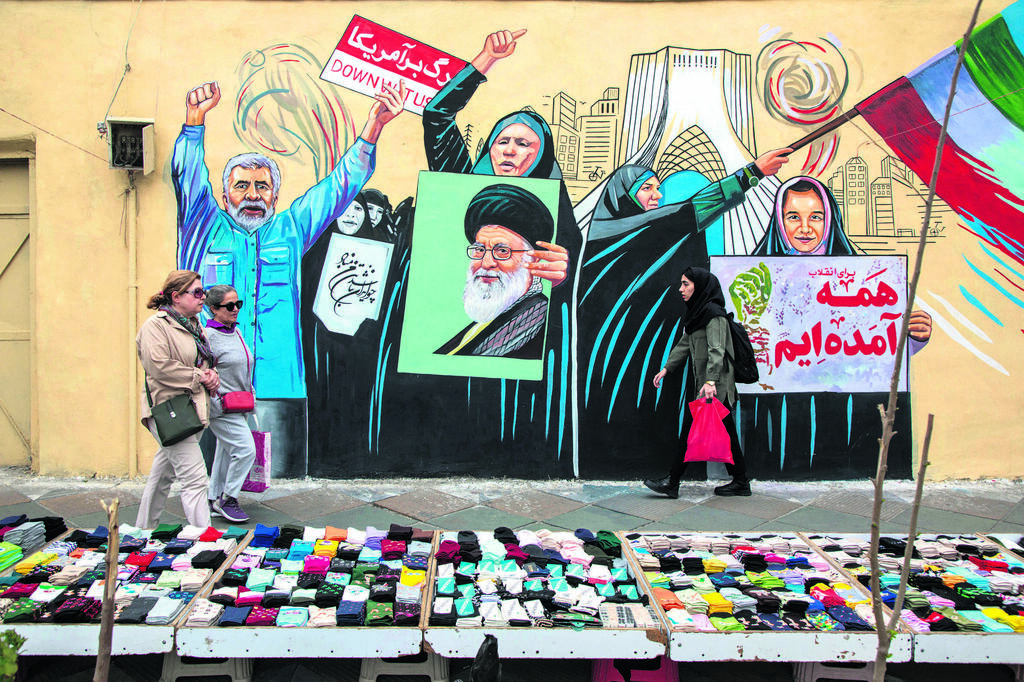
Less than a year after the previous war with Iran, the IDF is again listing the campaign’s achievements, including the killing of Iran’s entire senior leadership, significant damage to the missile production chain and strikes on facilities that generated revenue for Iran, along with what it described as extensive damage to Iranian weaponry.
“What was defined for the IDF at the start of the operation was carried out. Now we need to see what happens in the negotiations,” the official said. “I hope the Americans insist on the enriched material” — referring to the 440 kilograms of uranium in Iran — “and also on enrichment itself. Together with the Americans, we are prepared to return to fighting on short notice, and we have the ability to strike anything we want. We have not destroyed everything we are capable of destroying.”
On the war’s objectives, the official said toppling the regime was not one of them. “The fall of the regime depends on the Iranians. In the end, you cannot topple a regime from the air. What we did was undermine the regime’s foundations,” he said. “We achieved significant gains in the campaign, and those gains are now being reflected in the negotiations.”
Regarding the economic damage to Iran, the military said it estimates the cost at about $250 billion, and that figure could still rise. “In the end, the goal of the economic strikes we carried out is to force them to ask where the next dollar goes — to military buildup or to rehabilitating civilian life,” the senior official said.
From the IDF’s standpoint, it launched the campaign in Iran after concluding that the pace of Iran’s recovery and progress was extremely rapid — both in advancing the nuclear project and in expanding its missile-production system. Assessments on the eve of Operation Roaring Lion were that the regime was producing missiles at a pace of thousands. “We set an exact number for the quantity of missiles that constitutes a red line for Israel,” the official said.
According to the military, Iran was aiming to launch barrages of hundreds of missiles and eventually reach a point where thousands of missiles could be fired at Israel.
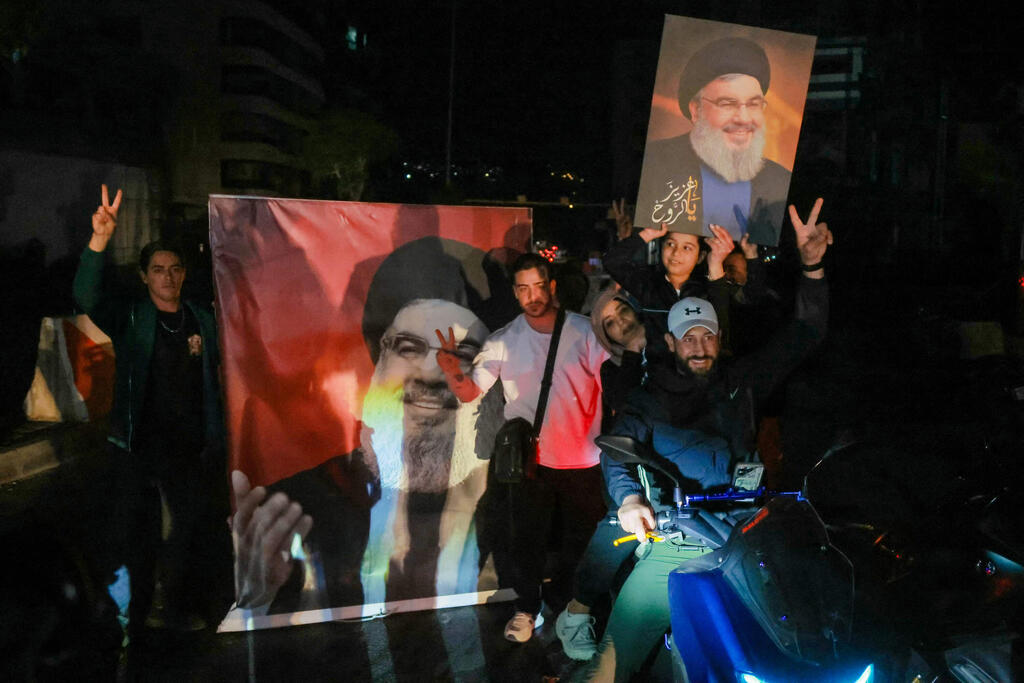
Hezbollah supporters celebrate the ceasefire with Israel
(Photo: Ibrahim AMRO / AFP)
The campaign was originally planned for June, but a wave of protests in Iran then broke out, accelerating the planning. President Donald Trump said that “help is on its way,” giving the green light for cooperation between the militaries. That reached the point where IDF Chief of Staff Lt. Gen. Eyal Zamir held a war-room session with CENTCOM commander Adm. Brad Cooper, and the two reviewed war-game scenarios in Iran while dividing shared targets and strike zones.
“There are significant achievements in Iran, but the enriched material must be dealt with in order to roll back the nuclear program. There is now a gun to Iran’s head in the form of a possible attack on its energy facilities, and we will see what comes of the negotiations. There is something to work with,” a senior defense official said.
The IDF also said it had prepared a broad attack plan against Hezbollah that was supposed to be carried out before the Iran campaign as a first stage.
“After Northern Arrows, we killed 450 of their terrorists,” the official said, referring to the 2024 Lebanon war. “Based on our understanding, they had reached a point where they would have had to respond differently, and they prepared for that. The goal was to hit them significantly before Iran, deal with them first and then move on to Iran. But the timetable changed and the political leadership did not approve it, so the operation was not carried out.”
According to the senior defense official, Operation Eternal Darkness, in which Israel struck hundreds of Hezbollah targets within minutes, is an alternative to that earlier operation that was never launched.
With the campaign now over, the military is also addressing for the first time in depth the issue of missiles carrying cluster warheads. Of the 90 missile impacts during Operation Roaring Lion, 64 came from cluster-warhead missiles, which air defenses did not intercept.
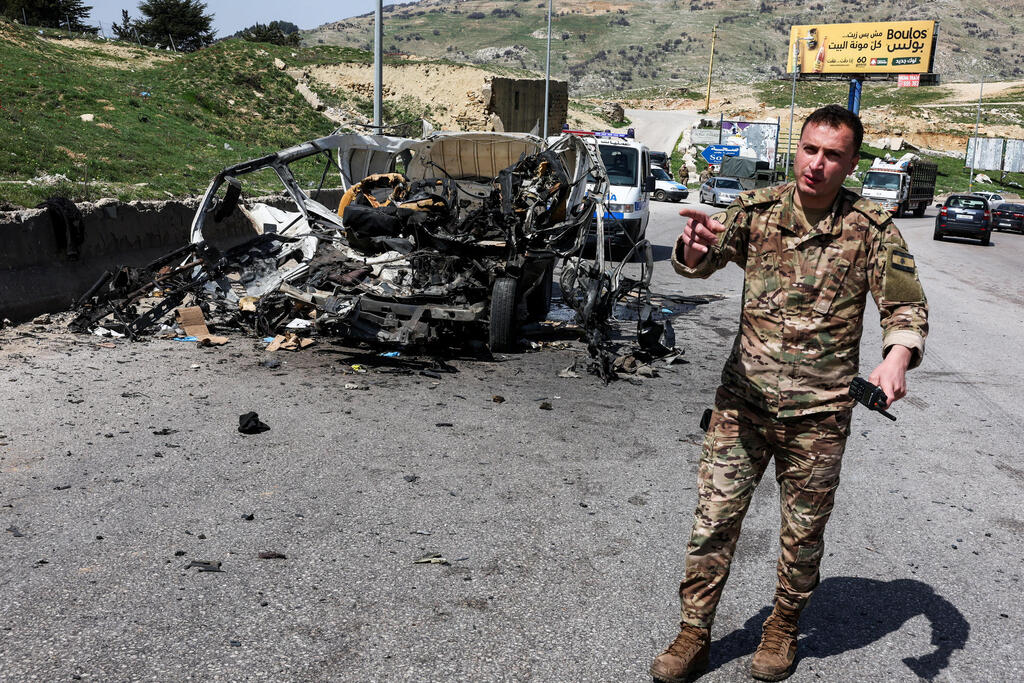
Car attacked by Israeli drone in southern Lebanon
(Photo: REUTERS/Mohamed Azakir)
“First of all, it must be made clear that anyone who followed Home Front Command instructions was not harmed by cluster munitions,” senior security officials said. “They are difficult to intercept because they sometimes split at very high altitude, at times outside the atmosphere. In addition, the overall set of considerations includes both interception capability and the economics of munitions. Solutions are also being developed for the cluster-munition issue.”
Finally, a senior military official summed up the Iranian front this way: “There is an enormous opportunity here to isolate Iran and expand the alliances in the region. I speak with all my counterparts in the region, and their message is: Don’t stop.”
‘Fighters were not sent to Bint Jbeil because it is a symbol’
During the ceasefire, the IDF is still maneuvering in southern Lebanon and consolidating its hold on the ground. Military officials are now effectively laying out the army’s defensive plan in the area and its demands in the negotiations.
The defensive lines along the border are divided into three: the red line, the yellow line — the anti-tank missile line — and the Litani River line. In some places, Israeli forces are about 10 kilometers, or roughly 6 miles, from the border.
The first line, the red line, is made up of the villages adjacent to the border, nearly all of which have been demolished. The second line is the anti-tank line, where troops are currently positioned and consolidating their hold in order to prevent direct fire on residents of northern Israel. On the third line, the Litani line, the IDF says it has established fire control.
“The directive to the forces is that wherever there is a threat, they are to act immediately to remove it. We are continuing to clear the area,” the military said.
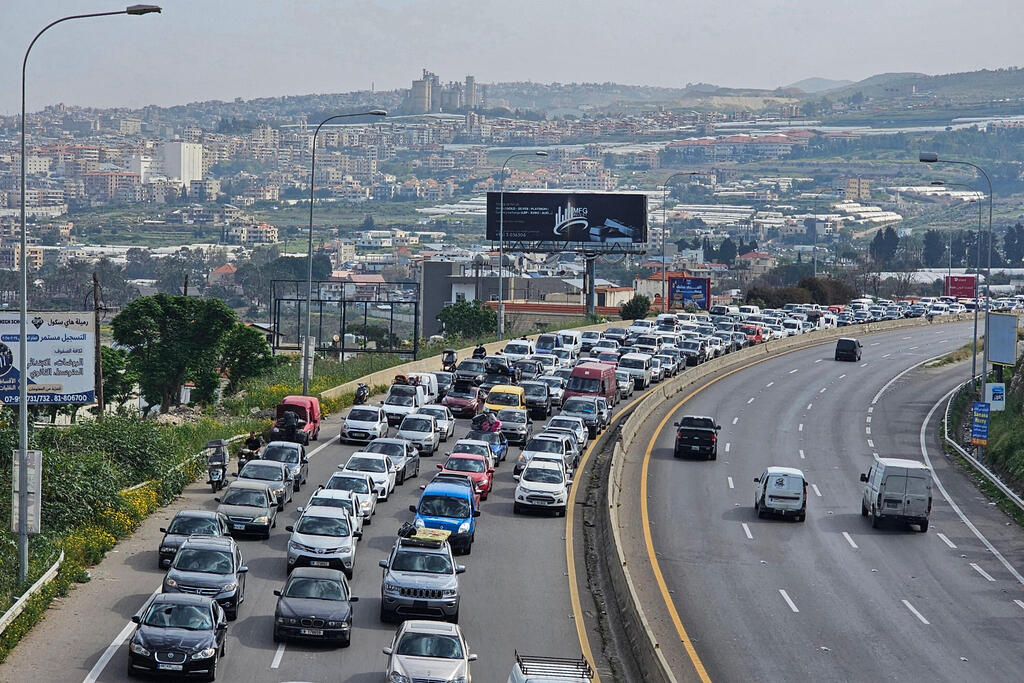
Sidon, Lebanon
(Photo: AFP)
The military said it supports the negotiations now underway. “The threat of a cross-border raid has been removed. It no longer exists. Hezbollah has suffered a deep blow and is in its weakest state in years. In the negotiations, we will insist on demilitarizing the area from the border line to the Litani, along with the establishment of a monitoring and control mechanism, and on remaining on the yellow line rather than moving back. There is now a historic negotiation here, and we will see how it ends. The military achievement led to the negotiations.”
The military also said that “in order to completely remove the threat of high-trajectory fire,” meaning rockets and other arcing projectiles, “it is necessary to maneuver beyond the Litani. Now, with the negotiations, there is potential for long-term quiet. The IDF will not abandon the residents of the north.”
The military also addressed claims that forces reached Bint Jbeil only because it is considered symbolic. Bint Jbeil, a major Hezbollah stronghold in southern Lebanon, became a potent symbol in Israel after heavy fighting there during the 2006 war.
“I did not send fighters to Bint Jbeil because it is a symbol,” the senior military official said in response to the criticism. “Bint Jbeil is 4 kilometers (about 2.5 miles) from the border. There were many terrorists there, and now only a few remain. It is a Hezbollah center of gravity in southern Lebanon, and the action there relates to the entire area. Hezbollah was under pressure over this, that Bint Jbeil must not fall. They tried to reinforce their forces in that sector. We surrounded it from several directions and delivered heavy fire from the air.”
Overall, during the days of fighting against Hezbollah, 2,500 rockets crossed from Lebanon into Israel, 5,500 rockets and 140 anti-tank missiles were fired at maneuvering forces, and the damage inflicted on Hezbollah in Operation Eternal Darkness is still being assessed. Current estimates are that between 200 and 260 terrorists were killed.