

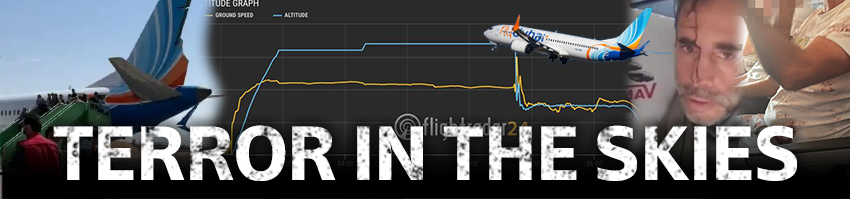
Indian flydubai captain Smit Machchhar has given his first detailed account of the seconds before his Omani co-pilot allegedly tried to crash a Tel Aviv-bound passenger jet, saying the man prayed in the cockpit for several minutes before suddenly attacking him from behind.
Speaking with Prime Minister Benjamin Netanyahu, Machchhar said co-pilot Hamam al-Hammami asked to pray shortly before the attack. The Sept. 30 incident aboard flydubai Flight FZ1073 from Dubai to Tel Aviv is being investigated by authorities in several countries. The United Arab Emirates has described it as an attempted terrorist attack, while investigators have so far found no established connection between al-Hammami and a terrorist organization.
Prime Minister Benjamin Netanyahu speaking with Indian flydubai captain Smit Machchhar
(Video: Prime Minister's Office)


“It was just a normal flight,” Machchhar told Netanyahu. “The co-pilot wanted to pray. A lot of the locals, they do pray, which is not out of the ordinary. While he was praying, out of respect, I was just looking at the front and not at the back — and suddenly after about four, five minutes, there was a big blow to the back of my head.”
Machchhar said his first thought was that the aircraft had suffered a catastrophic malfunction.
“But after that, the blows kept coming, one after the other. That's when I realized that it's not the aircraft — it's the other guy who was in the cockpit with me,” he said.
“I did try to stop him, but because of his initial blows, my vision was almost nothing. I was completely blurred out. And at that point, the next feeling that I had was that the aircraft was sharply going down.”
Flight-tracking data showed the Boeing 737 rapidly lost more than 16,000 feet during the incident. Al-Hammami is accused of attacking Machchhar with an emergency ax kept in the cockpit and attempting to seize control of the aircraft.
Machchhar, seriously wounded and struggling to see, said he tried to open the cockpit door to summon help.
“I did try and manage to open the [cockpit] door once, but I think he shut it back closed,” Machchhar said. “At this point, I remember I was lying down on the cockpit floor, and I felt the aircraft and the whooshing sound, and people screaming.”
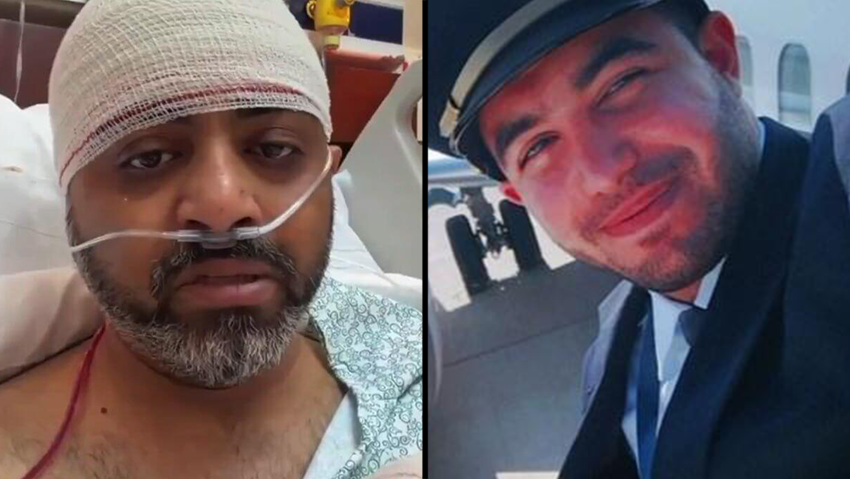
He said he realized he had one final chance to act.
“I had that one last fight left in me,” he said. “Call it personal or call it for people, but I did it; if I don't do it, I'm going to die. And that's when I pushed against everything. I gave everything that I had, and just went for the door and opened the door. And thankfully, people were waiting to pounce back, took over the control, and the rest is what you know, sir.”
Machchhar has separately said he knew as he lay wounded that the aircraft was plunging and that he could not allow the passengers to die. The veteran pilot has 17 years of flying experience, including 11 as a captain.
Netanyahu asked Machchhar how he had managed to open the cockpit door.
“The door, from the inside, has a twist-to-open mechanism,” Machchhar said. “From the outside, you can only open [the door] with a code. My colleagues from outside were trying to put in the code, but the guy was not allowing to open [using] the code.”
“The only way to open the door was to reach the knob, and like any other knob, just to twist it open, and it opens on its own,” he continued. “The issue was to reach to that point. Once I had my hands on the knob, I guess I twisted it and I opened it.”
Opening the door proved decisive. Israeli passengers rushed into the cockpit and subdued al-Hammami, while others helped stabilize the aircraft until off-duty pilots aboard the flight could take control. The jet diverted to Tabuk in northwestern Saudi Arabia, where it landed safely.
Machchhar was hospitalized with serious injuries and was later transferred to Abu Dhabi. In a separate video call with Indian Prime Minister Narendra Modi, he said he recited the Hanuman Chalisa, a Hindu devotional hymn associated with strength and courage, as he struggled to get off the cockpit floor.
Netanyahu, who has met several of the Israeli passengers credited with helping thwart the attack, told Machchhar that he wanted him honored at Israel’s annual Independence Day torch-lighting ceremony.
“It's our highest honor that we give on our Independence Day,” Netanyahu told him. “It's usually reserved for Israeli citizens, but I think here, in this case, all the citizens of Israel will embrace you. We hope to see you very soon in Israel.”
Netanyahu also said he would like Modi to participate in the ceremony. The proposal comes months before the event, and the composition of Israel’s government at the time remains uncertain.
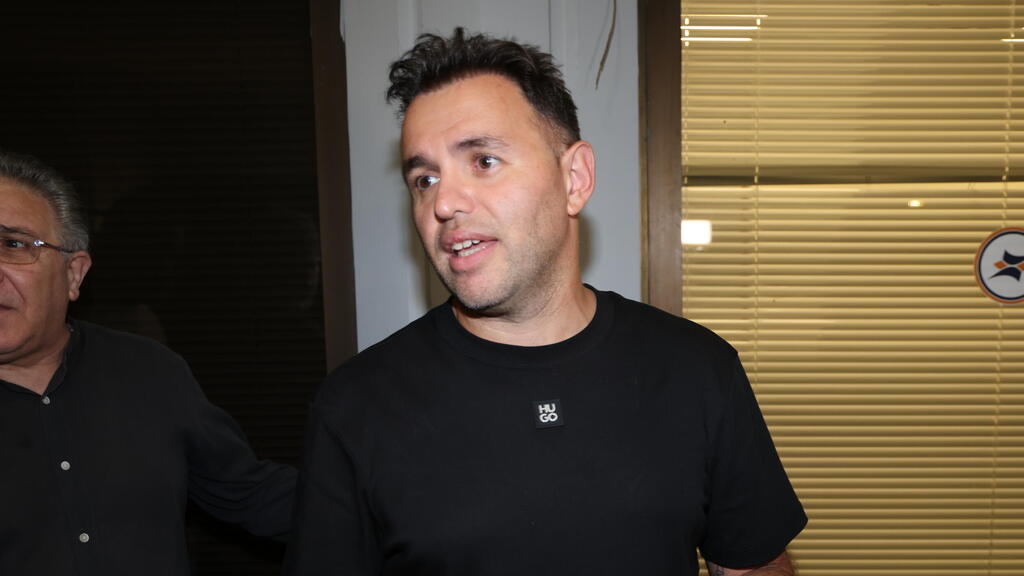
Dr. Shota Musaev
(Photo: Yariv Katz)
Meanwhile, Dr. Shota Musaev, an Israeli dentist who treated Machchhar after the cockpit attack, was the guest of honor Saturday evening at Simchat Torah celebrations organized by the Chabad Jewish outreach movement in the Nahalat Yehuda neighborhood of Rishon LeZion in central Israel.
“The greatest gift we received is that we are alive, and today I can dance with the Torah scroll,” Musayev said.