


U.S. President Donald Trump’s ceasefire with Iran in June was intended to lead to a broader agreement to end the war and curb Tehran’s nuclear program, during a negotiating period set at 60 days. But the deadline, which had been scheduled to expire Sunday, has effectively been abandoned, and the war has turned into a contest of willpower and economic endurance with no end in sight.
There have been no public reports of American strikes against Iranian targets since late July, . However, the effective collapse of the agreement underscores how much Trump is struggling to end the war he began in February alongside Israel, and how far he is from the ambitions of the June agreement, including the full reopening of the Strait of Hormuz.
Gallery
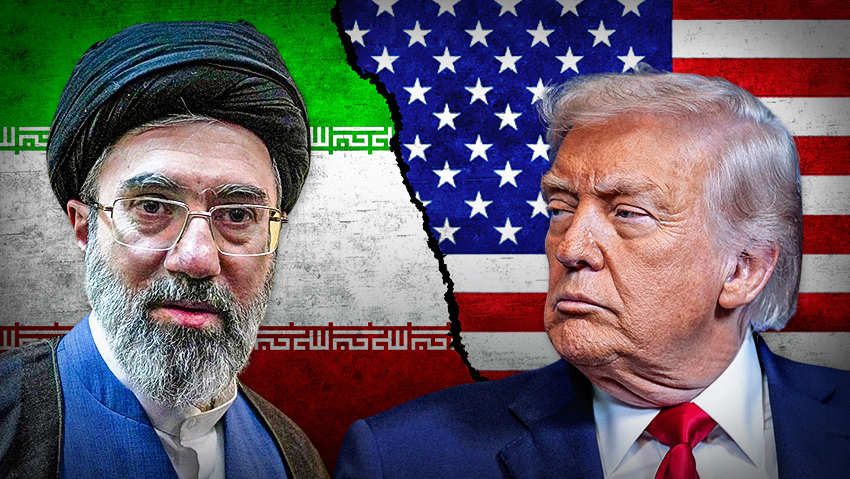
(Photos: Hamed Jafarnejad/ISNA/WANA (West Asia News Agency) via Reuters, Shutterstock, AP/Alex Brandon)
Officials inside the White House are well aware that they will pass the deadline without reaching an agreement, and that the confrontation has largely become an economic war, two American sources familiar with the details of the negotiations told The New York Times.
The current strategy bears a surprising resemblance to previous American efforts, which lasted for years, to isolate Iran in the hope of forcing it to abandon its nuclear ambitions. That policy produced mixed results, and some analysts doubt that even heavy economic pressure alone will force Iran to change course. In fact, this was the approach Trump tried to take during his first term. His treasury secretary, Scott Bessent, said last week that he was about to impose unprecedented financial sanctions.
The vague wording that led to the agreement’s collapse
The June memorandum of understanding was seen by many as a significant achievement for Iran, giving the regime badly needed sanctions relief while talks on difficult concessions, such as uranium enrichment, were deferred to a later stage. However, Iran’s leaders chose to escalate the situation again rather than consolidate the gains they had secured from the agreement, according to Nate Swanson, an Iran expert at the Atlantic Council, a Washington think tank.
Endless cycle of attacks and responses. American bombings in Iran


Ships were able to sail freely through the Strait of Hormuz before the war. Iran’s insistence that the wording on the issue in the memorandum of understanding remain vague gave it control over the shipping lane, leading to the agreement’s collapse. Iran began firing on ships sailing in lanes outside its territorial waters, and American forces responded with strikes in southern Iran, setting off a cycle of attacks and counterattacks across the Middle East.
Iran is now refusing to reopen the strait until the U.S. fulfills its ceasefire commitments, such as releasing frozen Iranian assets abroad, according to Ali Vaez, an Iran expert at the International Crisis Group. The Trump administration, by contrast, is demanding that Iran first end the naval blockade. “Neither side is really willing to complete the agreement. Both think that within days or weeks the other side will be more desperate for a deal, and that way they will be able to extract more from it,” Vaez said. “That is why we are once again trapped in this test of attrition.”
The reopening of the strait has gradually become Trump’s central focus in the confrontation, even though he originally declared that the war was intended to strengthen the Iranian people so they could topple the existing regime, severely damage its missile capabilities and prevent Tehran from obtaining nuclear weapons. There are very few indications that Iran and the U.S. have held in-depth discussions on Iran’s nuclear program since the June ceasefire, let alone formulated an agreement acceptable to both sides.
Iranian Foreign Minister Abbas Araghchi said over the weekend that Iran had not yet decided whether to resume talks with the U.S., but noted that the 60-day deadline was no longer relevant, given that the June agreement is effectively no longer in force. “We did not have a ceasefire that now needs to be extended,” Araghchi said. “We had an end to the war, which has now taken on a new status.”
'The chances were slim from the start'
Former U.S. officials who worked on Iran issues told The New York Times that the chances of a new nuclear agreement between the U.S. and Iran within 60 days were always slim, even though the framework included the possibility of an extension. A previous agreement, reached under former U.S. President Barack Obama, required about two years of complex talks. Trump withdrew from that agreement, known as the JCPOA, in 2018.
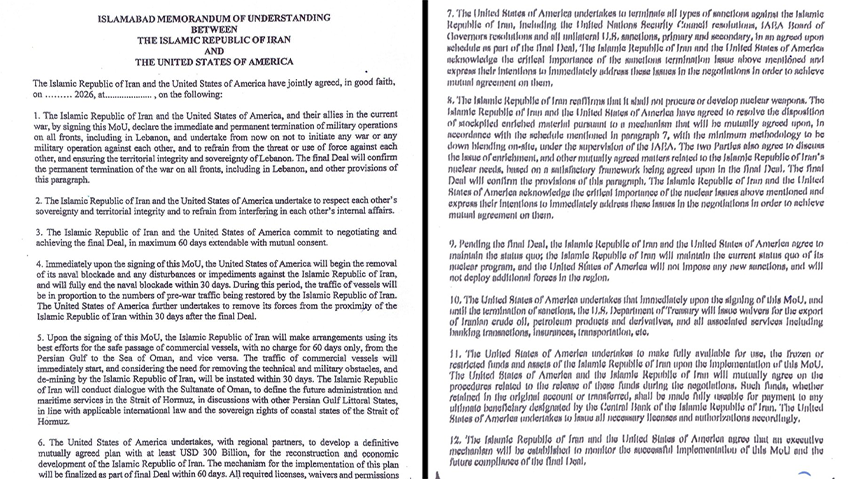
Memorandum of Understanding between Iran and the US
The Trump administration hoped the June agreement would at least lead to the opening of the Strait of Hormuz. But in order to close the deal, it relied on vague formulations that strengthened the validity of Iran’s claim to future control over shipping traffic in the strait, analysts said. “It was a flawed document, rushed out before it was ready,” Swanson said. “Beyond that, they did not solve the most urgent problem in the immediate term, which was the issue of the strait.”
Now, the U.S. and Iran appear to be bogged down in an open-ended struggle — neither all-out war nor defined peace. In an effort to force Iran to accept American terms, the Trump administration has restored sanctions on Iranian oil and reimposed the naval blockade. Iran’s collapsing economy, which led to mass protests that were brutally suppressed earlier this year, is a central consideration for the country’s decision-makers. But Swanson argues that the current deadlock is likely to push Iran toward escalation rather than reconciliation.
Trump’s declaration and Iran’s demand
While very little progress has been made on the commitments detailed in the agreement, Trump and his Iranian counterparts have continued to exchange threats. During an event in Garden City, New York, on Friday, Trump again appeared determined to change the narrative, threatening that “American ownership of the Strait of Hormuz” would soon be declared.
It was unclear how serious Trump’s declaration was. But such a move could include the deployment of ground forces and would almost certainly require a prolonged naval presence, steps that run counter to the “America First” values of Trump supporters who seek to end prolonged military conflicts overseas. Trump is also known for floating undeveloped foreign policy ideas to divert attention and criticism, as he did when he surprised the world last year by proposing that the U.S. take control of the Gaza Strip — an idea that never materialized.
The White House did not respond to questions about whether the administration had drawn up practical plans to seize control of the Strait of Hormuz. Trump’s aides also did not respond to questions about the approaching deadline.
Iranian army commander Amir Hatami responded Sunday to Trump’s statement and said: “The U.S. president says he wants to declare the Strait of Hormuz part of his country. After seeing the reactions, he announced that he was joking. The expulsion of the Americans has been implemented, and they are no longer permitted to enter the Persian Gulf, the Gulf of Oman or the Strait of Hormuz. Everyone should know that there is no way American bases can return to their previous state, and Iran will never allow it.”
Hatami also said: “The Strait of Hormuz is a divine gift to the Iranian people and will not return to its previous state. Any price we pay to preserve the Strait of Hormuz is worth it. We will defend it with all our strength.” Earlier, a quote attributed to him was also published, saying Iran is offering a $30,000 reward for the capture or killing of an American soldier.
Iranian Deputy Foreign Minister Kazem Gharibabadi wrote on social media: “Recognize reality once and for all. So far, you have suffered severe strategic defeats. The Strait of Hormuz was Iranian, is Iranian and will remain Iranian.”