

A South African traditional monarch from the Xhosa nation visited Israel this week at the invitation of the Foreign Ministry, in a rare outreach effort aimed at strengthening ties with tribal leaders in a country whose government has become one of Israel’s most vocal international critics.
King Buyelekhaya Zwelibanzi Dalindyebo of the AmaXhosa’s AmaThambo subgroup — part of an ethnic community of more than 9 million people, including more than 3 million AmaThambo — met with President Isaac Herzog and Foreign Minister Gideon Sa’ar during his visit.
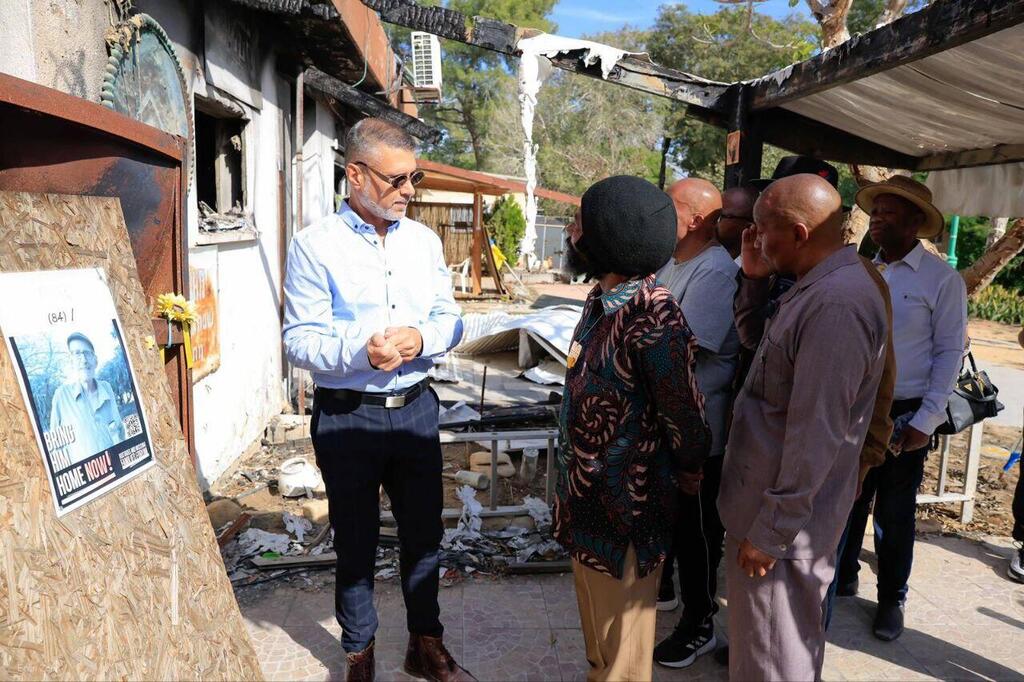
King Buyelekhaya Zwelibanzi Dalindyebo of the AmaXhosa condemns Hamas from southern Israel


South Africa, despite maintaining diplomatic relations with Israel, has taken a sharply adversarial stance toward Jerusalem and last year brought a case against Israel at the International Court of Justice, accusing it of war crimes in Gaza.
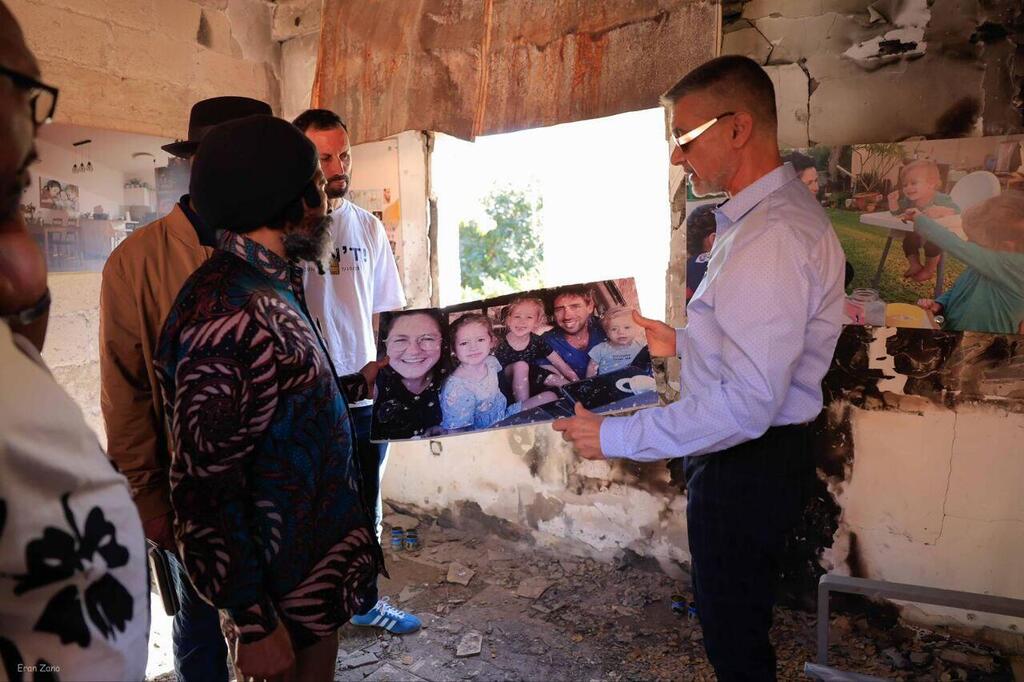
During the trip, the king toured Kibbutz Nir Oz and the Nova music festival site, met former hostages Aviva and Keith Siegel, and spoke with Rabbi Doron Perez, father of Capt. Daniel Perez, who was born in South Africa and was killed on Oct. 7. He also met officials involved in water, agriculture and health initiatives, including Sheba Medical Center director Prof. Yitzhak Kreiss and Innovation: Africa founder Sivan Yaari, whose organization deploys Israeli solar, water and agricultural technologies across the continent.
Gallery
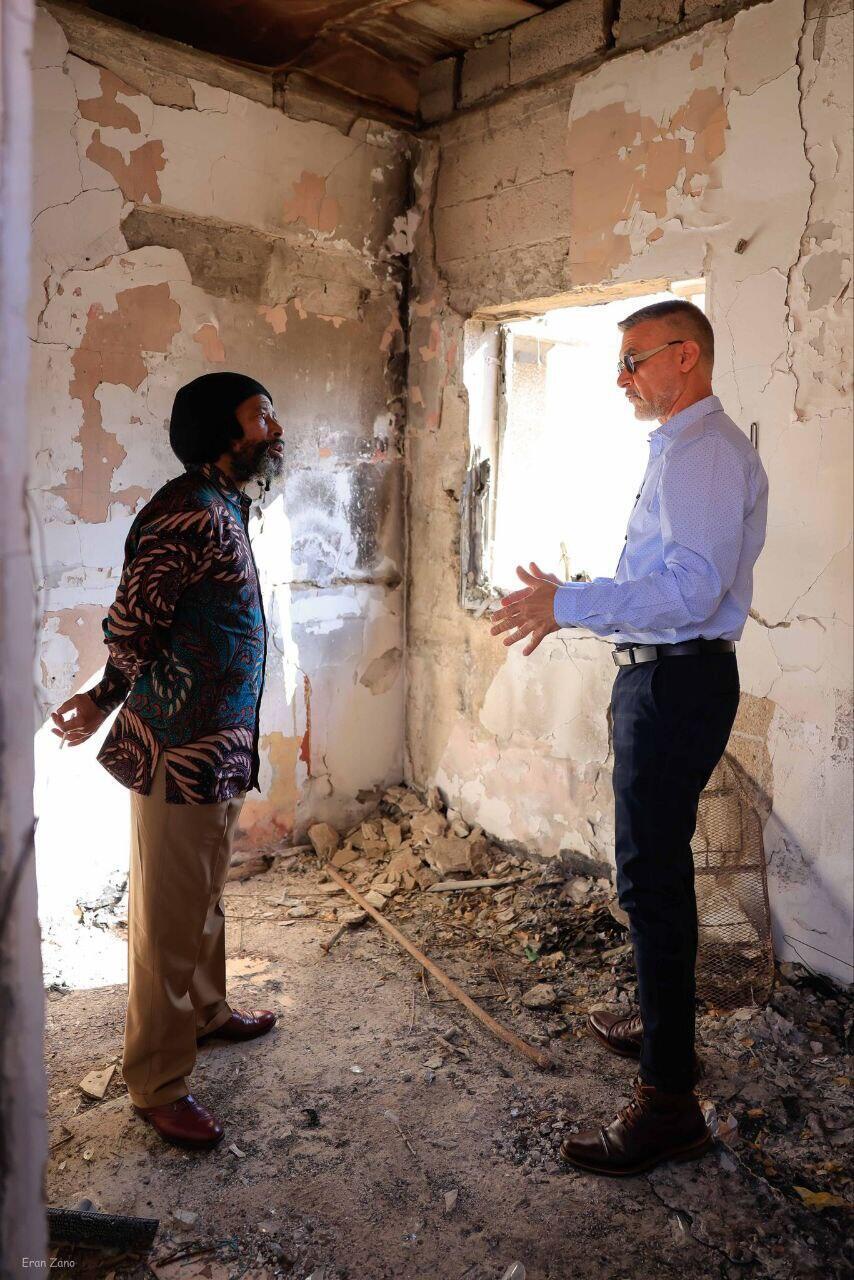
King Buyelekhaya Zwelibanzi Dalindyebo and Ambassador David Saranga tour Kibbutz Nir Oz
(Photo: Eran Zano)
(Photo: Eran Zano)
(Photo: Eran Zano)
At the Foreign Ministry, officials screened for the delegation a 47-minute compilation of Oct. 7 attack footage produced by the IDF. Israeli officials said members of the delegation, including the king, wept as they watched the raw documentation of killings and abuses carried out by Hamas.
David Saranga, the Israeli ambassador who organized and accompanied the visit, said the king had not been exposed to the events of Oct. 7 through South African media, which he said focuses heavily on the fighting in Gaza while giving little attention to the initial Hamas attack or the hostage issue. Saranga said the firsthand meetings “presented a reality he did not know,” prompting the king to speak publicly about what he saw.
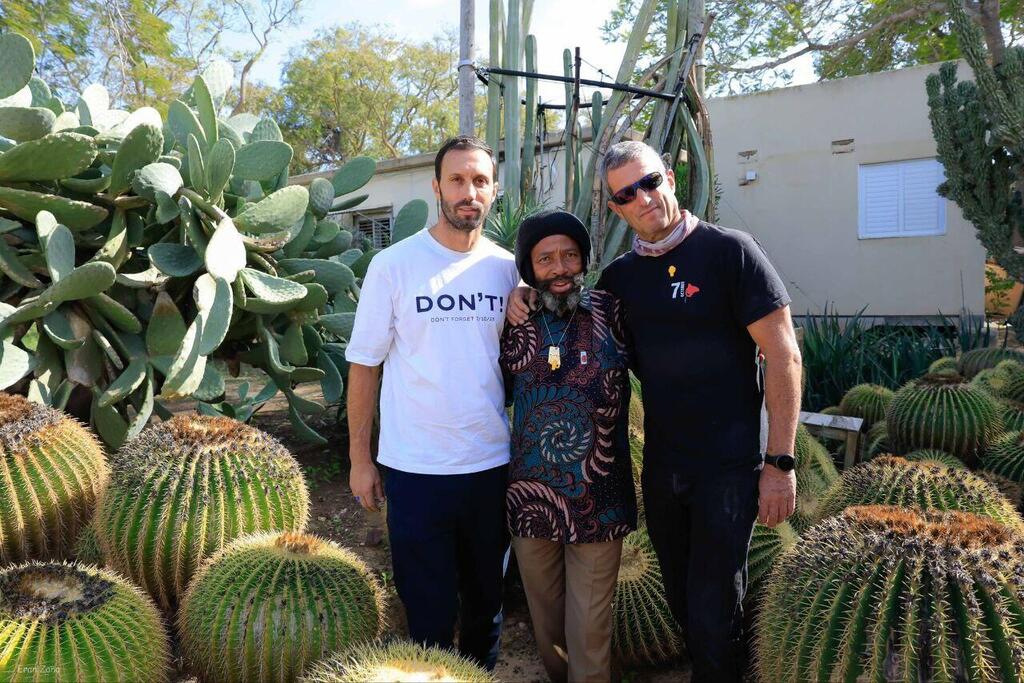
Buyelekhaya Zwelibanzi Dalindyebo and family of slain hostage Oded Lifshitz
(Photo: Eran Zano)
In a video recorded in Nir Oz and circulated widely in South Africa, the king stood outside the burned home of the Bibas family and condemned Hamas. He also criticized South Africa’s government for petitioning the Hague court to indict Prime Minister Benjamin Netanyahu. “In war, you are not allowed to kill children, you are not allowed to kill women, you are not allowed to attack civilians that are simply unarmed, defenseless,” he said, adding that if such an attack happened to his own people, “a cruel man like myself would wipe out everything in Gaza.” He called Hamas "criminals who must be brought to justice."
Upon returning to Johannesburg, the king held a news conference in which he defended his visit and attacked critics in South Africa’s government and media.
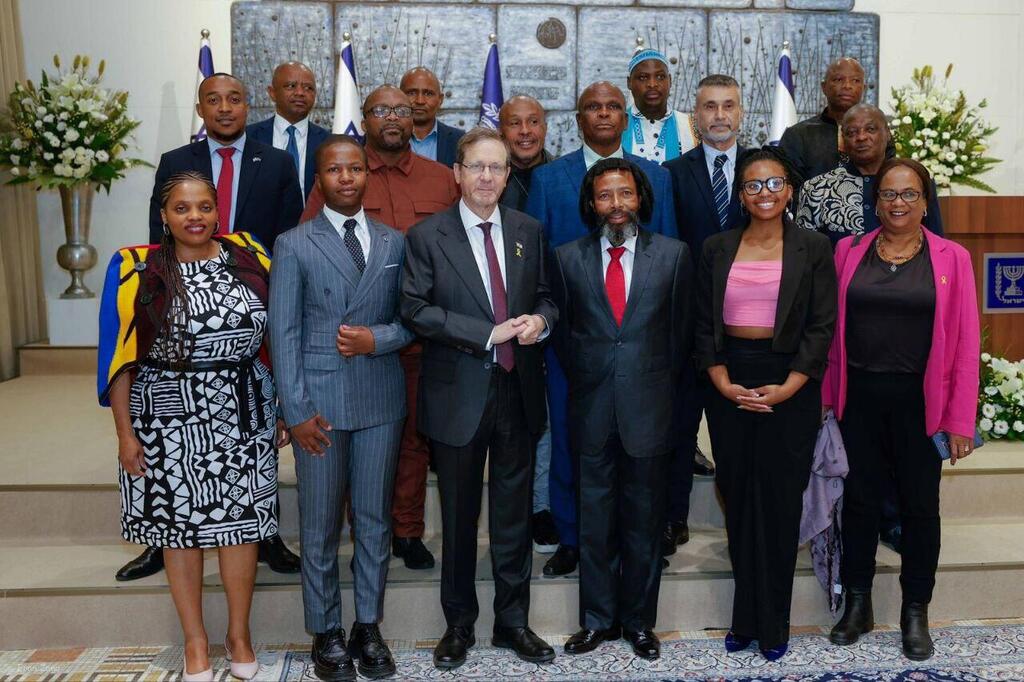
King Dalindyebo and his entourage pictured with President Isaac Herzog
(Photo: Eran Zano)
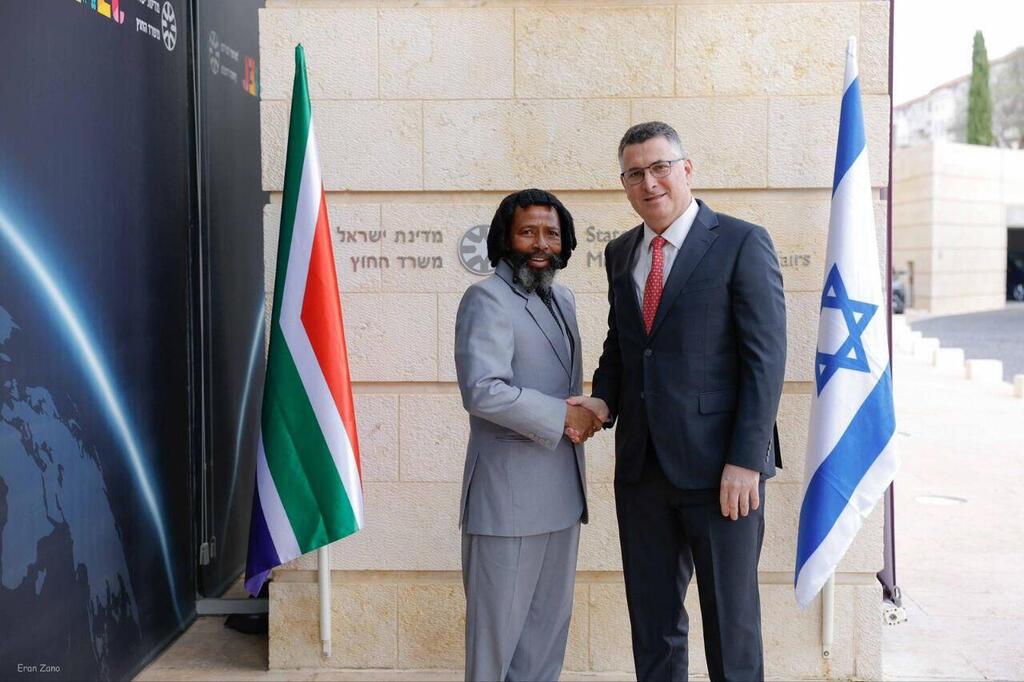
King Dalindyebo and Foreign Minister Gideon Sa'ar
(Photo: Eran Zano)
Israel has intensified outreach to traditional leaders in South Africa, who hold significant social and political influence and whose endorsement is actively sought by political parties. The initiative, led by Saranga and the embassy in Pretoria, is partly intended to bypass the hostility of the ruling African National Congress and establish direct dialogue with broader segments of the South African public.
Israeli officials say that despite the government’s stance, public sentiment in South Africa — a majority Christian country — is more favorable to Israel. A U.S. survey published in May placed South Africa among the 10 countries with the most positive public attitudes toward Israel.
The relationship between Israel and the king began in August, when the Foreign Ministry’s international aid agency, MASHAV, provided humanitarian assistance after deadly floods in the Eastern Cape, where the king resides. Despite heavy political pressure not to accept Israeli aid, the king met Israeli representatives and publicly thanked Israel, criticizing his own government for neglecting its citizens while Israel offered support.