

In a low-key ceremonial handover held this week on the production line at an Elbit Systems plant in Yokneam, the IDF Artillery Corps marked a milestone with the delivery of its first domestically produced wheeled self-propelled howitzer.
The Israeli defense contractor formally transferred the newly developed system, known in Hebrew as Ro’em (Thunderous) and in English as the SIGMA 155, to the army’s chief artillery officer, Brig. Gen. Ehud Bibi. The 155mm howitzer rolled out of the northern industrial zone onto nearby Highway 6 and made its way south for induction and training at the Tze’elim base in the Negev Desert.
The Israeli-made SIGMA 155mm self-propelled howitzer in action


The delivery comes four decades after the IDF first absorbed U.S.-made M109 Paladin self-propelled artillery systems and after more than a decade of attempts, some unsuccessful and controversial, to find a replacement for the aging platforms, including options sourced abroad.
Elbit ultimately completed an ambitious project to develop a fully Israeli, wheeled artillery system featuring automatic shell loading, a reduced crew of three soldiers instead of seven, firing ranges of up to 40 kilometers (25 miles) and advanced command-and-control technology.
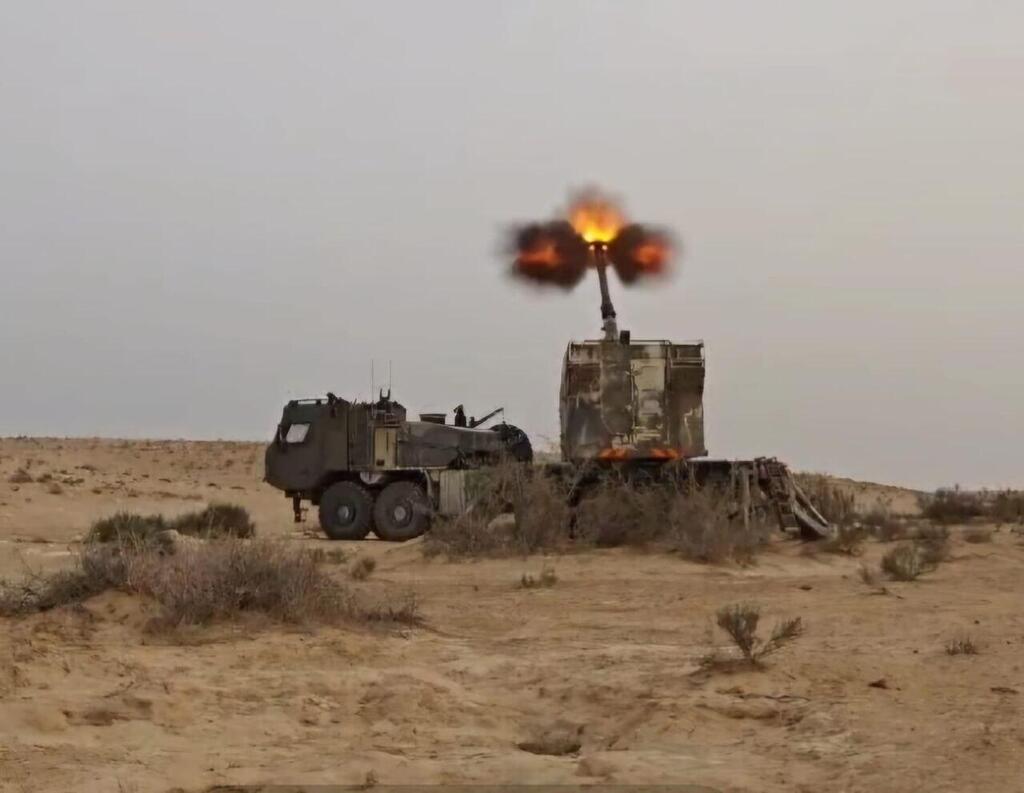
Elbit began developing the howitzer from scratch for the IDF in 2019. The project faced repeated technical challenges, dozens of live-fire tests and extensive customization to meet operational requirements, including a firing rate of eight shells per minute and the ability to conduct synchronized, time-on-target strikes against multiple objectives across a wide area in coordination with other SIGMA 155 units.
The prolonged war that began on Oct. 7 caused additional delays to a program that had reached its final stages roughly three years earlier. The military redirected personnel and resources to combat operations, while key components failed to arrive from overseas, largely due to arms embargoes imposed by several European countries.
Those obstacles have now been resolved. In the coming days, a lieutenant colonel overseeing the Artillery Corps project is expected to conduct the first official IDF live-fire exercise with the wheeled howitzer.
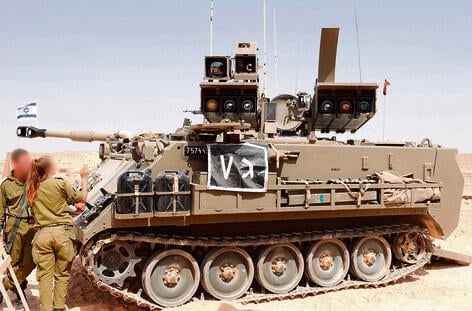
US-made M109 Paladin self-propelled artillery systems in IDF service
(Photo: Israel Yosef)
One of the system’s main advantages is its mobility. Unlike tracked artillery, the wheeled SIGMA 155 can move more rapidly between firing positions, including across difficult terrain, offering a level of operational flexibility for ground-based fire support not previously available to Israeli forces.
The initial test firing will take place at the Tze’elim training range as part of the system’s induction program. It marks the introduction of a large new ground platform not seen in the army since the first Merkava tanks entered service in the early 1980s.
First operational battalion in the fall
As part of the induction process the new howitzer will undergo in the coming weeks, it will conduct live-fire drills, be fitted with IDF–specific components and pass a series of thorough inspections by the Technology and Maintenance Corps. At the same time, the first crew slated to receive the system in the spring will begin training with it, ahead of the conversion of the first standing battalion. The unit is expected to be the 282nd Fire Brigade's 405th Battalion.
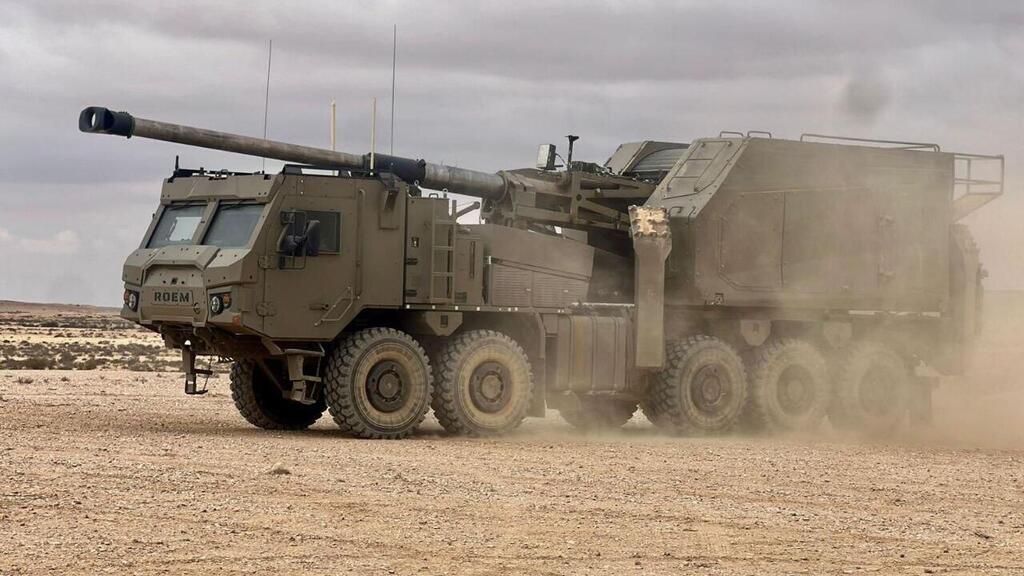
The Israeli-made SIGMA 155mm self-propelled howitzer
Meanwhile, production of additional howitzers at the Yokneam plant is continuing without interruption, with further systems to be delivered to the IDF gradually starting in early summer. The first SIGMA 155 battalion is expected to become operational by the coming fall. Artillery Corps officials estimate that a first artillery formation based on the SIGMA 155 will be operational within three years, and that by the end of the decade, and possibly earlier, all regular IDF artillery battalions will be equipped with the new Israeli-made howitzer.
Existing self-propelled howitzers, in their relatively newer versions, will meanwhile be transferred to reserve artillery units. Their current guns will not be sold or scrapped, a lesson drawn from the scale of the ground forces following the failures of Oct. 7, despite the fact that the IDF had considered doing so before the war. They will likely be used for spare parts, live-fire targets or exceptional emergency use.
The IDF plans to carry out the first operational firing with the SIGMA 155 delivered this week within the first two months of its full integration into the military. The operational arena has not yet been determined, but Lebanon is considered the most likely, depending on operational needs. Gaza could also be relevant.
Farewell to the loader profession
The fact that the new howitzer features automatic rather than manual loading will spare many back injuries from one of the oldest roles among artillery soldiers — the loader, accustomed to lifting shells weighing dozens of kilograms.
The Israeli-made SIGMA 155mm self-propelled howitzer
(Video: Elbit Systems)
Soldiers will still need to preload the “belly” of each gun with dozens of shells ahead of a mission, but they will be able to use cranes or lifting systems to do so. At a later stage, a loading system similar to that used for Iron Dome interceptor missile racks will be integrated, lifting shells from a truck and connecting a “plug-and-play” magazine to the gun without soldiers making physical contact, and at a speed that will increase operational flexibility.
“Even though we were full partners in the project at Elbit from day one and played a central role in defining and designing the gun, it will continue to evolve and improve as it is fielded,” an Artillery Corps officer said. “Each subsequent battalion will receive a more advanced platform, and so on. We will improve accuracy and increase the rate of fire. This is major news for the maneuvering force.”
In recent years, the Artillery Corps has suffered from a severe shortage of combat soldiers and specialists in its reserve battalions, and the efficiency gains from transitioning to the SIGMA 155 are expected to help close that gap. The manpower required to operate the new system will be down to just three crew members, rather than seven as in the past: a mission commander, a gunner and a driver. The fact that loaders will no longer be practically required could allow all SIGMA 155 battalions to be fully open to female combat soldiers. Today, only some artillery battalions are mixed-gender, but the new howitzer would remove any limitation on recruiting only or primarily women.
During the prolonged war, the Artillery Corps has operated all of its platforms across all theaters, from classified ground-launched missiles to the most precise and heaviest rockets, as well as Skylark drones, which are also set to become more lethal with missiles launched from the aircraft. Still, the corps’ major test has yet to come, despite the multi-front fighting: the IDF has not yet truly maneuvered in the war, meaning the deployment of divisions deep into enemy territory in its primary theater, Lebanon. As a result, the test of artillery support in core combat scenarios in the northern arena has not yet arrived.
“The war helped us sharpen the operational concepts for employing the SIGMA 155 howitzers in a future maneuver, when it comes, making it more lethal and more powerful through their use,” the IDF said.