

The uproar in the United States continued Saturday evening over President Donald Trump’s extraordinary decision to bar reporters from CNN, MS NOW — formerly MSNBC — and Politico from entering the White House, saying he had had enough of the “fake news” they allegedly spread about him. Journalists from all three outlets said that when they tried to enter the complex Saturday, their credentials were confiscated, while CNN and MS NOW correspondents were forced to broadcast from a sidewalk on a nearby street.
Trump’s ban marks the latest escalation in his long-running battle with a range of U.S. media organizations since returning to the White House last year. Although he also attacked the mainstream media throughout his first term — and helped turn the phrase “fake news” into a fixture of political discourse — he generally stopped short of measures this sweeping.
Gallery
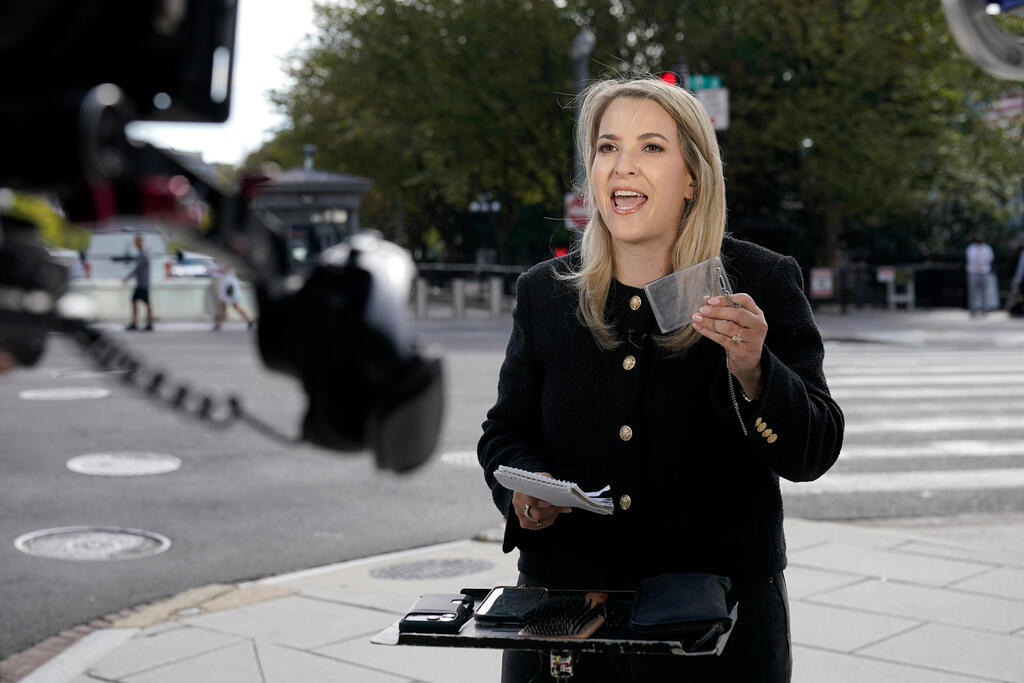
CNN reporter Betsy Klein broadcasts from the street near the White House, showing the plastic cover - which contained her press pass
(Photo: Jose Luis Magana/AP)
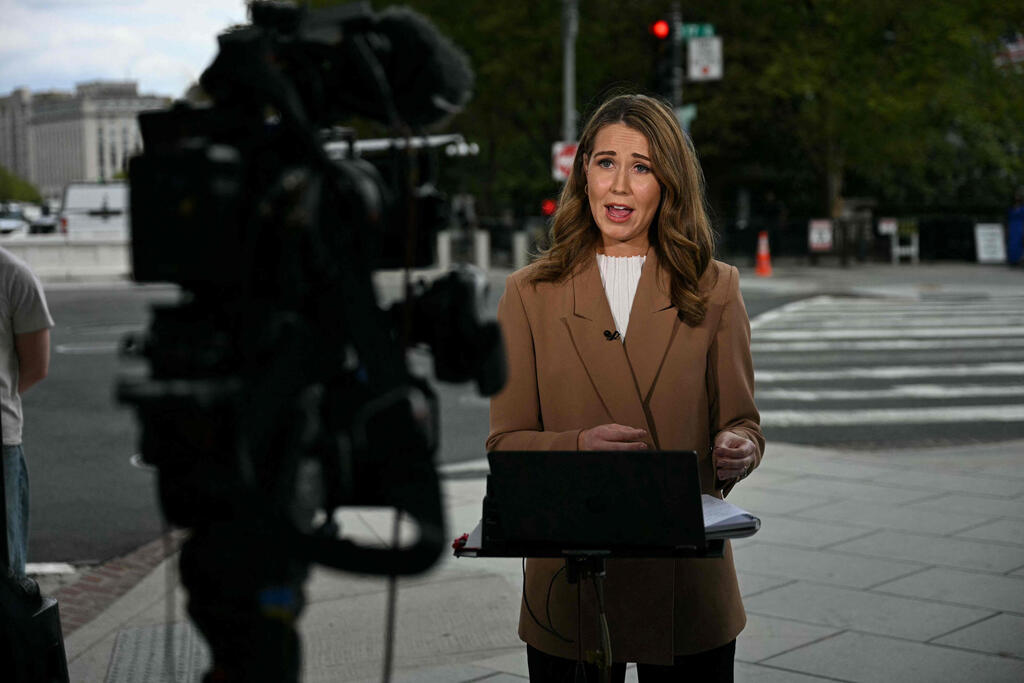
CNN reporter Julia Benbrook also broadcast from the street: 'We'll do our job from anywhere'
(Photo: Jim WATSON / AFP)
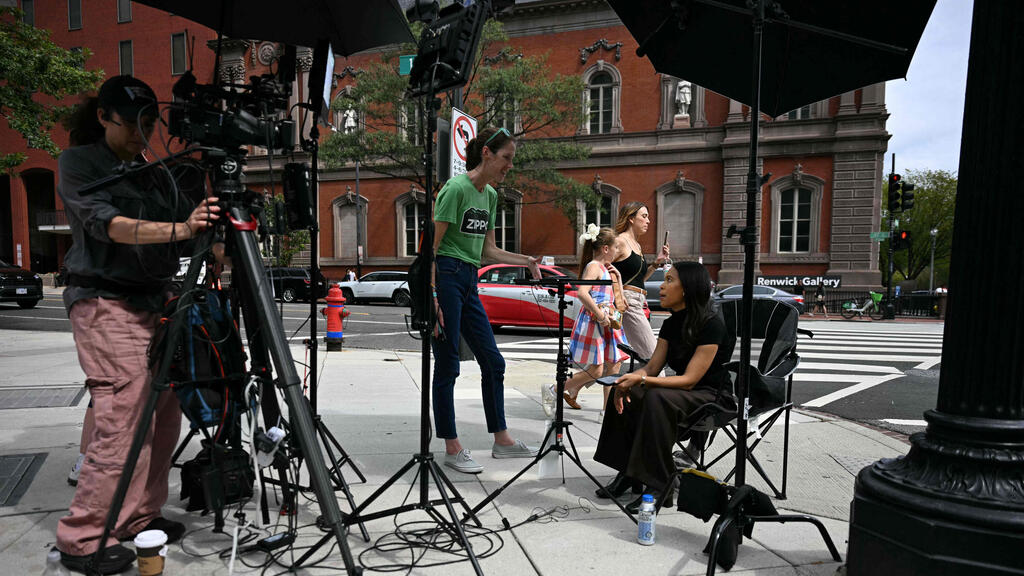
MS NOW White House Correspondent Akayla Gardner reports from the street after the US President Trump bars her from White House
(Photo: Jim Watson / AFP)
During his second term, however, he has intensified his campaign against various news organizations. He has filed multiple lawsuits against newspapers and television networks over reports he objected to, including a $10 billion suit against The Wall Street Journal over its report that he once sent a birthday greeting featuring a drawing of a naked woman to convicted sex offender Jeffrey Epstein. He has repeatedly urged the Federal Communications Commission to punish networks over content he disliked, sought to have Jimmy Kimmel’s late-night show canceled and frequently insulted journalists — particularly female reporters — when they asked him difficult questions.
Trump had already imposed a partial boycott on a major news organization last year, barring Associated Press reporters from joining the regular press pool that accompanies him in the Oval Office, aboard Air Force One and at other events. The move came in retaliation for the AP’s decision not to adopt his preferred name, “Gulf of America,” for the Gulf of Mexico.
The AP challenged the restriction in court, in a case that remains ongoing, but until now Trump had stopped short of completely banning the agency from the White House — the step he has now taken against CNN, MS NOW and Politico. It remains unclear why he singled out those three outlets while continuing to label many others “fake news,” including The New York Times and The Washington Post, which were not included in the ban.
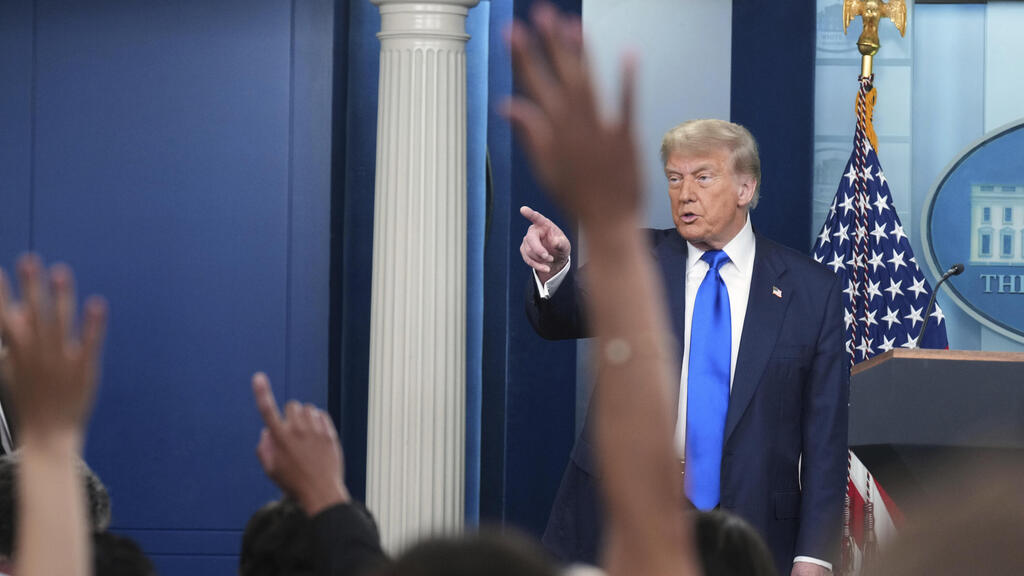
President Donald Trump answers questions from the White House press corp
(Photo: Jacquelyn Martin/AP)
“I am proud to announce that, effective immediately, Fake News CNN, MS NOW, and Politico are banned from the White House as a result of their constant false reporting,” Trump wrote Friday. He added that “media outlets shouldn’t be able to constantly write or report fiction and lies when they’re covering the President of the United States, the Trump Administration, or the United States of America.”
At an Oval Office event Friday, Trump added: “I don’t think somebody should be allowed to come in and write false stories, fake news, and that’s why they have no credibility. During the election, 96% of my coverage was negative, and yet I won, because they have no credibility. If they want to write it, let them write it — but I don’t have to let them into the White House. It’s sick.”
Politico reported that the move caught many senior White House officials by surprise and noted that Trump announced it while his chief of staff, Susie Wiles, was away from Washington.
It was not initially clear Friday night whether the ban had actually taken effect. But when journalists from the three outlets tried to enter the White House Saturday morning, they were told their credentials were no longer valid and the passes were taken from them.
MS NOW correspondent Akayla Gardner said that at one entrance, a security officer asked her to hand over her badge. “He said it had been disabled. I asked why I couldn’t go inside, and he said it was above him,” she said while broadcasting from a sidewalk nearby.
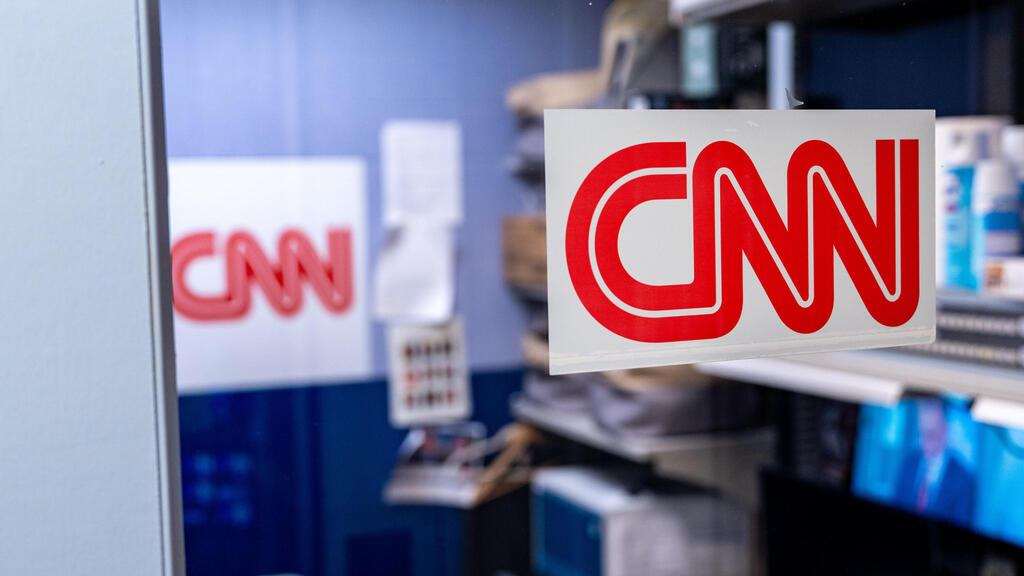
CNN's White House office is now empty
(Photo: Alex Brandon/AP)
CNN senior White House reporter Betsy Klein described a similar experience. She said that when she asked for her badge back, the security officer returned only the plastic sleeve it had originally come in. She vowed to keep reporting on the White House.
“We’re going to keep doing our jobs, whether that’s inside the White House complex or right here at the intersection nearby. We can do our jobs anywhere,” she said.
The three media organizations signaled that they intend to take legal action against the ban, arguing that it violates the First Amendment, which protects freedom of speech and freedom of the press.
“We will vigorously defend our First Amendment rights,” Politico’s global editor in chief Jonathan Greenberger said.
CNN called the ban an “illegal assault” on press freedom and said the network “will not be deterred from its mission to scrutinize the administration and other public institutions and hold them accountable.”
MS NOW said it “intends to take any and all steps necessary to defend our First Amendment rights and the essential role of independent journalism in our democracy.”
A range of U.S. journalists and news organizations also issued statements expressing solidarity with the barred outlets.
Among the most notable came from Jacqui Heinrich, a correspondent for conservative Fox News — Trump’s favored network — who also serves as president of the White House Correspondents’ Association.
“The Constitution protects the freedom of the press from government interference,” she said. “That protection does not depend on whether the president likes a news organization’s coverage, agrees with its reporting, or approves of the questions its journalists ask.”
“This is about more than the rights of journalists. It is about the right of the American people to receive a full and independent account of the activities, policies and decisions of whoever occupies the nation’s highest office.”
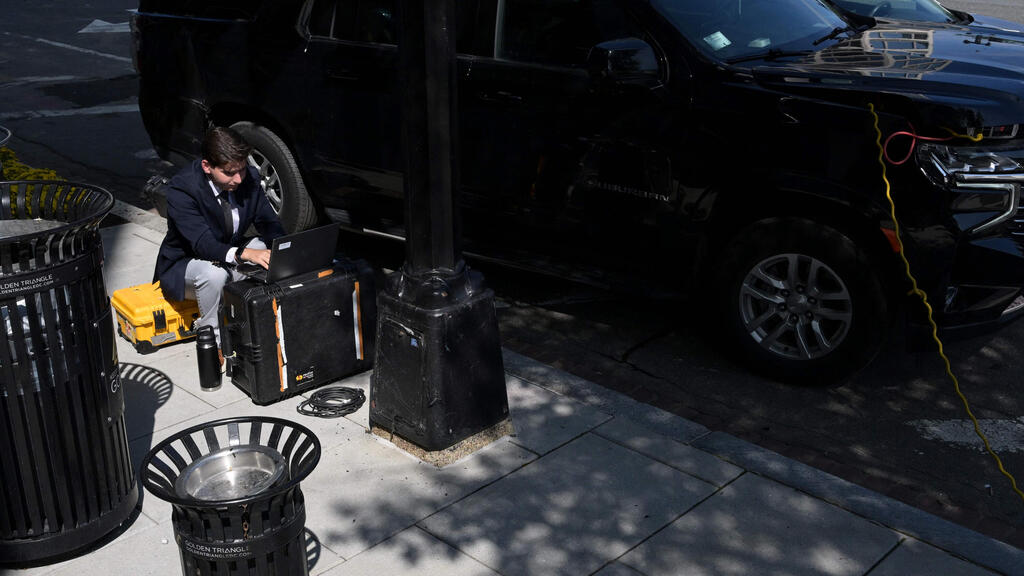
CNN producer with equipment on the sidewalk after Trump ban
(Photo: Oliver Contreras / AFP)
Heinrich said the White House Correspondents’ Association “stands in defense of our colleagues” at the three organizations, who she said were being singled out “for doing their jobs.”
Amy Kristin Sanders, a Penn State University professor and expert in media law, told the Associated Press that the Trump administration “is not interested in operating under the traditional First Amendment rules and norms.”
She warned that the president’s actions could have consequences for press freedom beyond the United States.
“The Trump administration’s efforts to undermine press freedom and challenge the legitimacy of independent journalism go far beyond those of any other modern American president,” she said. “It would not be an exaggeration to say that his hostile actions toward media organizations and individual journalists are chilling free expression around the world.”
CNN media correspondent Brian Stelter also called the move “a direct threat to press freedom in the United States.”
“This is much bigger than CNN,” he said. “This is a test of free speech in America.”