


While most of the IDF’s attention is focused on Iran and Lebanon, significant forces are still operating in the Gaza Strip against attempts by Hamas to regroup. The military is also preparing for the possibility that the terrorist group could join the war at a higher intensity, as Hezbollah has done.
Gaza, which was the main theater for more than two years of fighting, has effectively become the third most important front, after Iran and Lebanon. But the mission there has not changed, and the enemy remains dangerous.
Compared with the early days of the campaign against Iran, the military has identified a slight deterioration in the situation in Gaza. Hamas continues to pay salaries to its operatives and commanders, who in turn want to “justify” the wages they receive. In addition, Hamas — which for years was backed by Iran — now needs to demonstrate its commitment to the Shiite axis, a dynamic that could lead to escalation in the enclave.
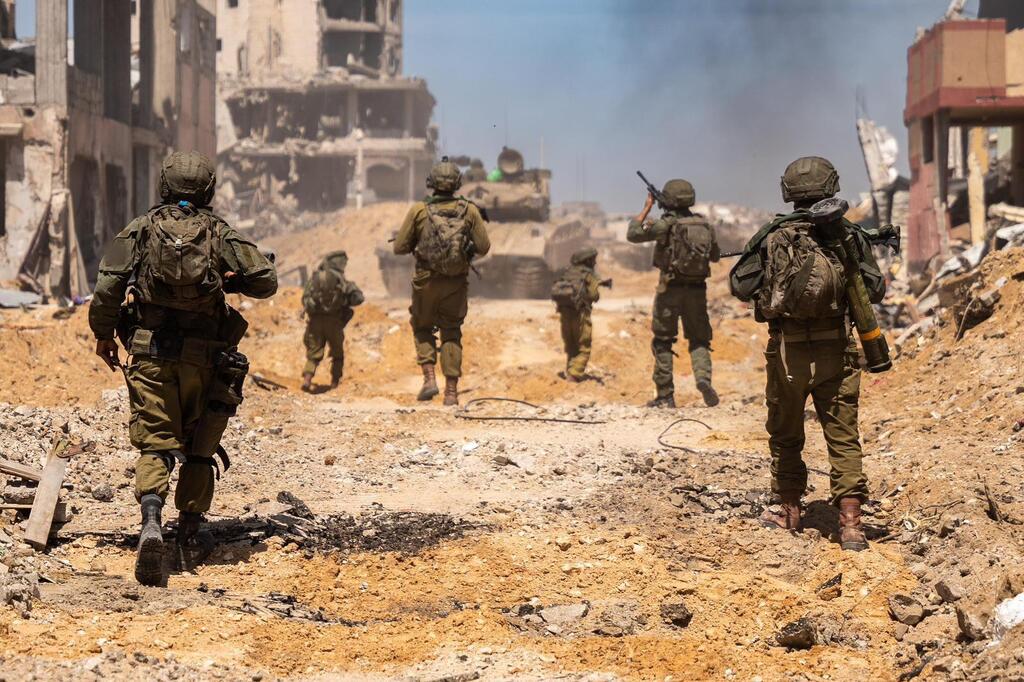
For now, the military’s focus and resources have been diverted elsewhere, meaning the forces that remain in Gaza must find creative ways to deal with the many operational challenges. Among other tasks, troops are still required to locate and destroy tunnels and carry out defensive missions along the “yellow line,” the perimeter where Israeli forces operate, against Hamas terrorists who occasionally attempt attacks.
Just in the past week, for example, Golani Brigade troops operating in southern Gaza encountered terrorists several times, killing eight, including members of Hamas’ elite Nukhba force.
In practice, although the objective in Gaza remains the same, the means used to achieve it have changed. In the past, Israeli Air Force fighter jets — along with helicopters and drones — provided extensive support to infantry units fighting in the enclave. Now, other solutions are required, including deception and tactical ruses aimed at Hamas terrorists, in order to maintain and strengthen Israel’s hold on the ground.
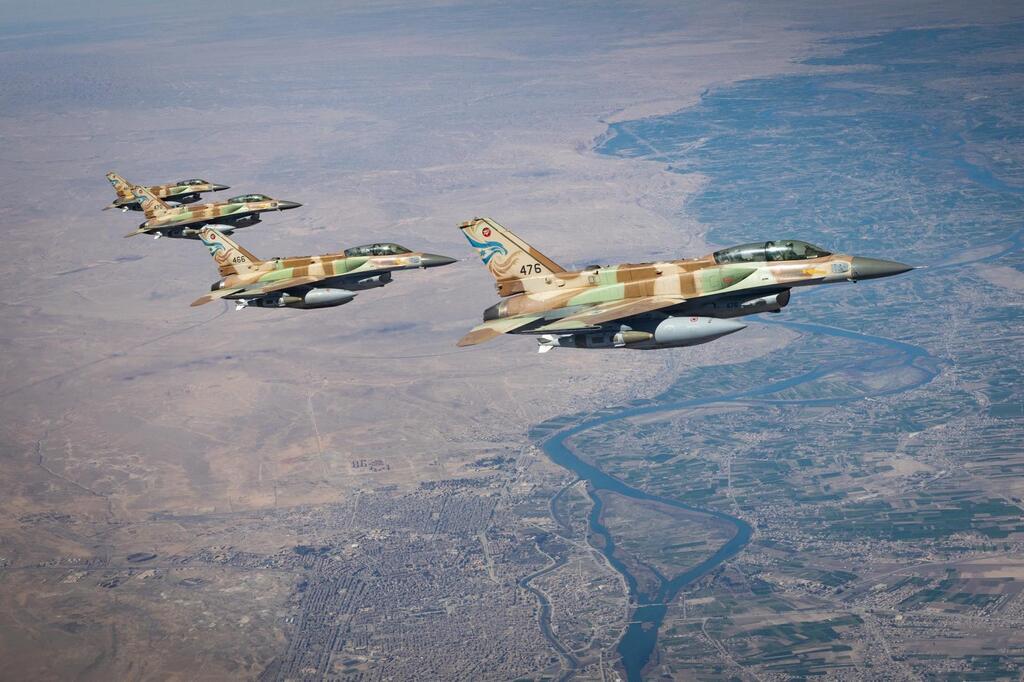
Israeli Air Force fighter jets en route to strike Iran
(Photo: IDF)
“We are facing terrorists with a murderous ideology," a military official told ynet. "They will always look for weak points. You have to understand that on the other side are people who want to harm us.”
Even so, between strikes in distant Iran and operations in Lebanon, the Israeli Air Force can still provide support in Gaza. Although resources have been reprioritized and the amount of munitions allocated to the enclave has been reduced, the ability to deliver operational responses has not been compromised.
Forces in Gaza are compensating by employing deception and other tactics against Hamas — some drawn from older methods of warfare and others using advanced technological techniques — to prevent the enemy from understanding what is happening. Hamas has struggled to decipher how Israeli operations are being carried out in Gaza.
The confusion among Hamas operatives stems from those deceptive actions by Israeli forces on the ground, which have managed to make the most of the resources available.
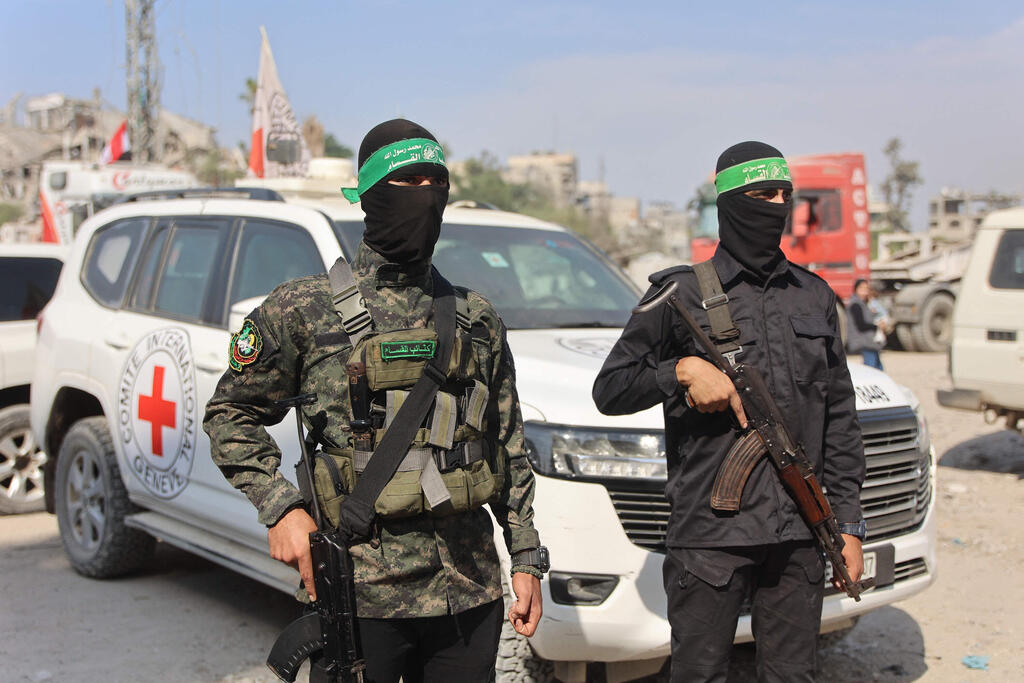
Hamas terrorists in Gaza
(Photo: Omar AL-QATTAA / AFP)
Meanwhile, the military is maintaining a high level of alert in its defensive positions, based on the assessment that Hamas will not remain on the sidelines and will continue attempting attacks against Israeli troops along the yellow line.
According to military assessments, Hamas is preparing, searching for vulnerabilities and planning future attacks, while growing frustrated by the strong defensive posture of Israeli positions in Gaza. At the same time, the military acknowledges that the outposts are not impenetrable and continues to strengthen defenses through improvements to positions, ambushes and patrols.
“The work isn’t finished, but the direction is good,” the military official said. “It’s a privilege to take part in this. Where there were motorcycles on Oct. 7, the fields are now blooming. We’re beginning to see the results of very, very hard work, despite the very heavy price we paid.”
“They used to say that when our children grow up, there won’t be an army. So yes, there will still be an army — but it seems that finally we may give our children a better world. A better Middle East.”
Tehran cuts contact with Hamas as group tightens grip on Gaza
The Saudi newspaper Asharq Al-Awsat reported earlier this week, citing Palestinian sources, that an unusual breakdown in communication has occurred between Hamas leadership and officials in Iran’s Islamic Revolutionary Guard Corps responsible for the Palestinian portfolio.
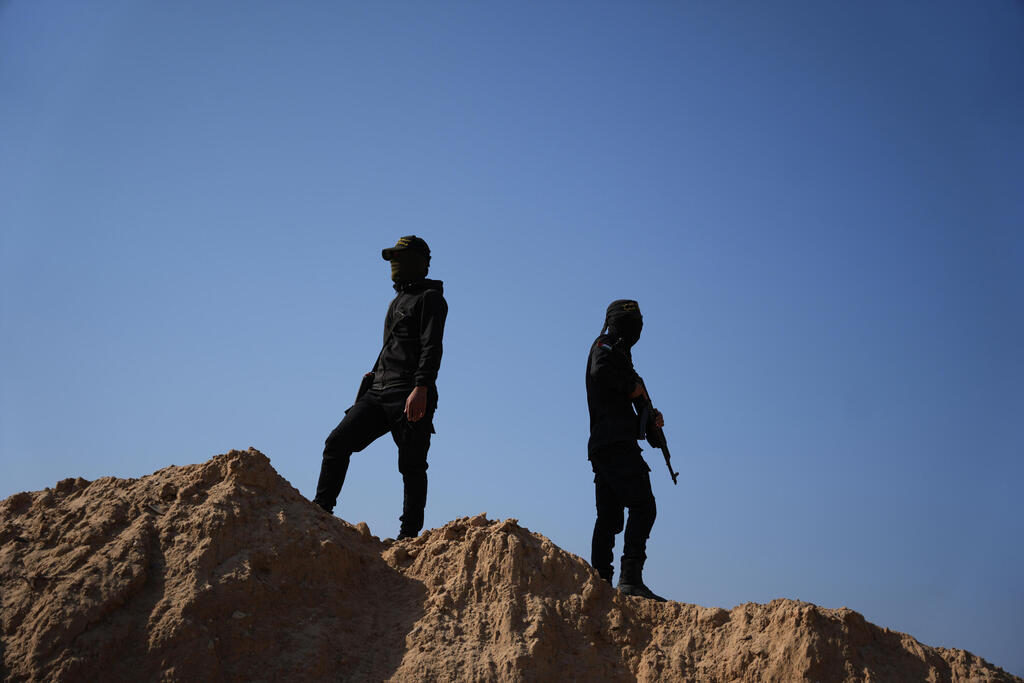
Palestinian Islamic Jihad terrorists in Gaza
(Photo: AP Photo/Abdel Kareem Hana)
According to the report, contact with senior IRGC officials — including figures in the Quds Force and other units that maintain regular ties with Palestinian factions such as Hamas and Palestinian Islamic Jihad — was cut off on Saturday when the war began. The disruption is being felt both by Hamas leaders in Gaza and by officials outside the enclave.
The sources said it is currently unclear whether the Iranian officials with whom contact was lost were killed in strikes or whether the silence is the result of strict security protocols. In the past — including during the 12-day war in June — messages were transmitted through encrypted electronic channels and other means.
“Since the outbreak of the current war, no messages have been received at all,” the sources told the Saudi newspaper.
The report said IRGC officials responsible for the Palestinian file mainly oversee financial and military assistance to Palestinian factions and maintain ongoing coordination with senior political and military leaders.
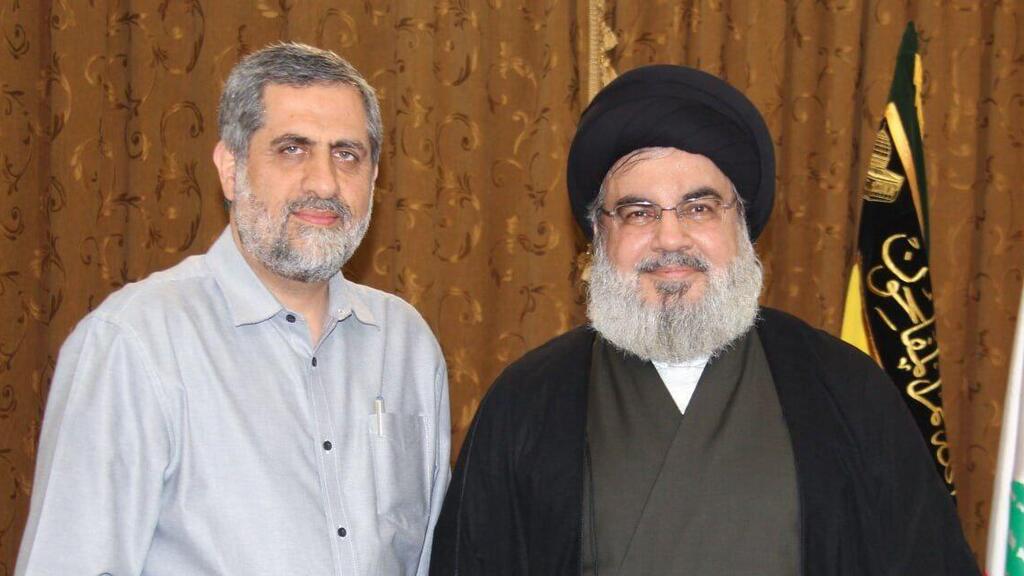
Palestine Corps in the IRGC’s Quds Force Commander Mohammad Saeed Izadi and Hezbollah leader Hassan Nasrallah
(Photo: Mehr News)
After the killing of Mohammad Saeed Izadi, also known as “Haj Ramadan,” the commander of the Palestine Corps in the IRGC’s Quds Force during the 12-day war, a successor was appointed and two deputies were assigned as backups. However, according to the report, none of them have made contact with the factions since the current war began.
A security official said that since the start of the ceasefire, Hamas has been systematically working to rebuild its capabilities and consolidate its rule in Gaza.
“About 13 municipalities are already functioning, most government offices have resumed operations and Hamas personnel are visibly present on the ground,” the official said.
According to the official, Hamas has established a regional policing system to enforce order, is collecting taxes from merchants and is effectively restoring its governing mechanisms.
“At the same time, Hamas continues to operate its military and civilian branches,” the official said. “There is no doubt that the ceasefire is giving it room to maneuver — and that has a broader context, including the regional arena and its ties to the Iranian axis.”