

Hamas on Saturday called on Iran to stop attacking Gulf states, even as it expressed support for Tehran’s right to respond to U.S. and Israeli strikes.
In a statement, the terrorist group urged Iran not to target neighboring countries.
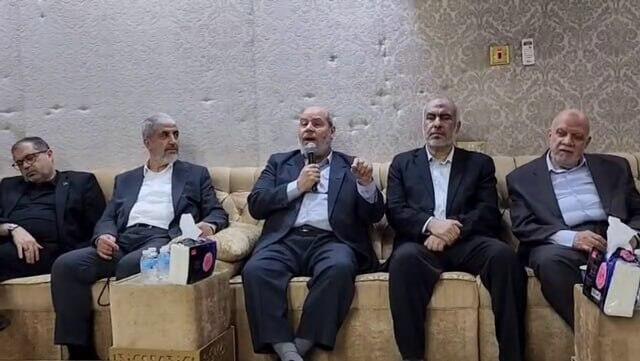
“While affirming the Islamic Republic’s right to respond to this aggression by all means available in accordance with international norms and law, Hamas calls on Iran not to harm neighboring states,” the organization said.
Hamas also urged the international community to work toward an immediate end to the war in Iran, which has been ongoing for two weeks.
Qatar pressure behind the statement
Israeli officials said Hamas issued the statement following explicit pressure from Qatar.
According to Israeli sources, Hamas received signals from Qatari officials warning that if it did not publicly condemn Iran’s attacks on Gulf states, Qatar could halt financial assistance to the terrorist group and expel senior Hamas leaders from Doha.
Many of Hamas’ political leaders are based in the Qatari capital.
Iran signals mixed messages to neighbors
Last Saturday, Iranian President Masoud Pezeshkian apologized to Iran’s neighbors for the attacks and said Iran’s leadership had approved a policy under which neighboring states would not be targeted unless attacks against Iran originated from their territory.
“Our defensive actions are only against targets and facilities that serve as the source of aggressive operations against Iran, and we consider them legitimate targets,” Pezeshkian said. “We have not attacked neighboring countries, only American military bases and facilities in the region.”
However, Pezeshkian later walked back the apology, which reportedly angered hardliners and members of Iran’s Islamic Revolutionary Guard Corps.
Iran’s judiciary chief, Gholam Hossein Mohseni-Ejei, said certain countries in the region had allowed the United States to attack Iran from their territory, accusing them of aiding operations against Tehran.
“Heavy strikes against those targets will continue,” Mohseni-Ejei said.
Reports of tension between Hamas and Iran
At the beginning of the war, Hamas condemned the killing of Iran’s supreme leader, Ali Khamenei, describing it as a “heinous crime.”
Shortly after Khamenei’s death was announced, Hamas praised him for providing “political, diplomatic and military support to our people, our cause and our resistance.”
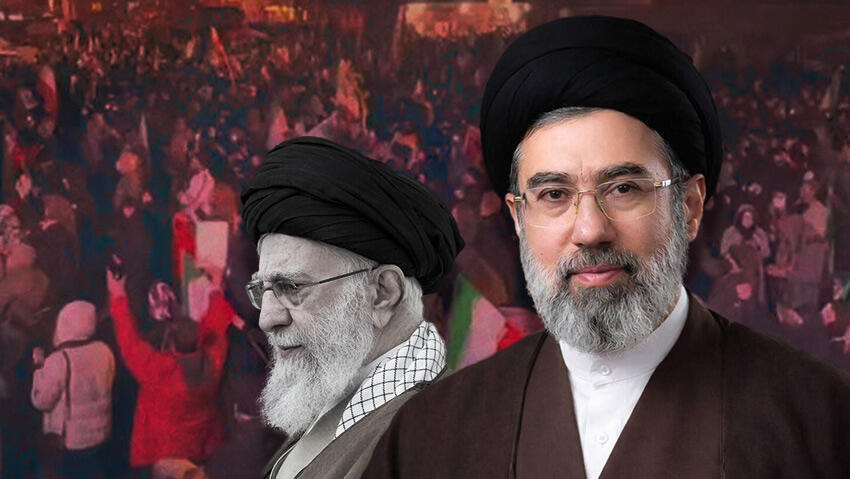
Ali Khamenei and his son Mojtaba, who was appointed supreme leader in his place
This month, however, Arab media reported an unusual breakdown in communication between Hamas leadership and Iranian Revolutionary Guard officials responsible for Palestinian affairs.
Palestinian sources told the Saudi newspaper Asharq Al-Awsat that contact with senior IRGC figures, including members of the Quds Force who maintain close ties with Palestinian factions such as Hamas and Islamic Jihad, had been cut off at the start of the war.
The disruption reportedly affects both Hamas leaders in Gaza and those operating outside the enclave.
Sources said it was unclear whether the Iranian officials with whom contact was lost had been killed in strikes or whether Iran had implemented strict security protocols.
In previous conflicts, including the 12-day war in June, messages were still delivered through encrypted electronic channels and other means.
“Since the current war began, no messages have been received at all,” the Palestinian sources told the Saudi newspaper.