

An investigation published over the weekend by the German newspaper Süddeutsche Zeitung sheds new light on the murky connection between the “new” Germany that emerged after World War II and the capture of senior Nazi official Adolf Eichmann. According to the report, German attorney Dieter Wechtenbruch, who joined Eichmann’s defense team, was in fact an agent of West Germany’s Federal Intelligence Service. His role was to pass inside information about the defense team’s conduct to his handlers and ensure that the trial did not expose the Nazi past of members of the West German government in the early 1960s.
After 1945, West Germany integrated former Nazis into senior and influential positions in politics and in the education, health, economic and cultural systems. German authorities, including the security and intelligence services, worked vigorously to obscure or conceal the identities of these people, particularly from Israelis and Jews.
For example, West Germany’s Federal Intelligence Service, the BND, knew Eichmann’s new identity and whereabouts. Eichmann, the former head of the Gestapo’s Jewish Affairs Department, had been hiding in Argentina after World War II. But the person who informed the Mossad of his location and new name was Fritz Bauer, the state prosecutor of Hesse and a Jew who had fled Germany after the Nazis came to power. Bauer did so because he did not trust West Germany’s law enforcement system, whose ranks were filled with many former Nazis.
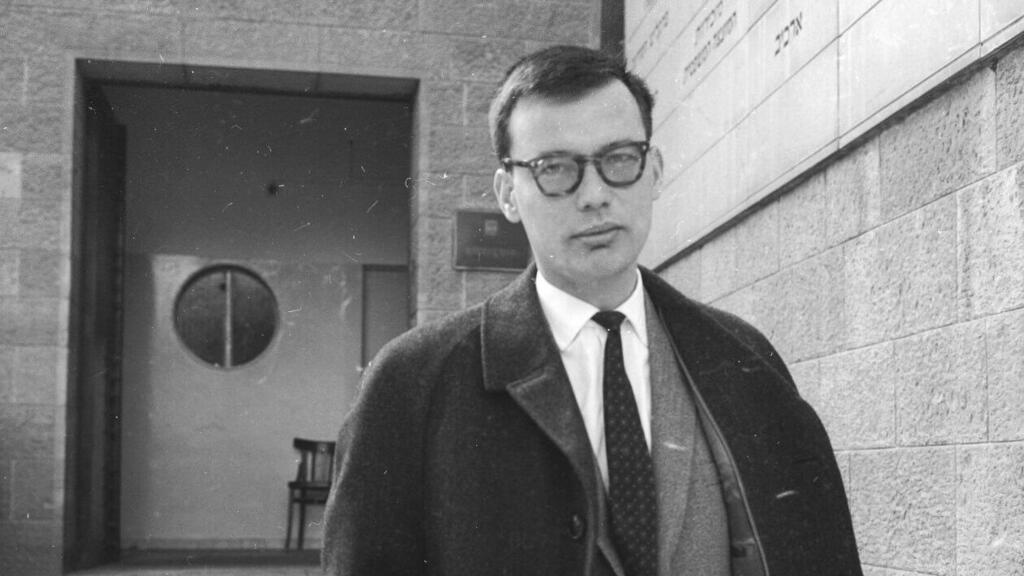
Now, according to the Süddeutsche Zeitung report, it appears that German intelligence continued its activities surrounding Eichmann even after his capture and trial in Jerusalem. Dieter Wechtenbruch was a young lawyer from Munich who officially came to Israel to assist Robert Servatius, the head of Eichmann’s defense team. Their defense argued that Eichmann had been a minor cog in the machinery of the Jews’ extermination and had merely followed orders.
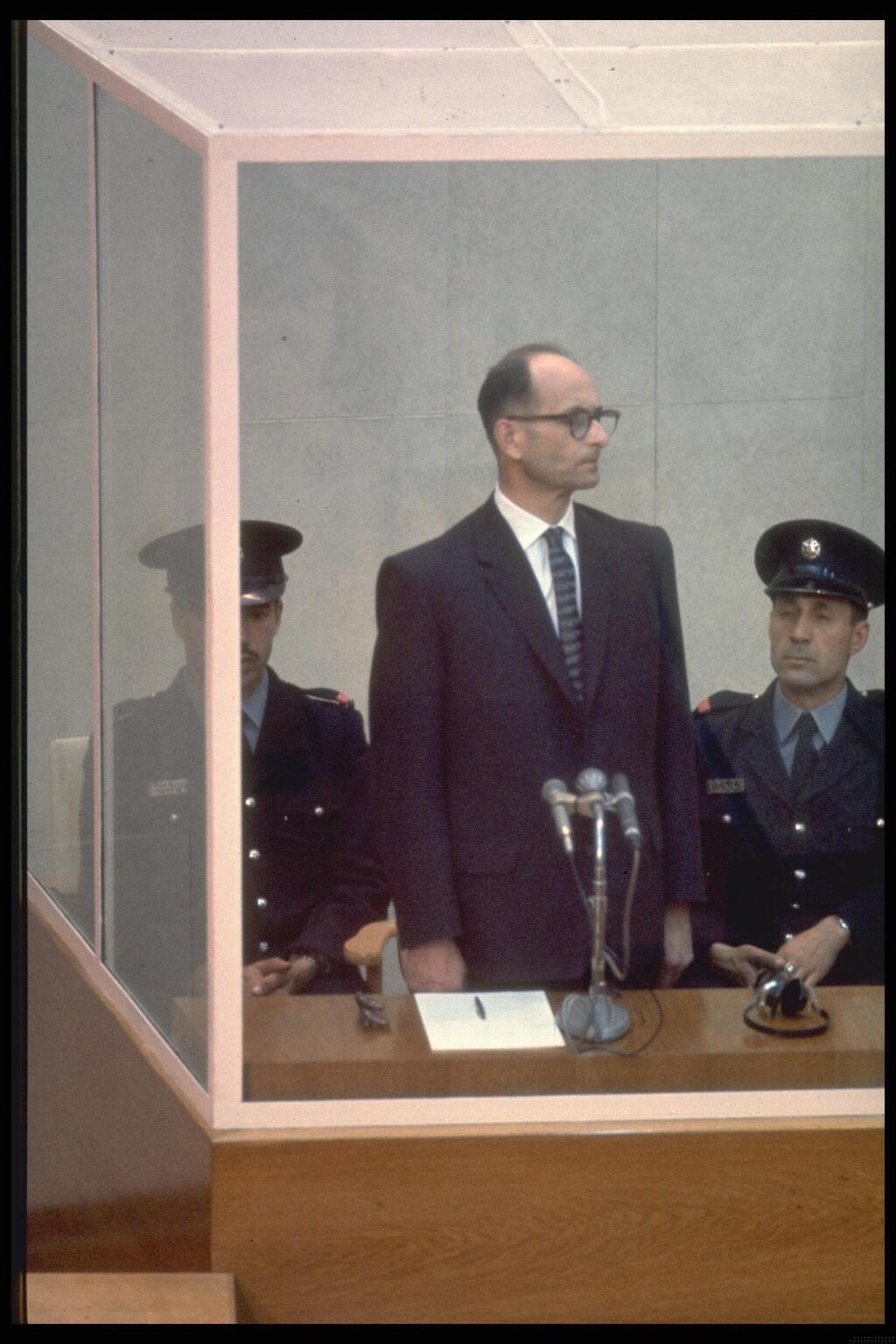
Adolf Eichmann on trial in Israel, 1961
(Photo: GPO)
But Wechtenbruch actually was an intelligence plant and informant for German intelligence. His registration code was V-7461. His agent name was Laquear. His actual role was not to defend Eichmann, but to leak the main points of the lawyers’ defense strategy to his handlers.
According to the investigation, before the trial in Jerusalem, Wechtenbruch was “interviewed” by an Israeli agent known as Almog. The latter failed to uncover the German lawyer’s true motives and gave his superiors a favorable assessment after spending time with him at a cabaret in Munich. “Wechtenbruch represents the new Germany,” he reported. “Without the Nazi stains.”
Wechtenbruch became one of the most influential figures in Eichmann’s legal defense and the team’s main spokesman to journalists. He is even quoted in Hannah Arendt’s famous book "Eichmann in Jerusalem: A Report on the Banality of Evil." In a report published in the Israeli press, Haim Gouri quoted the young lawyer as saying after prosecutor Gideon Hausner’s opening address: “I will never again be able to believe anything Germans of this generation say. I now know the truth.”
Wechtenbruch died in April 2025. In June, the Federal Administrative Court in Leipzig considered a petition by a German journalist seeking, among other things, disclosure of documents related to Eichmann’s capture in Argentina. German intelligence services refused the request on grounds of secrecy and the need to protect their methods of operation. The court rejected the journalist’s petition.
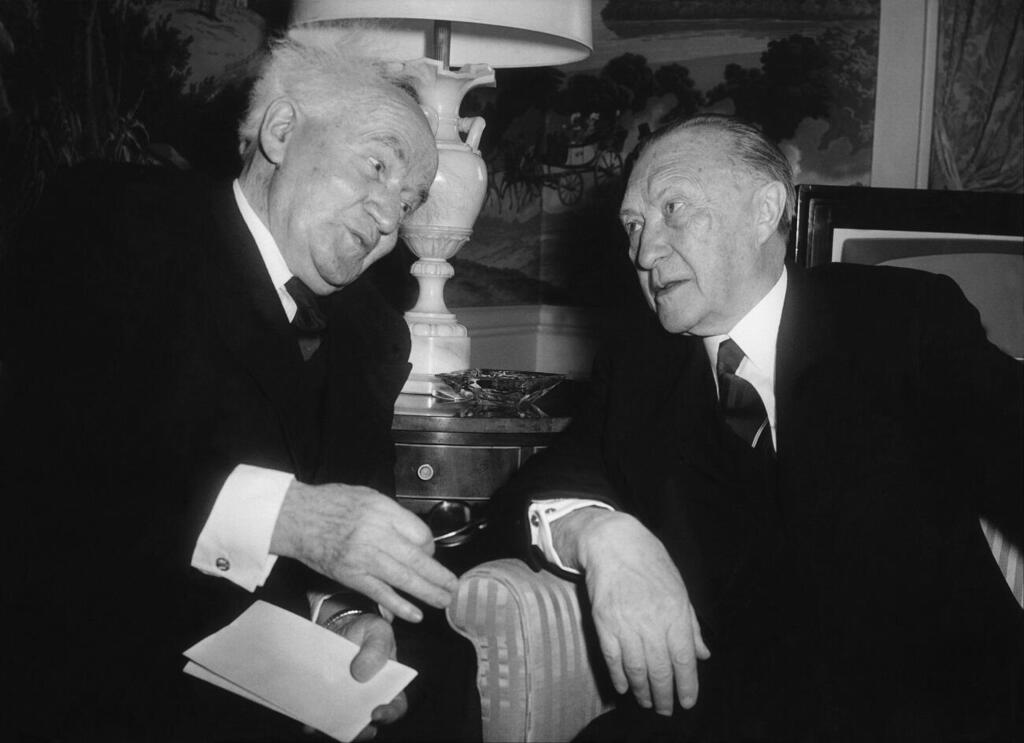
Konrad Adenauer with David Ben-Gurion(
(Photo: Getty Images)
The integration of Nazis into the West German government after World War II is a subject that has been extensively researched and documented. The country was led at the time by Konrad Adenauer, who had been persecuted, imprisoned and paid a heavy price for opposing the Nazis. After the war, he was elected, by a margin of a single vote — his own — as West Germany’s first chancellor, and is regarded as the man who restored the country to the family of nations and led its economic miracle. He was also one of the key figures behind West Germany’s rapprochement with Israel and played a central role in shaping the reparations agreement. Years later, after leaving office in 1963, he also came to Israel and visited Yad Vashem.
But to achieve all of this, Adenauer had to recruit a supporting team from a population in which, at the height of the war, 80% had supported the Nazi regime. He had no practical way to screen all of them out. The middle path he chose was this: Nazis without blood on their hands would be appointed to key positions, shape Germany’s future and educate the next generation of Germans.
One of them was Hans Globke, a doctor of law and one of the chief architects of the legal infrastructure for the persecution and extermination of the Jews. He came up with the idea of adding the name “Israel” to every Jewish man and “Sara” to every Jewish woman. In 1935, he drafted the authoritative commentary on the Nuremberg Laws and was considered a “racial expert” whose interpretation helped determine who was Jewish and who was Aryan.
After the war, Globke became one of Adenauer’s closest associates. He served as his close aide and later as chief of staff in his office. Many called him the “shadow chancellor.” Despite all this, he played an important role in establishing relations between Germany and Israel and in drafting the reparations agreement.
One of the well-known anecdotes from the Eichmann trial concerned the defendant’s reaction to a transcript from a 1941 meeting shown to him. He pointed to a photograph of Globke and said: “How is it that I am standing trial and he is running Germany?”