


A dramatic Iranian decision came just two days after the memorandum of understanding took effect: Tehran announced Saturday afternoon that it was closing the Strait of Hormuz. According to Iran, the closure came in response to what it called “the United States’ blatant violation of the first clause of the ceasefire agreement and the Zionist regime’s ongoing and relentless violations of the ceasefire in southern Lebanon.”
About an hour after the closure announcement, Iran raised the level of its threats. Iranian officials told Lebanon’s UNews: “Iranian missiles may be launched at Israel tonight if the aggression against Lebanon continues.” Despite all this, Pakistan announced, and Iran and the United States have not ruled out for now, that the first talks on the agreement will be held in Switzerland on Sunday.
As Iran announced the closure, Vance said talks were progressing well
(Video: FoxNews)


Iran’s Khatam al-Anbiya command headquarters, which also includes the Revolutionary Guards, issued the statement after citing a Quranic verse that says, “They will break their oaths; fight the leaders of disbelief, for their oaths are worthless, so that they may desist.” The command said the move was “the first step in response to the enemy’s violation of its commitments,” adding that if the aggression continues, additional measures will be planned and taken to force the enemy to uphold its commitments.
The announcement of the closure came almost simultaneously with reports that U.S. President Donald Trump’s envoys, Steve Witkoff and Jared Kushner, had landed in Switzerland to open a round of talks with Iran. “There may be talks with Iran on Sunday,” Trump’s vice president, JD Vance, said.
He added that things were going well and said he expected to arrive in Switzerland within the next two days, speaking almost at the same time Iran announced the strait’s closure. Vance said he believed the ceasefire could be preserved and that he intended to give the talks a chance. Asked about the closure, he said there was no evidence it had happened.
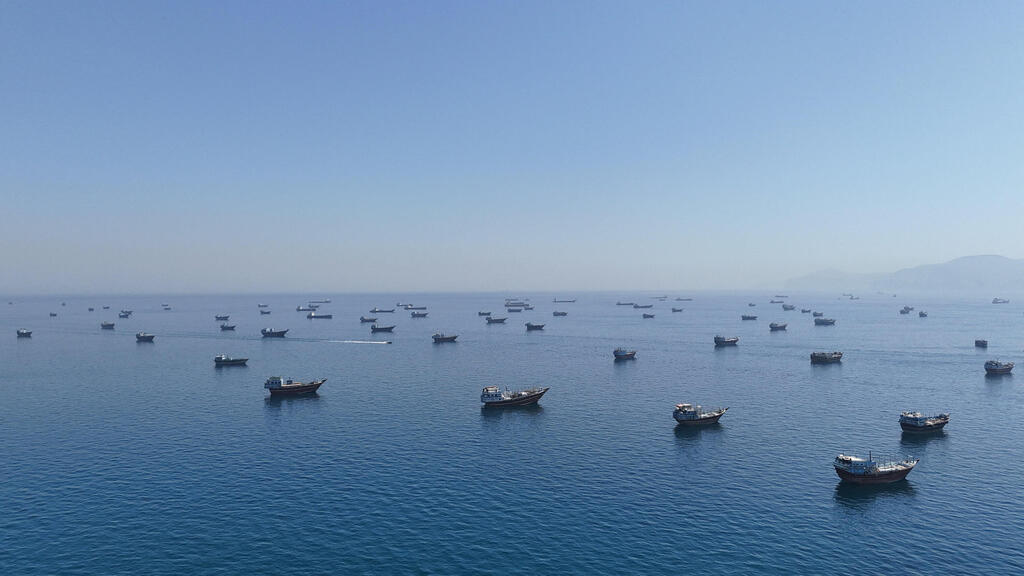
Strait of Hormuz
(Photo: REUTERS/Stringer)
In a follow-up statement, the Revolutionary Guards navy said it was warning ships not to approach the strait, saying Hormuz had been closed because of what it described as the crimes of the Zionist entity in Lebanon and America’s violation of its ceasefire commitments. It said ships must stay away from the Strait of Hormuz or risk their safety. A U.S. security official told Axios that the U.S. military had not yet seen Iranian movements indicating a potential closure of the strait. However, the official said the announcement alone was enough to deter use of the strait.
Iran’s dramatic announcement came minutes after the Tasnim news agency, which is close to the Revolutionary Guards, criticized Foreign Minister Abbas Araghchi’s intention to meet Witkoff in Switzerland. Tasnim said the meeting had no justification or necessity, adding that the officials who conducted the negotiations had promised that the clause guaranteeing Lebanon’s sovereignty and territorial integrity meant an Israeli withdrawal from all occupied territories in southern Lebanon. The agency said that clause had been officially and openly violated.
The internal Iranian clash was also evident in a statement by the Foreign Ministry in Tehran, which said an Iranian delegation would fly to Switzerland to monitor the implementation of the other side’s commitments under the memorandum of understanding. Iranian Foreign Ministry spokesman Esmaeil Baghaei said the other side was obligated to compel the Zionist regime to stop its attacks in Lebanon. He warned that if some of the other side’s commitments were not implemented, the overall understanding would be in jeopardy and said the other side must take the necessary measures as soon as possible.
About an hour after the closure announcement, mediator Pakistan said technical-level talks would be held the following day at the Bürgenstock resort in Switzerland as a continuation of the signing of the memorandum of understanding. According to Pakistan, the discussions will include representatives from the United States and Iran, along with mediators from Pakistan and Qatar.
Lebanon reported Saturday afternoon that at least 30 people were killed in strikes across several areas in the south of the country. The IDF said the strikes were a response to extensive overnight Hezbollah attacks on forces in the security zone, which it said included more than 50 launches at troops in southern Lebanon.
Lebanon also reported a relentless series of strikes in the south overnight and Saturday morning, despite the United States’ announcement Friday that a new ceasefire had taken effect as part of the Trump administration’s effort to advance negotiations with Iran on a final nuclear agreement.
The exchanges of fire in southern Lebanon come after a deadly tank incident the previous night, between Thursday and Friday, in which four soldiers were killed, including Lt. Col. Dor Ben Simhon, commander of the 52nd Armored Battalion. Following the incident, whose circumstances are still under investigation, the IDF struck about 150 targets in Lebanon on Friday. Lebanon reported 83 deaths in those strikes, claiming many of those killed were civilians and accusing Israel of carrying out a massacre.
Iran is insisting on linking the various fronts and already accused the United States on Friday of responsibility for the alleged violation of the memorandum of understanding between the sides. Following the escalation, the first round of negotiations between representatives of Washington and Tehran on a final nuclear agreement, which had been scheduled to take place Friday in Switzerland, was postponed.
However, the Trump administration, which is pressing Israel to moderate its strikes in Lebanon in an effort to allow progress with Iran, announced Friday that Israel and Hezbollah had reached another ceasefire that had supposedly taken effect at 4 p.m., hours after Prime Minister Benjamin Netanyahu vowed to make the Shiite terrorist group pay a heavy price. After the U.S. announcement, a senior Israeli official said there was nothing new in the ceasefire and that it allows the IDF to continue destroying infrastructure and acting against emerging threats. The strikes, as noted, continued afterward.
Under the first clause of the memorandum of understanding, the United States, Iran and their allies in the current war declare, by signing the document, the immediate and permanent end of military operations on all fronts, including in Lebanon. They also commit not to initiate any war or military operation against one another, to refrain from threats or the use of force against one another and to ensure Lebanon’s territorial integrity and sovereignty. The clause also says the final agreement will confirm the permanent end of the war on all fronts, including in Lebanon, along with additional provisions of the clause.
First published: 16:39, 06.20.26