

Despite a sweeping wave of assassinations that has decimated Iran’s top leadership, the Islamic Republic continues to function, launch attacks and project power, raising a central question: who is actually running Iran?
Supreme Leader Ali Khamenei was killed in the opening strike of the war. His de facto successor, Ali Larijani, was reportedly killed this week in a safe house in Tehran. The newly appointed supreme leader, Mojtaba Khamenei, has not been seen in public since taking office.
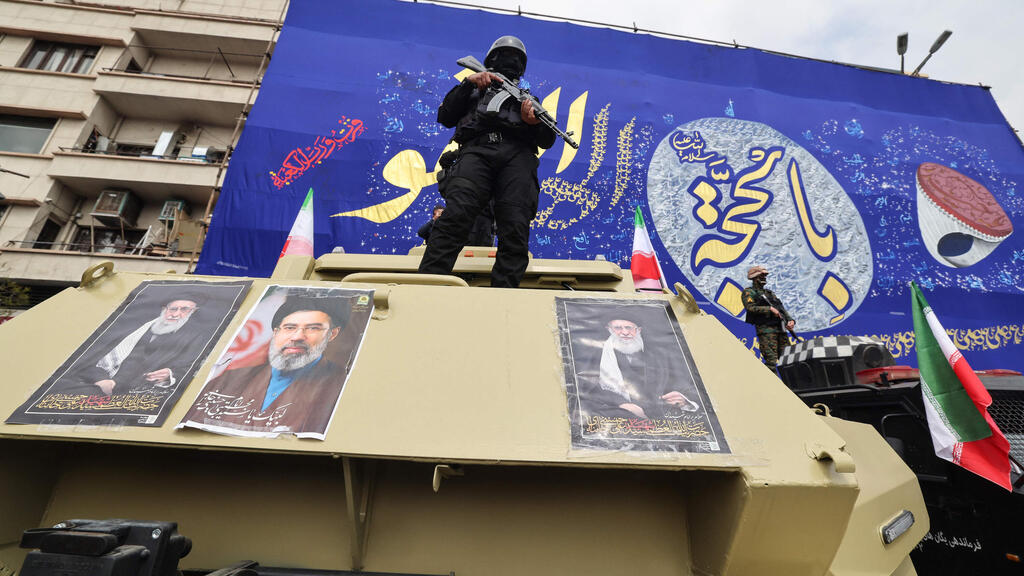
Yet Iranian missile fire has not stopped. In fact, launches have increased in recent days, even if the number of missiles per barrage remains relatively limited.
Israeli officials say the command-and-control structure inside Iran has been shaken, but not broken. The inner circle around Mojtaba Khamenei is still taking shape, and it remains unclear how decisions are being made at the highest level.
“I’m not sure who is running Iran right now,” Prime Minister Benjamin Netanyahu said at a press conference. “Mojtaba, the replacement ayatollah, hasn’t been seen in public. Have you seen him? We haven’t, and we cannot confirm what exactly is happening there.”
According to assessments, Mojtaba Khamenei, who succeeded his father after the initial strike, maintains close ties with the Islamic Revolutionary Guard Corps, Iran’s most powerful military force. His views are believed to be even harder-line than those of his father. Formally, he now commands Iran’s armed forces and holds ultimate authority over decisions related to the nuclear program.
But analysts caution against assuming that leadership decapitation will lead to regime collapse.
Burge Ozcelik, a researcher at the Royal United Services Institute (RUSI), said the elimination of senior decision-makers across political, intelligence, internal security and military spheres would have deep consequences, but likely over time.
“The loss of key decision-makers will bring transformative results,” she said. “But the idea of ‘regime collapse’ obscures the fact that the regime is already changing. This is a process that could take years, not weeks.”
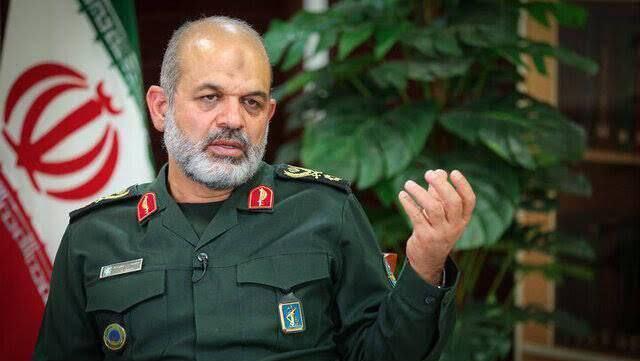
The new IRGC commander Ahmad Vahidi
Messages attributed to Mojtaba Khamenei have continued to emerge, including a Nowruz statement in which he said Iran had responded with unity after the killing of its leadership.
“The enemy believed that by targeting the leader and influential figures, it could instill fear and force the people to withdraw,” the statement read. “The Iranian people delivered a blow to the enemy.”
At the same time, analysts increasingly point to the Revolutionary Guards as the true center of power.
“The Islamic Revolutionary Guard Corps is the state now,” said Ali Vaez, director of the Iran project at the International Crisis Group.
Before the war, Iran’s civilian leadership operated under the authority of the supreme leader, while the Revolutionary Guards functioned as a parallel power center. Now, with the leadership hierarchy disrupted and Mojtaba Khamenei largely absent from public view, some experts believe the Guards have effectively taken control.
The IRGC, established after the 1979 Islamic Revolution to defend the regime, has since evolved into a dominant military, economic and political force. Its Quds Force has played a central role in building Iran’s regional network of allies, including Hezbollah in Lebanon, the Houthis in Yemen and other groups across the Middle East.
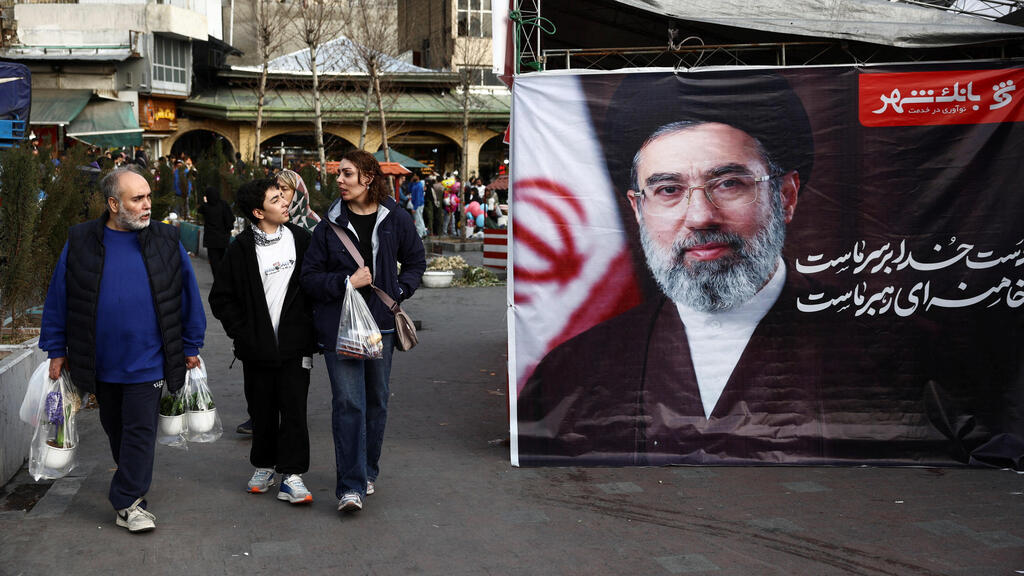
Mojtaba Khamenei, still hasn't made a public appearance
(Photo: Majid Asgaripour/WANA (West Asia News Agency) via Reuters)
Its commander, Esmail Qaani, had not been seen publicly since the start of the war until a message attributed to him was released this week, following a pattern of previous unexplained disappearances.
Meanwhile, the United States has placed a bounty of up to $10 million on current IRGC commander Ahmad Vahidi, who assumed the role after his predecessor and several senior officers were killed.
Iran’s military structure itself may also be contributing to its resilience.
At the start of the war, Iranian Foreign Minister Abbas Araghchi suggested that military units were operating with a degree of autonomy, acting on pre-issued directives rather than centralized, real-time command.
“They operate independently, based on general instructions given in advance,” he said, adding that some attacks attributed to Iran may not have been directly ordered by the central leadership.
This decentralized approach appears to be part of a broader contingency plan.
According to analysts, Iran anticipated the possibility of leadership decapitation and prepared accordingly. Military assets were dispersed geographically, key capabilities were moved underground and authority was delegated to regional commanders.
Iran has reportedly divided its ballistic missile forces into dozens of separate command units, each with a degree of operational independence. Critical systems, including missile stockpiles, drones and naval attack capabilities, have been hidden deep underground, sometimes tens of meters below rock.
This structure allows Iran to continue operating even if senior leadership is eliminated.
“The expectation that the regime would collapse after the killing of dozens of senior leaders is nothing more than an illusion,” Vaez said. “Iran is a system with multiple layers of leadership.”
That illusion, some analysts argue, is at the heart of what they describe as the “decapitation illusion” — the belief that removing top figures would quickly bring down the regime.
Instead, the war is revealing a more complex reality: a system designed to absorb shocks, redistribute authority and continue functioning even under extreme pressure.
At the same time, Iran appears to have activated pre-planned strategies beyond the battlefield, including efforts to disrupt global energy markets. Analysts say Tehran had long prepared scenarios to close the Strait of Hormuz and trigger a global energy crisis in the event of a major conflict.
As the war continues, the question is no longer just who is formally in charge, but how power is actually exercised across Iran’s fragmented but resilient system.
For now, despite the chaos at the top, the machinery of the state remains intact.