

Exchanges of fire broke out Sunday morning in southern Gaza after Palestinians reported gunfire directed at an IDF engineering vehicle near Rafah, just over a week after a ceasefire took effect and the IDF withdrew from about half of the Gaza Strip.
In a statement, the IDF said that earlier Sunday, terrorists fired an anti-tank missile and gunfire toward troops operating in the Rafah area of southern Gaza to dismantle terrorist infrastructure, in accordance with the ceasefire agreement.
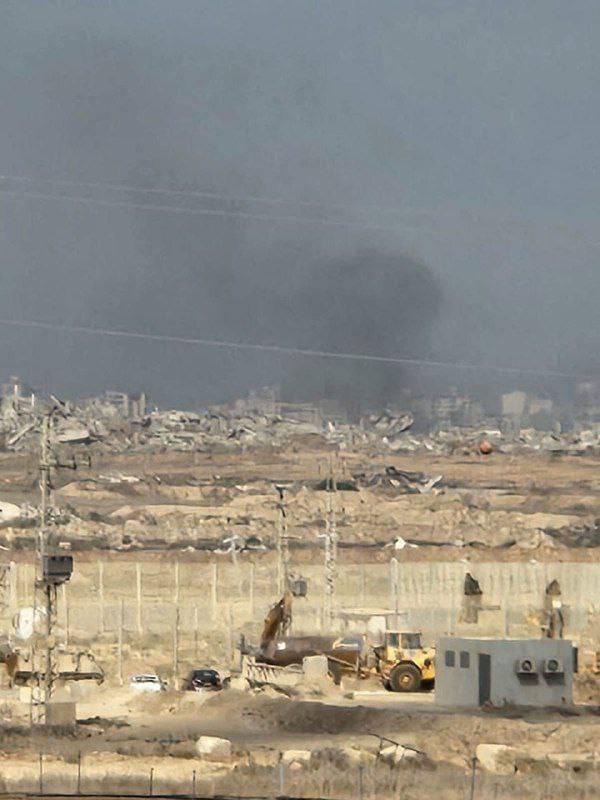
The army said it launched strikes in the area “to eliminate the threat and dismantle tunnel shafts and military structures used for terrorist activity.” The IDF added that “these terrorist actions constitute a blatant violation of the ceasefire agreement, and the IDF will respond firmly.”
Prime Minister Benjamin Netanyahu, Defense Minister Israel Katz and the military secretary left the weekly Cabinet meeting for an urgent security assessment. During the session, the government also approved renaming the ongoing campaign to War of Revival.
Netanyahu said that Israel will retaliate forcefully to Hamas attack on IDF forces, while Hamas said that it had 'no part' in Rafah clashes, adding it is 'committed to ceasefire.'
The escalation comes amid fragile calm following the ceasefire agreement between Israel and Hamas terrorists. Two days earlier, the IDF reported the first significant breach of the ceasefire, when armed Hamas terrorists emerged from tunnels and opened fire on Israeli troops in two separate incidents in Khan Younis and Rafah. Several of the terrorists were killed in Israeli airstrikes.
At that time, an IDF spokesperson said, “In Khan Younis, several terrorists were identified emerging from a tunnel shaft in the southern city and approached the forces in a manner that posed an immediate threat. The terrorists were struck from the air to remove the threat, in accordance with the agreement.”
Since the ceasefire began, IDF forces operating in the designated buffer zones have been subject to strict rules of engagement. Troops may open fire only to drive off suspects approaching their positions or to conduct precise strikes when an armed terrorist poses an immediate threat. In all other situations — including when Hamas gunmen are identified from a distance by sight, binoculars, drone or aircraft — Israeli forces are prohibited from shooting.
Despite these restrictions, security officials say about 7,000 Hamas operatives have redeployed throughout the Gaza Strip, reasserting control over neighborhoods and towns as civilians return following the partial Israeli withdrawal.
Following the morning incident, Netanyahu convened an urgent situation assessment with senior defense officials, focusing on whether to resume limited airstrikes against Hamas targets and reduce humanitarian aid entering Gaza. Any changes to aid deliveries, Israeli officials said, would require U.S. approval due to the sensitivity of the ceasefire and Washington’s role in mediating the ongoing effort to recover the bodies of Israeli hostages. For now, Israeli officials said there is no plan to resume large-scale ground operations of the kind conducted before the ceasefire.
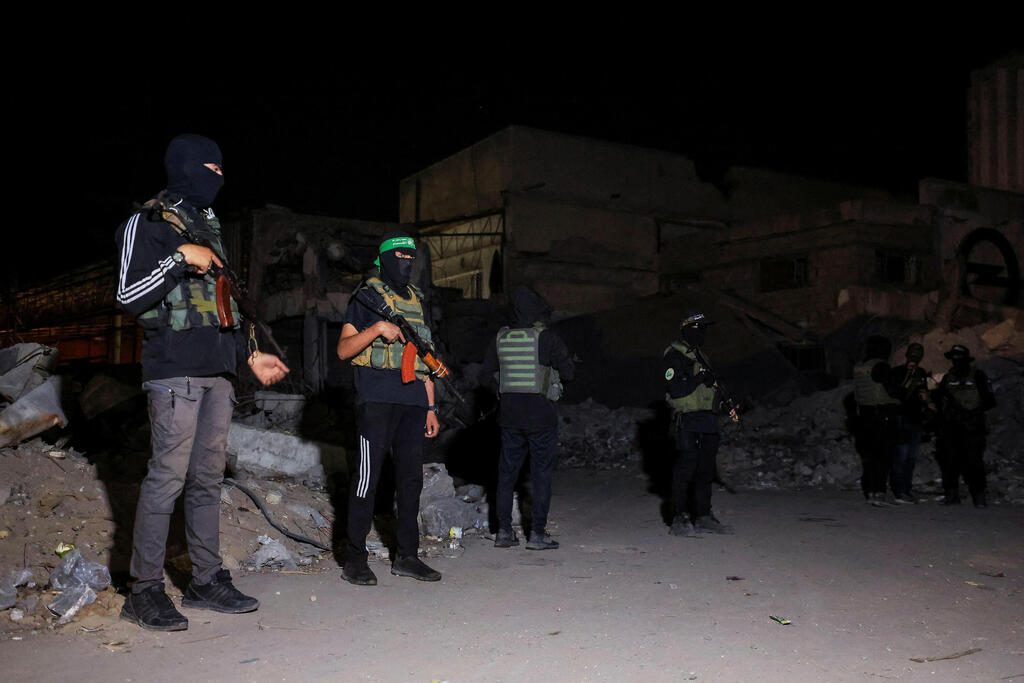
(Photo: REUTERS/Dawoud Abu Alkas)
Israeli political leaders responded sharply to the renewed violence. Finance Minister Bezalel Smotrich wrote “War!” on social media. National Security Minister Itamar Ben-Gvir called on Netanyahu to order “a full resumption of fighting in the Strip with full force,” adding that “the false hope that Hamas will change its ways or even honor an agreement it signed is predictably dangerous to our security. This Nazi terrorist organization must be destroyed completely — the sooner, the better.”
Hamas official Izat al-Rishq accused Israel of violating the ceasefire, saying, “Hamas remains committed to the ceasefire agreement, while Israel continues to violate it and seeks false excuses to justify its crimes. Netanyahu’s attempts to renege on his commitments stem from pressure exerted by the far-right coalition in an effort to escape responsibility before mediators and the Arab world.”
The renewed tensions come as part of U.S. President Donald Trump’s 20-point plan for Gaza. The plan’s second phase — for which no agreement has yet been reached between Israel and Hamas — calls for additional Israeli withdrawals beyond the so-called yellow line. Those areas would be placed under the authority of a future international force tasked with overseeing the Strip’s demilitarization. About 200 U.S. soldiers are expected to arrive in Israel to help monitor implementation, and Vice President J.D. Vance is also expected to visit.
First published: 11:15, 10.19.25