

Documents uncovered in Munich archives are raising new questions about the alibi that helped clear Adolf Hitler of suspicion after the mysterious death of his niece Geli Raubal in his apartment in 1931, German magazine Der Spiegel reported.
Raubal, 23, had moved into her uncle’s Munich home in 1927, six years before Hitler and the Nazi Party took power in Germany. In September 1931, she was found dead there from a gunshot wound, and authorities officially ruled that she had taken her own life.
Gallery
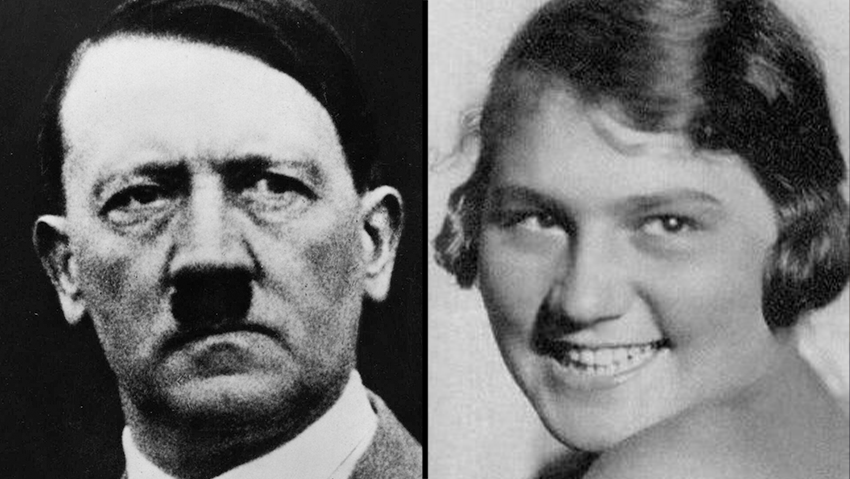
Hitler and his niece Geli. After her death: ‘Emergency meetings at Nazi Party headquarters’
(Photo: Wikipedia, Hulton Archive / Getty Images)
Even at the time, however, newspapers and political opponents of the Nazi Party questioned that conclusion, amid reports of Hitler’s controlling relationship with his niece and allegations that the two had quarreled shortly before her death.
Historian Harald Sandner, known for his books on Hitler’s life, recently uncovered two death notices and a death certificate in Munich archives that Der Spiegel said appear to contradict the official timeline established after Raubal’s death.
According to the long-accepted account, Raubal’s body was found in her locked bedroom on the morning of Saturday, September 19, 1931. Hitler’s personal servant Georg Winter was said to have discovered her lying on the floor.
Hitler later maintained that he had left Munich on the afternoon of September 18, providing an alibi that placed him outside the apartment at the time of her death.
The three archival documents found by Sandner, however, reportedly date the discovery of Raubal’s body to 10:15 a.m. on September 18, a full day earlier.
At that time, Hitler was still in Munich. According to Sandner, he attended a party meeting in the city between 10:30 a.m. and 12:30 p.m. and did not leave for Nuremberg until later that afternoon.
If the documents are accurate, Raubal would have died in the early hours of September 18 or possibly the previous night, undermining the timeline presented by Bavarian authorities and the Nazi Party.
Sandner argues that the discrepancy could point to cooperation between Munich police and the Nazi Party to protect Hitler, who was already emerging as one of Germany’s most powerful political figures.
He also points to the fact that no autopsy was carried out on Raubal as another possible indication that the investigation was incomplete.
Sandner, whose new book drawing partly on the documents is due to be published in November, nevertheless acknowledges that the records do not provide conclusive evidence of manipulation or prove that Hitler was responsible for Raubal’s death.
‘Bruises on the body’ and Eva Braun’s shadow
Raubal died as Hitler was accelerating toward political power, a rise that culminated in his appointment as German chancellor in January 1933 and the subsequent collapse of the Weimar Republic.
Historian Thomas Weber, quoted by Der Spiegel, said Hitler at the time sought to present himself as someone who “embodied all virtues and values,” meaning any suspicion that he had been involved in his niece’s death could have caused severe political damage.
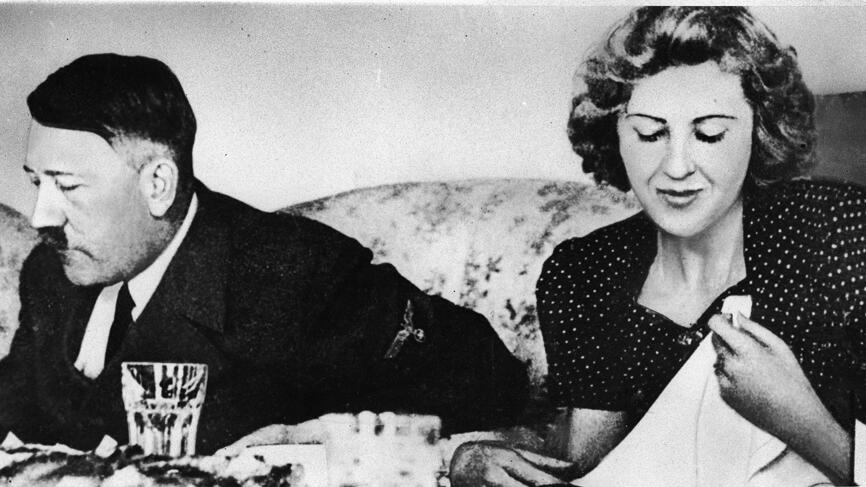
Hitler and Eva Braun. Geli was said to have been his true love
(Photo: Gettyimages)
Shortly after Raubal died, the Social Democratic-aligned Münchner Post reported that she and Hitler had been involved in a violent argument, that bruises had been found on her body and that emergency meetings were held at Nazi Party headquarters to coordinate how the case would be presented to the public.
Other newspapers went further, suggesting that Hitler had either killed his niece himself or ordered her death.
Over the decades, numerous theories have circulated about the nature of Hitler’s relationship with Raubal.
It has been alleged that after she moved to Munich he closely monitored her movements and controlled much of her life. Some also believed the relationship was sexual, although the claim has never been proven.
It was further alleged that Hitler described Raubal as the only woman he had ever truly loved, while letters have been cited as suggesting that his future wife, Eva Braun, felt she lived in Raubal’s shadow.
German newspapers reported after Raubal’s death that she and Hitler had quarreled shortly beforehand, with speculation that the dispute centered on her desire to move to Vienna and pursue singing studies, something Hitler allegedly opposed.
Historian: most likely a clerical error
Not all historians are persuaded by Sandner’s interpretation of the newly uncovered documents.
Heike Görtemaker, a prominent historian of Hitler and his inner circle, told Britain’s Telegraph that the new evidence had not convinced her that the established account was wrong.
She said the most plausible explanation for the discrepancy between the police report, which said Raubal was found dead on the morning of September 19, and the death certificate, which gives the morning of September 18, was a simple transcription or registration error.
According to Görtemaker, the conclusion that Raubal died on the afternoon of September 18, after Hitler had already left for Nuremberg, was supported by testimony from eight witnesses.
It was “highly unlikely,” she argued, that all eight had conspired to provide a false account.
Görtemaker also rejected the theory that Munich police would have worked with the Nazi Party to shield Hitler at that stage of his rise.
“He was not yet in power,” she said. “The police chief was one of his opponents and would have seized such an opportunity to destroy him politically.”
The newly discovered documents therefore reopen a mystery that has followed Hitler’s biography for nearly a century, but they stop well short of resolving it. They challenge a crucial part of the official timeline, while leaving open the possibility that the discrepancy is nothing more than an error in a 95-year-old record.