

The Assad government carried out a two-year clandestine operation to truck thousands of bodies from one of Syria’s largest known mass graves to a secret location more than an hour away in the remote desert, a Reuters investigation has found.
The conspiracy by President Bashar al-Assad’s military to excavate the mass grave in Qutayfah and create an enormous second grave in the desert outside the town of Dhumair has not been previously reported.

To uncover the location of the Dhumair grave site and detail the vast operation, Reuters spoke to 13 people with direct knowledge of the two-year effort to move the bodies, reviewed documents produced by officials involved, and analyzed hundreds of satellite images of both grave sites taken over several years.
The operation to transfer bodies from Qutayfah to another hidden site dozens of kilometers away was called “Operation Move Earth,” and it lasted from 2019 until 2021. The purpose of the operation was to cover up the Assad government’s crimes and help restore its image, witnesses said.
Reuters informed the government of President Ahmed al-Sharaa of the findings of this investigation on Tuesday. The government did not immediately respond to questions for this report.
The news agency is withholding the site’s precise location to reduce the risk of tampering. A forthcoming Reuters special report will detail how the Assad government carried out the secret operation and how reporters uncovered the scheme.
With at least 34 trenches stretching two kilometers, the grave in the Dhumair desert is among the largest created during the Syrian civil war, Reuters found. Witness accounts and the dimensions of the new site suggest that tens of thousands of people could be buried there.
Assad’s government began burying the dead at Qutayfah around 2012, early in the civil war. The mass grave contained the bodies of soldiers and prisoners who died in the dictator’s prisons and military hospitals, witnesses said.
A Syrian human rights activist exposed Qutayfah by releasing photos to local media in 2014, revealing the grave’s existence and general location on the outskirts of Damascus. Its exact location came to light a few years later through court testimony and other media reports.
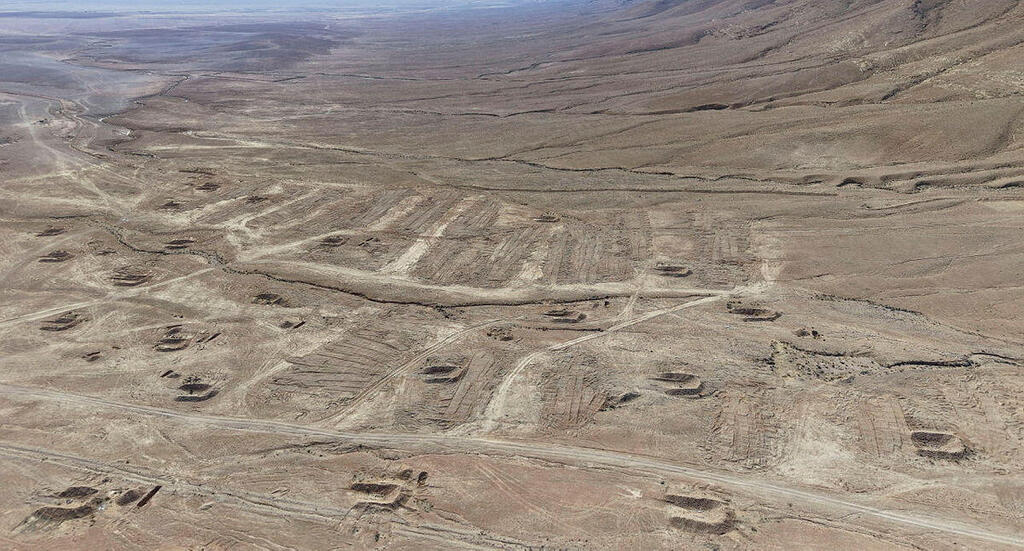
Mass graves in the Syrian desert
(Photo: Reuters)
For four nights nearly every week from February 2019 to April 2021, six to eight trucks filled with dirt and human remains traveled from Qutayfah to the Dhumair desert site, according to witnesses involved in the operation.
Reuters could not confirm whether bodies from elsewhere were also taken to the secret site and found no documentation mentioning Operation Move Earth or mass graves in general.
Everyone directly involved vividly recalled the stench, including two truckers, three mechanics, a bulldozer operator and a former officer from Assad’s elite Republican Guard who was involved from the earliest days of the transfer. Former President Assad, who is in Russia, and several military officials identified by witnesses as key participants in the operation could not be reached for comment. After the dictatorship’s fall late last year, Assad and many of his aides fled the country.
The idea to move thousands of bodies emerged in late 2018, when Assad was nearing victory in Syria’s civil war, said the former Republican Guard officer. The dictator was hoping to regain international recognition after years of sanctions and allegations of brutality, the officer said.
At the time, Assad had already been accused of detaining thousands of Syrians. But no independent Syrian groups or international organizations had access to the prisons or the mass graves.
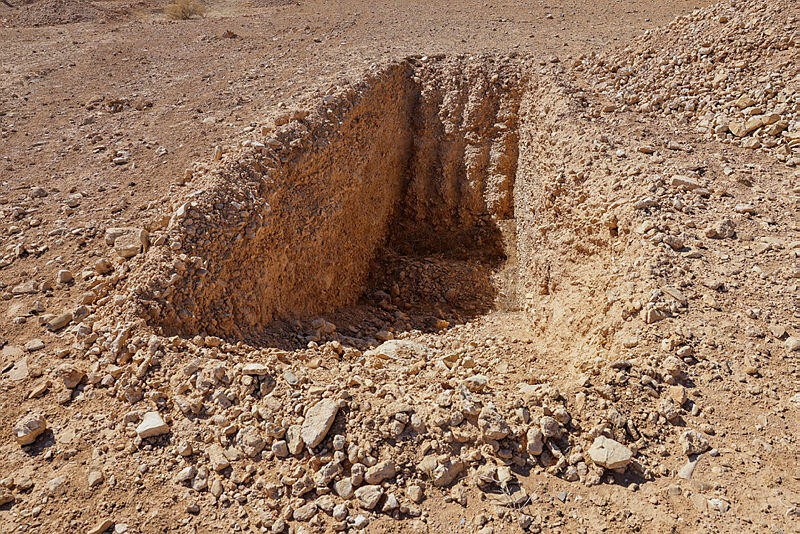
Mass graves in the Syrian desert
(Photo: Reuters)
Two truckers and the officer told Reuters they were instructed by military commanders that the point of the transfer was to clear out the Qutayfah mass grave and hide evidence of mass killings.
By the time Assad fell, all 16 trenches documented at Qutayfah by Reuters had been emptied.
More than 160,000 people disappeared into the deposed dictator’s vast security apparatus and are believed to be buried in the dozens of mass graves he created, according to Syrian rights groups. Organized excavation and DNA analysis could help trace what happened to them, easing one of Syria’s deepest wounds.
But with few resources in Syria, even well-known mass graves remain largely unprotected and unexcavated. The country’s new leaders, who overthrew Assad in December, have released no documentation about the individuals buried in them despite repeated calls from the families of the missing.
Officials have said the sheer number of victims and the need to rebuild the justice system have slowed the work. Syria’s new National Commission for Missing People has announced plans to create a DNA bank and a centralized digital platform for families of the missing, and said there is an urgent need to train specialists in forensic medicine and DNA testing.
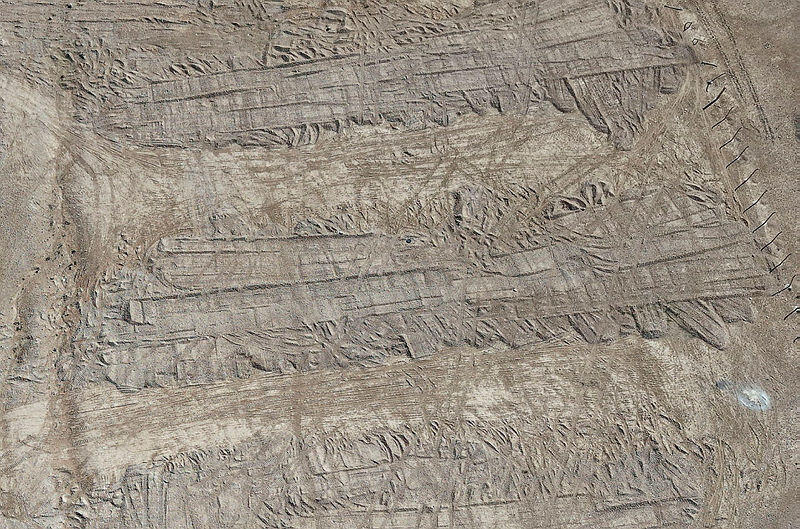
Mass graves in the Syrian desert
(Photo: Reuters)
“There is a bleeding wound as long as there are mothers waiting to find the graves of their sons, wives waiting to find the graves of their husbands, and children waiting to find the graves of their fathers,” al-Saleh told the semi-official Syrian news site al-Watan in late August.
Mohamed Al Abdallah, head of the Syria Justice and Accountability Center, a Syrian organization that works to trace the missing and investigate war crimes, said a haphazard transfer of bodies like the one from Qutayfah to Dhumair was disastrous for grieving families.
“Piecing these bodies together so complete remains can be returned to families will be extremely complicated,” Al Abdallah said after learning of the Reuters findings. He described the establishment of the commission for missing people as a positive step from the new government.
“It has political support, but it still lacks the resources and the experts,” he said.
Drivers, mechanics and others involved in the transfer said speaking out during the secret operation would have meant certain death.
“No one would disobey the orders,” said one driver. “You yourself might end up in the holes.”