

Thousands of ultra-Orthodox Jews gathered Wednesday near a military prison in central Israel to protest the arrest of yeshiva students accused of evading mandatory military service, worsening traffic disruptions and raising concerns among nearby residents already frustrated by repeated demonstrations.
The protest began near Prison 10 at the Beit Lid military base, close to the city of Kfar Yona in central Israel. It came hours after hard-line ultra-Orthodox demonstrators staged a surprise protest on Highway 4, one of the country's main north-south arteries.
Gallery
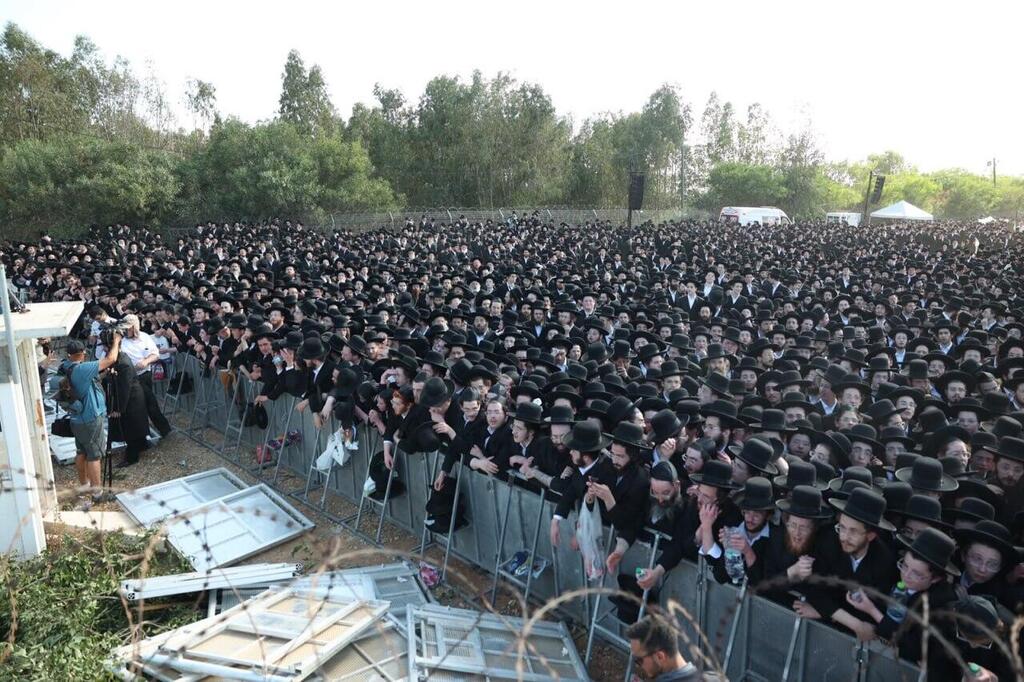
Thousands of Haredi demonstrators gathered outside Prison 10 in protest of arrests of fraft dodgers
By late afternoon, thousands had assembled near the prison. Among those attending was Rabbi Yaakov Aryeh Alter, the leader of the Ger Hasidic dynasty, the largest Hasidic group in Israel and the dominant figure in Agudat Israel's Council of Torah Sages.
Rabbi Haim Denderowitz, head of the Imrei Emet yeshiva, told demonstrators that they had come peacefully. "We came not with violence but with prayers," he said. "We pray that those fighting against Torah study will repent and stop humiliating the Torah."
He accused authorities of focusing on religious students while ignoring other forms of wrongdoing. "They call us draft dodgers," he said. "Our students and married Torah scholars are devoted to Torah study. Those surrounding us abandoned the obligations of Torah and commandments, yet they call us evaders."
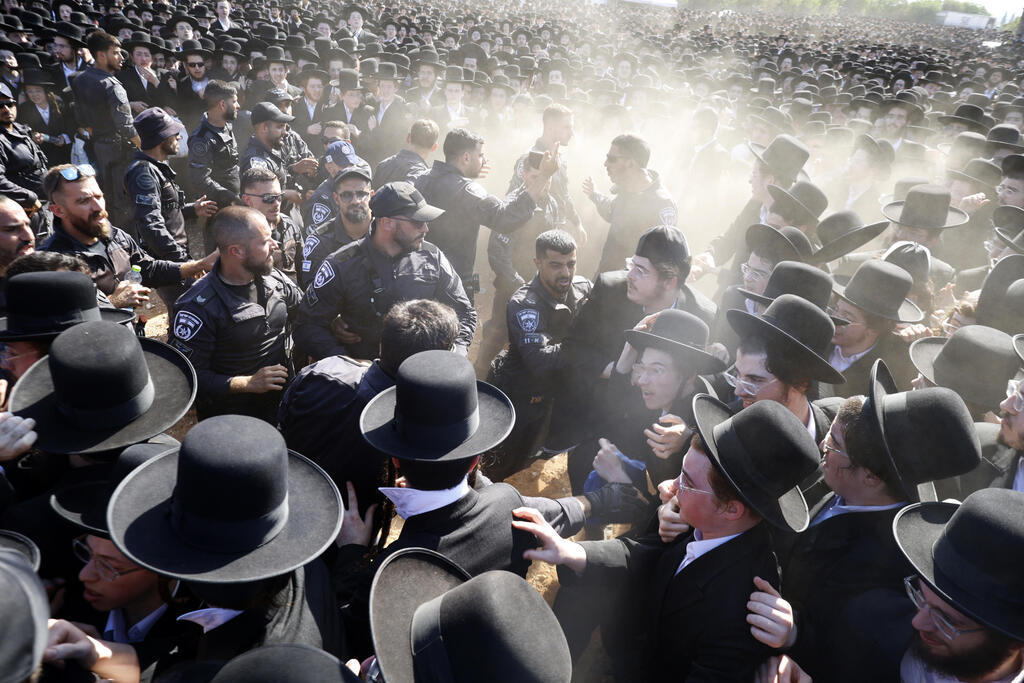
Haredi protesters clash with law enforcement outside Prison 10
(Photo: Amir Levy/Getty Images)
Denderowitz also compared the arrests of Torah students to policies in communist countries under Vladimir Lenin and Josef Stalin, saying religious scholars were imprisoned there as well.
The demonstrations come amid growing tensions over military conscription in Israel. Military service is mandatory for most Jewish Israelis, but ultra-Orthodox men historically received broad exemptions if they studied full time in religious seminaries. Those exemptions have become increasingly controversial during the war in Gaza and amid manpower shortages in the military.
Shas party spokesman Asher Medina told Kol Barama radio on Wednesday that legislation being promoted by Prime Minister Benjamin Netanyahu to prevent the arrest of draft evaders would apply only to ultra-Orthodox students. "Secular refusers from Tel Aviv do not have the status of 'Torah is their profession,' and they certainly deserve to be arrested every day," Medina said.
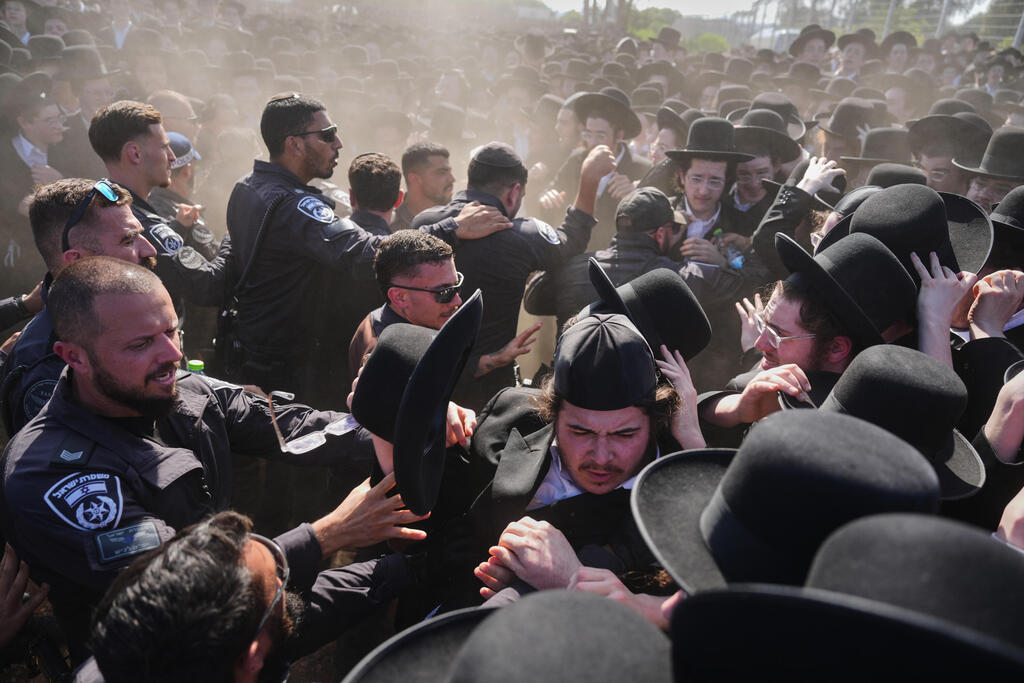
Haredi protesters clash with law enforcement outside Prison 10
(Photo: AP Photo/Ariel Schalit)
Separately, leaders of ultra-Orthodox hesder yeshivas — institutions that combine religious study with military service — appealed to Netanyahu to halt arrests for one year while a compromise solution is developed. "For more than a decade, we have worked to create frameworks that allow members of the ultra-Orthodox community to combine Torah life with sharing the burden of Israel's security," the heads of the institutions wrote.
Authorities did not publicly announce expected road closures, but the Hefer Valley Regional Council warned residents in advance that major disruptions were expected until about 9 p.m., both because of demonstrators and planned police roadblocks.
Among the affected roads were Highway 57 near Beit Lid Junction and Kfar Yona Junction. Officials warned of major delays to buses and transportation services for after-school activities and special education programs.
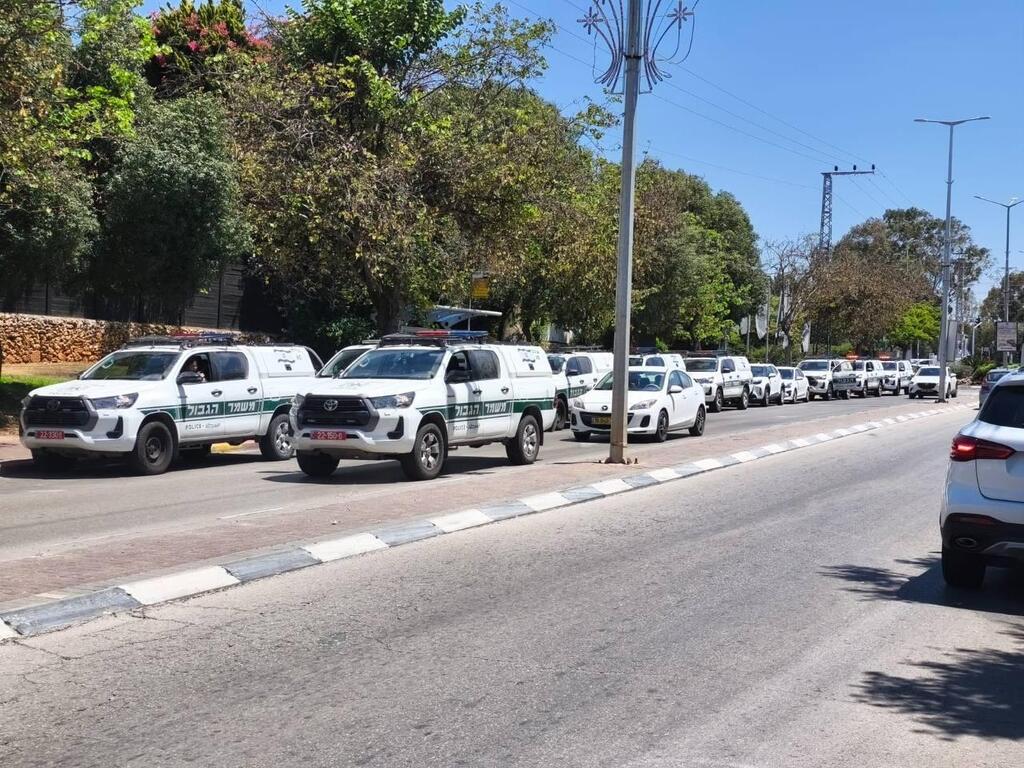
Police reinforcements deployed near the Beit Lid military base ahead of a mass ultra-Orthodox protest over the arrest of draft evaders
Residents of the Givat Alonim neighborhood, located near the military base, said they have borne the brunt of repeated demonstrations. "We are anxious," said Miki Gerbi, chairman of the neighborhood committee. "Everyone came home early from work. The neighborhood is under siege."
Gerbi said previous protests had at times turned violent and prevented residents from entering their homes. "We've experienced many demonstrations here, some of them violent," he said. "Today we expect between 10,000 and 15,000 people. We have only about 400 households."
Another resident, identified only as Dudu, said a protest Tuesday night had already made it difficult to return home. "They don't care about the neighbors," he said. "They shout and blow whistles. The police tolerate it and we suffer."
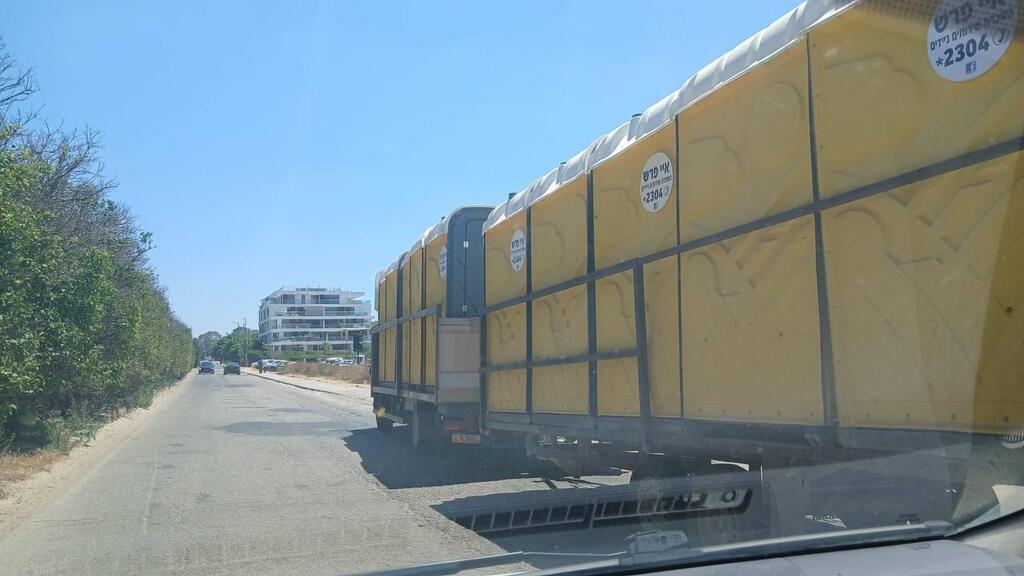
Portable facilities and police preparations near Beit Lid as authorities brace for thousands of ultra-Orthodox demonstrators
He said residents had been advised to collect their children early because access to the neighborhood could become impossible. "What happens if there's a fire or someone needs an ambulance?" he asked. "How will emergency services get in?"
Resident Ilan said neighbors had warned authorities about the problem since plans for the military prison were announced in 2018. "There are children who can't sleep when they hold these demonstrations because they turn it into a carnival," he said.
Kfar Yona Mayor Albert Taieb criticized the decision to locate the prison near residential areas. "They must move Prison 10 out of the city and place it somewhere remote," he said. "Look how an entire city is disrupted by hundreds of buses and thousands of ultra-Orthodox protesters over one detainee, who in my opinion will probably be released in a day or two."