


Prime Minister Benjamin Netanyahu departed for Washington on Tuesday, seeking to block a potential nuclear agreement with Iran, saying he will present Israel’s core principles to U.S. President Donald Trump as negotiations between Tehran and Washington get underway.
Speaking at Ben Gurion Airport ahead of his flight, Netanyahu said the talks with Trump would focus on “Gaza, the region, and above all the negotiations with Iran.” His visit comes after Iran and the United States began indirect talks and as significant US military forces, including the aircraft carrier Abraham Lincoln, remain deployed in the region and prepared for a possible strike on Iran.
Netanyahu heads to Washington


“This is my seventh trip to the United States since President Trump was elected to his second term,” Netanyahu said. “It reflects the unique closeness and the extraordinary relationship between Israel and the United States, and between me personally and the president, something unprecedented in our history.”
“I will present to the president our views on the key principles in the negotiations,” he added. “These are principles that are important not only for Israel, but for everyone in the world who seeks peace and security in the Middle East.”
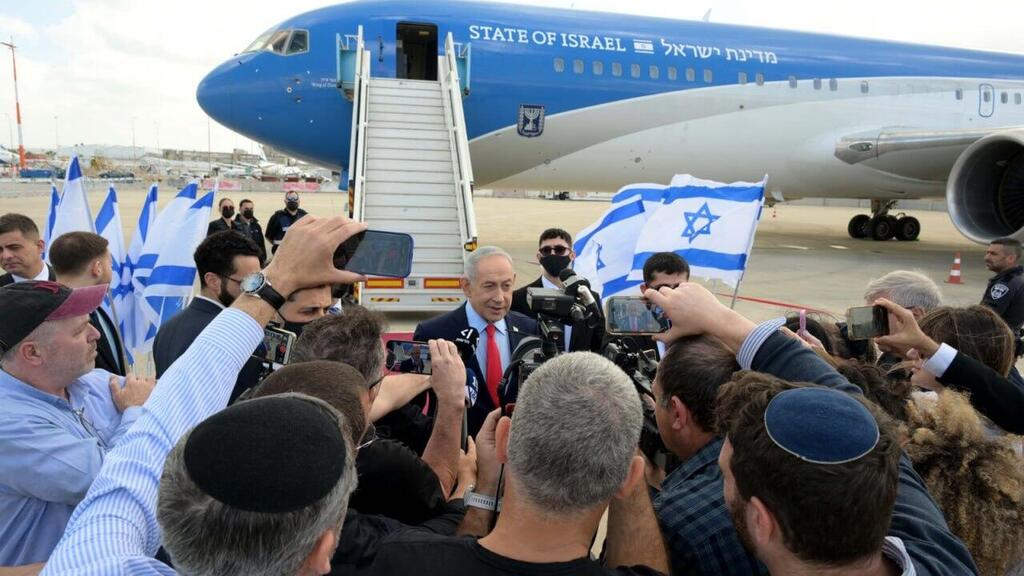
Netanyahu traveled without his wife, Sara, who is not accompanying him on this visit. He is expected to land in Washington around 1 a.m. Israel time. The meeting with Trump is scheduled for Wednesday morning, US time, at the White House and will be held as a closed working meeting without media присутствence.
The decision to hold a closed-door meeting was made by the White House, in contrast to most previous encounters between the two leaders, which included media access and, at times, joint meals, including their last meeting at Trump’s Mar-a-Lago residence in Florida.
Netanyahu is traveling with a relatively small delegation, including his military secretary, Maj. Gen. Roman Gofman, and acting National Security Council head Gil Reich, and without his wife.
Israeli officials say the closed format may be intended to avoid publicly exposing disagreements between Trump and Netanyahu over Iran. Senior officials in Jerusalem say there is significant pressure from Arab states and strong involvement by Trump envoys Steve Witkoff and Jared Kushner, developments that have raised concern in Israel.
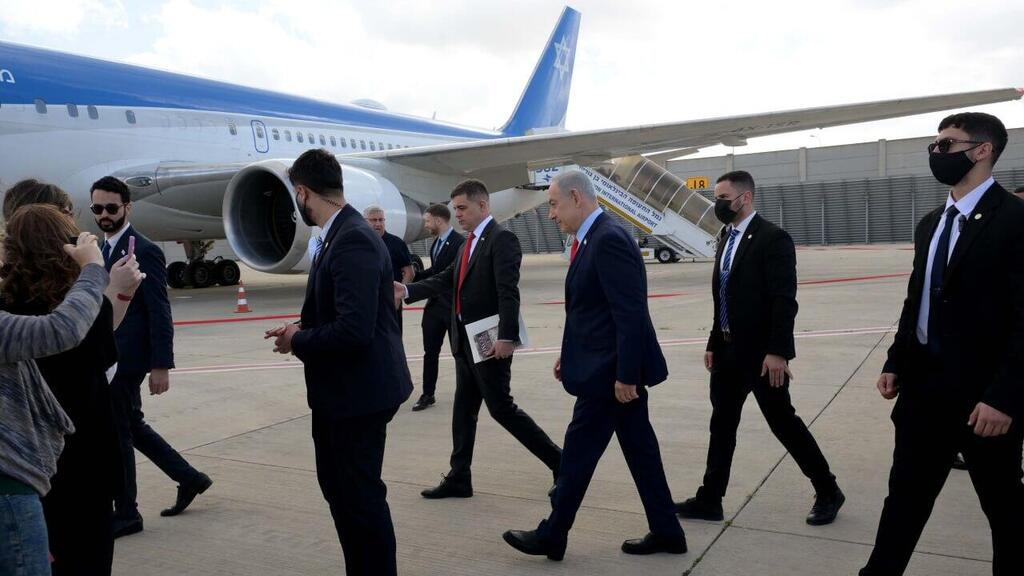
(Photo: Avi Ohayon/ GPO)
In Jerusalem, there is fear Trump could reach what officials describe as a “hollow” agreement with Iran, one that would address only the nuclear issue without meaningful oversight by the International Atomic Energy Agency. Israeli officials worry such a deal would effectively constrain Israel’s ability to act against Iran while an agreement between Washington and Tehran is in place.
In such a scenario, Netanyahu would also find it difficult to publicly criticize Trump, who is widely regarded in Israel as the most pro-Israel US president to date. During Trump’s previous term, Israel refrained from military action against Iran while the nuclear agreement was in effect, despite repeated threats and assertions that it was not bound by the deal.
Meanwhile, Iran’s Foreign Ministry commented Tuesday on the negotiations that began over the weekend in Oman, which is mediating between the sides. Spokesman Esmail Baghaei said the talks were intended primarily to “test Washington’s level of seriousness” and that, despite deep mistrust, it appears possible to continue the contacts.
“It is not possible to predict the duration of the negotiations or their end date,” Baghaei said. “We are negotiating with the goal of reaching a swift conclusion and do not want to prolong the process.”
“We are acting energetically and want to reach an agreement with the United States that guarantees the lifting of sanctions,” he added. “One of the problems facing the United States in the region is its submission to Israel’s demands.”
Baghaei said Iran expects the United States to act independently of Israel’s influence and accused Israel of seeking to sabotage any agreed solution to regional crises, citing ongoing Israeli strikes in Gaza and the West Bank.
“We view every Israeli move as coordinated with the United States,” he warned, adding that Iran’s response to any aggression would be “strong, decisive and painful.”
Iranian officials have also continued to issue forceful statements alongside expressions of diplomatic openness. In a statement marking the anniversary of the Islamic Revolution, Iran’s military said it would respond decisively to any threat, while Air Force commander Brig. Gen. Bahman Bahmard said recent fighting with Israel had restored Iran’s combat readiness.
Netanyahu’s visit is being closely watched in Jerusalem, where officials fear the negotiations could result in an agreement that would limit Israel’s freedom of action at a critical moment in the region.