


More than 150 fighter jets struck weapons production sites across Tehran over the past 24 hours, but the sustained air campaign could end within days as pressure mounts on Israel to wrap up the war in the next two to three days ahead of a possible ceasefire aimed at opening negotiations between Iran and the United States on a deal.
Israeli officials assess that the chances of reaching an agreement remain low, even after U.S. President Donald Trump again extended his ultimatum to Iran. In Israel, the view is that the 15 points in the U.S. draft proposal are extremely difficult for Iran to accept, and that few believe Tehran will agree to the offer.
IDF strikes on Tehran, Shiraz and Tabriz
(Video: IDF)


At the same time, U.S. officials are said to be preparing for the possibility that talks could collapse. Alongside the diplomatic push, the United States is increasing pressure on Iran while continuing preparations for a possible ground operation.
Among the scenarios under discussion are the seizure of Kharg Island, Iran’s main oil export terminal in the Persian Gulf, taking control of the Strait of Hormuz and removing enriched uranium. Thousands of U.S. troops are arriving in the Middle East as pressure on Iran intensifies. U.S. officials hope the buildup could push Iran to accept their terms, though there is no assurance it will do so.
Israeli officials are not expected to acknowledge it publicly, but a U.S. ground operation is seen in Israel as the preferred option, together with strikes on Iran’s oil and gas infrastructure. The assessment in Israel is that a ground operation could create a chance to break Iranian resistance or force a surrender.
Meanwhile, preparations are underway in Pakistan for possible U.S.-Iran negotiations, and there is also growing attention to the possibility that Washington could announce a ceasefire as early as this week to allow talks to proceed. In Israel, officials are operating on the assumption that time is limited and that as many targets as possible must be hit before any halt in fighting. Israel’s preferred course is to continue attacks until the target bank is exhausted.
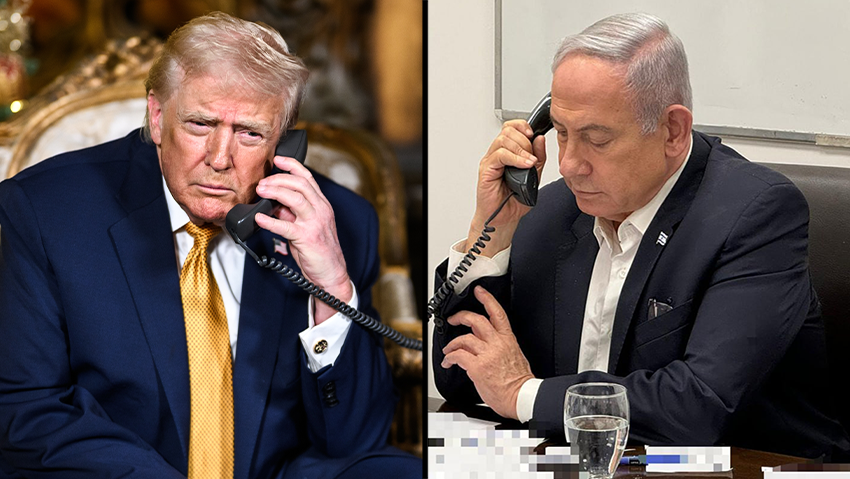
US President Donald Trump and Prime Minister Benjamin Netanyahu
(Photo: Shutterstock, Prime Minister's Office)
Israeli officials are also concerned about a scenario in which the United States announces a ceasefire and seeks to apply it to Lebanon as well. Israel has asked Washington not to link the theaters, but officials believe the final decision rests with Trump. More broadly, there is a sense in Israel of uncertainty and confusion over what decisions Trump may ultimately make.
There is coordination between the two countries. CNN reported that IDF Chief of Staff Lt. Gen. Eyal Zamir met on Sunday with Admiral Brad Cooper, the commander of U.S. Central Command, which is effectively leading the American leg of the campaign. But Israeli officials say their ability to influence Trump is limited, and that he has a range of interests that do not directly concern Israel.