

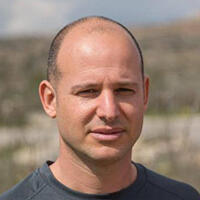
As he prepares to leave one of Israel's elite military units after two years in command, the outgoing commander of the Maglan special forces unit said Hezbollah has been severely weakened and revealed new details about the terrorist group's extensive underground tunnel network near the strategic Beaufort Ridge in southern Lebanon.
Lt. Col. B., 37, who is married and the father of four, is completing his tenure as commander of Maglan and will soon take over the Carmeli Reserve Brigade. He will be succeeded by Lt. Col. G., the former commander of the Nahal Brigade's 50th Battalion.
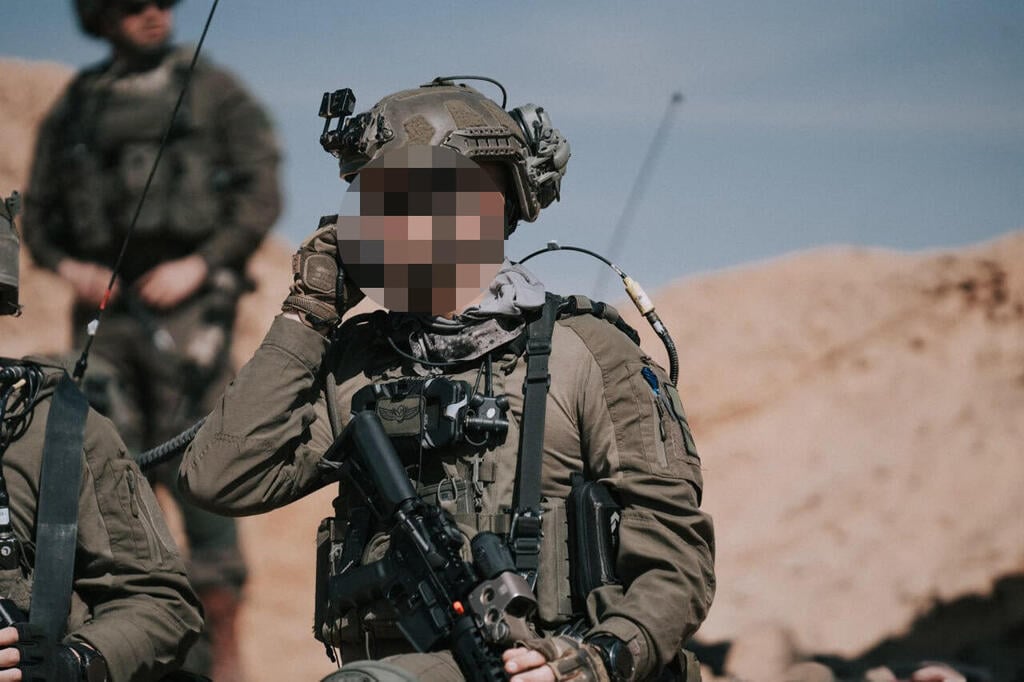
The commander is leaving the unit after months of continuous fighting and deep ground operations in Lebanon. In an interview with ynet and its parent newspaper Yedioth Ahronoth, he described what he sees as the collapse of Hezbollah's defensive network, built over two decades.
"I think we are fighting an organization that has been badly beaten," he said. "A year and a half ago, Hezbollah was still fighting us directly. Today, it barely dares to create friction with the army. It is simply retreating."
According to him, Hezbollah operatives increasingly avoid direct contact with Israeli troops. "Their commanders are sending them into southern Lebanon simply to die, and they are trying to avoid engaging us face to face," he said. "What they have left is trying to enhance their drone capabilities."
The growing drone threat has become one of the main challenges facing Israeli forces. "It's a new challenge, but every period brings a different weapon system that troubles us. We study it and learn how to deal with it," he said. "Today we have more tactical and technological solutions."
He recalled a deadly incident in which an explosive-laden first-person-view (FPV) drone equipped with thermal capabilities killed one of his soldiers during a nighttime attack. "It wasn't surprising that they moved to night operations with drones. Hezbollah was simply looking for cheap solutions," he said. "But did drones stop the IDF from reaching Beaufort Ridge? Absolutely not. I haven't seen a single place where the army stopped because of that threat. Protecting civilians in communities is more complicated."
One of Maglan's most significant achievements under his command was the destruction of Hezbollah's underground complex beneath Beaufort Ridge, north of the Litani River.
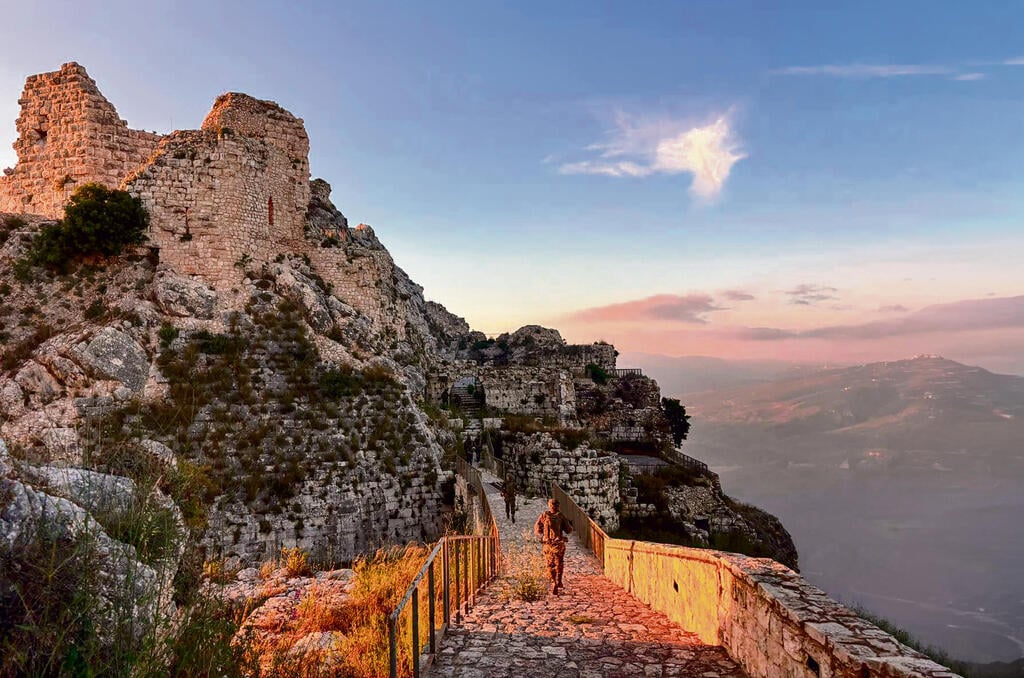
Beaufort Castle
(Photo: IDF)
The operation had been in preparation for months and was jokingly referred to inside the unit as "Maybe This Time."
"We spent two years preparing for this mission," Lt. Col. B. said. "We presented every possible plan and every possible method of getting there. At least three times we reached the stage of obtaining approval from the chief of staff, and every time it was postponed again."
He said the unit had absorbed heavy fire from the area, which had also been used to attack Israeli communities in the north. "In the end, over the last two years and eight months, I saw things I never believed would happen before the war," he said. "I learned that nothing is impossible."
According to the commander, the real Beaufort stronghold was underground. "If Hezbollah had used this asset the way it planned, the challenge for us would have been very difficult — extremely difficult," he said.
He described the complex as "an underground city" with food and water supplies lasting months, operating rooms and a fully equipped underground hospital capable of treating wounded fighters.
"We found an insane amount of weapons and huge warehouses containing hundreds of explosive devices that were intended to be deployed along the roads," he said. "Above all, you see a clear Iranian fingerprint."
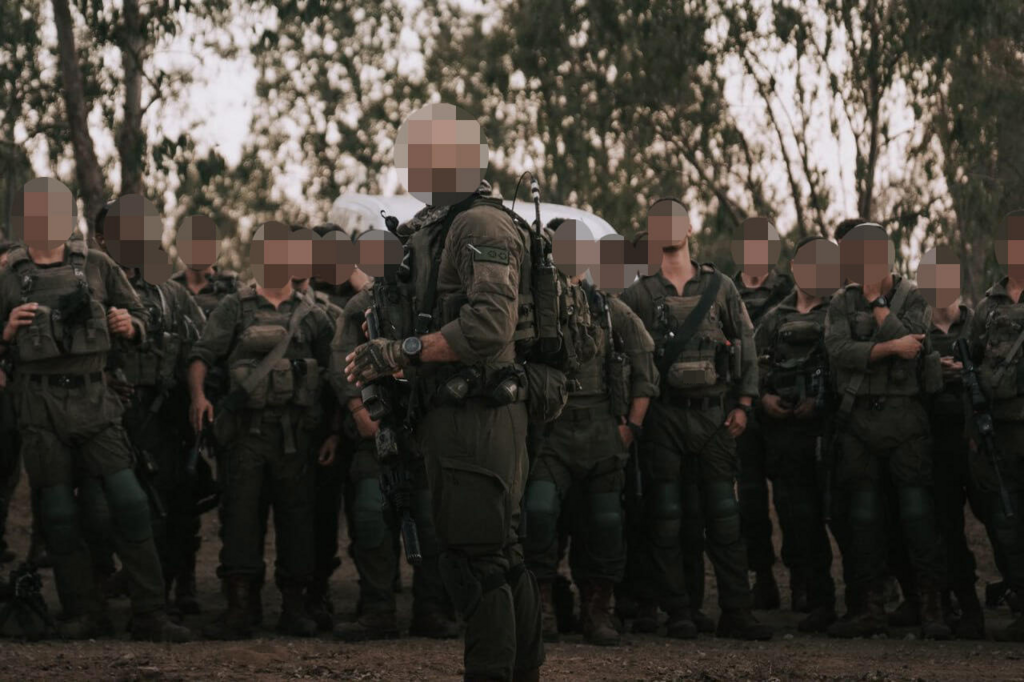
Lt. Col. B. and his troops
(Photo: IDF)
One of Maglan's central missions was clearing the routes needed for larger formations advancing toward the Litani River. "We dismantled hundreds of explosive devices on the roads," he said. "It was one of the most complex operations we have undertaken, all in order to open the way for the Golani and Givati brigades."
He said the scale of the defensive preparations demonstrated both Hezbollah's investment and its fear of Israeli military capabilities. "The terrain in northern Israel and southern Lebanon is not like the sand in Gaza," he said. "The rocky ground required years and years of digging to reach such depths."
"A project built over decades became irrelevant within a single week," he added. "We took away all of their assets."
According to the commander, Hezbollah today no longer possesses effective fighting zones in southern Lebanon. "I ask myself whether they will ever be able to rebuild what we invested so much effort in destroying," he said.
Asked whether the latest round of confrontation with Iran had affected operations in Lebanon, Lt. Col. B. said the military's objectives had not changed. "The army is fighting at full intensity," he said. "If tomorrow the chief of staff decides to move elsewhere, one order over the radio and it happens."
He said the military was already positioned for additional operations and praised the professionalism of units such as the Golani and Givati brigades.
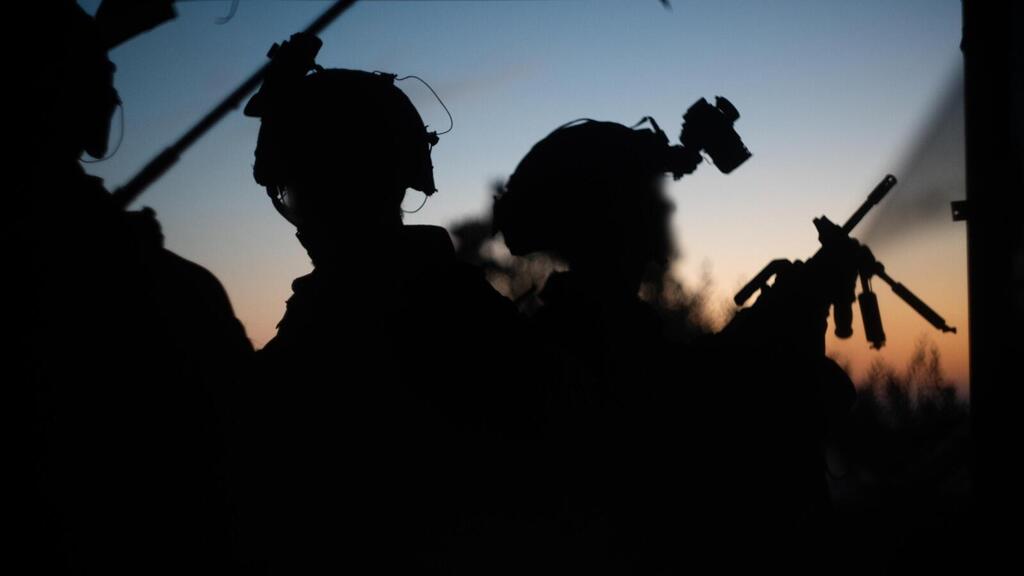
IDF forces operating in Beaufort Ridge sector
(Photo: IDF)
Despite the operational successes, he acknowledged the heavy burden placed on soldiers. "There is no doubt the unit has gone through an extraordinary process," he said. "Our team commanders and fighters almost never go home."
During the current campaign, the unit spent eight consecutive weekends on duty. "I personally have not spent one full Sabbath at home during the past year, except for brief visits between operations," he said.
He highlighted the contribution of Maglan reservists, who recently led operations at the Ali Taher ridge. "They were released home three weeks ago, and after only a week and a half, once approval came, they immediately returned," he said.
Within 48 hours, reserve forces, together with the Golani Brigade and the elite Yahalom combat engineering unit, captured what he described as the most difficult objective in the area.
Asked about the strategic importance of pushing Hezbollah farther from Israel's border, the commander said he was not a politician but argued that militarily, distance matters. "When you move the enemy away from the fence, the fighting takes place against the army and not inside our communities," he said.
He expressed hope that Lebanon would eventually disarm Hezbollah but stressed that any future agreement would not eliminate the need for a strong military. "Even if the best peace agreement imaginable is signed, we will still have to continue investing heavily in the IDF," he said. "Any agreement will come only from a position of strength. The other side will reach an arrangement only when it understands it simply cannot stand against our army."