

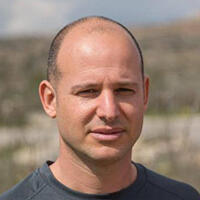
Lt. Col. N., commander of the IDF’s counterterrorism unit known by its Hebrew acronym LOTAR, said Sunday that his forces are operating at a very high pace along the northernmost line where the Israeli military is active in southern Lebanon.
“The forces are operating at a very high pace. Within just a few hours, they complete scans and demolitions of numerous targets. That’s our expertise,” he said.
LOTAR unit fighters in Lebanon
(Video: IDF)


The LOTAR unit specializes in urban warfare. In routine times, it also trains the IDF’s special units to operate in densely built environments. “The rural arena, like Lebanon, combines different combat worlds — both open terrain and built-up areas,” explained Maj. N., a company commander in the unit. “Ultimately, the unit serves as a backbone for training in sniping and breaching.”
Now, all of the unit’s capabilities and skills are focused on operations in the complex terrain of southern Lebanon. “We take our expertise from urban combat and create rapid transitions,” Lt. Col. N. said. “Our ladders are a game changer — our biggest advantage. They allow us to move quickly between rocks, boulders, terraces, walls and cliffs.”
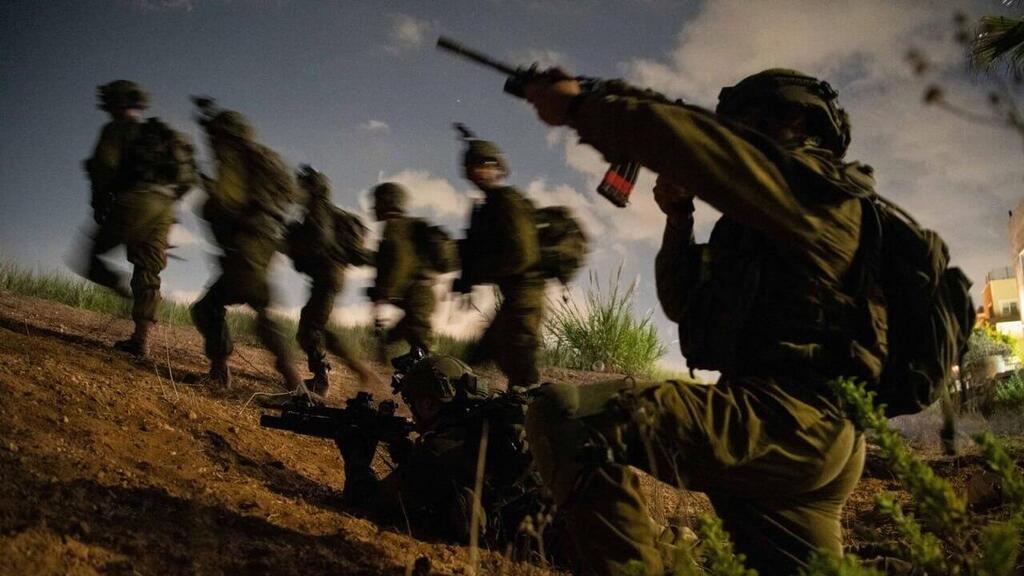
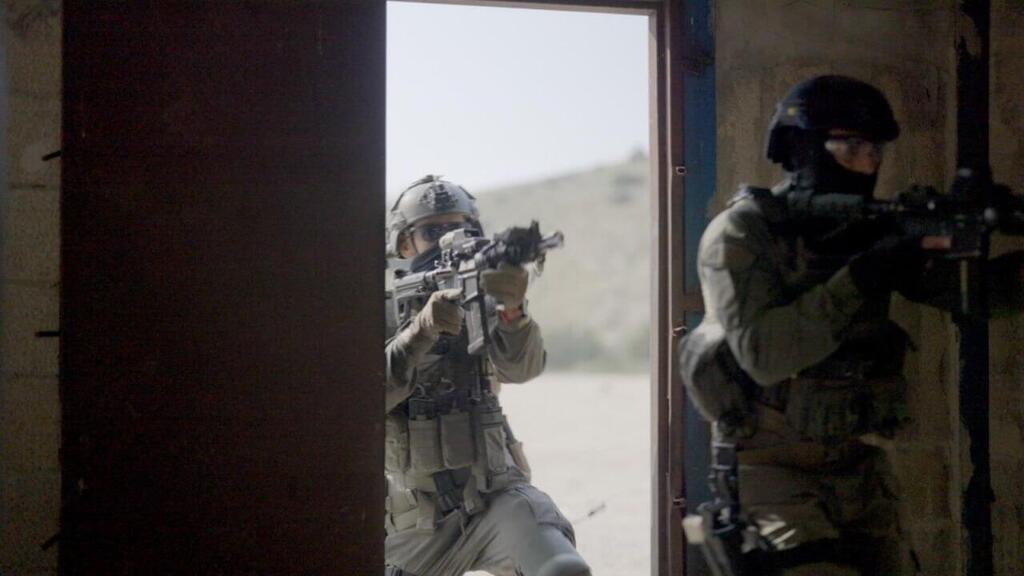
(Photo: IDF)
Beyond the weather, the main challenge facing troops in southern Lebanon is the high-trajectory fire launched by Hezbollah toward Israeli forces. “The fighters are creating a buffer between Lebanon and residents of the north, and that’s the result,” Maj. N. said.
“We continue our attacks even under a barrage of mortars. Rockets sometimes land among the forces, sometimes on targets we’re on the way to clear. Hezbollah also uses drones that drop explosives, so we constantly stay sharp — maintaining concealment while advancing quickly toward objectives. When that happens, we blend into the terrain, take whatever cover is available and wait for a lull. Some cling to rocks or buildings, while armored vehicle crews move into their vehicles. On the defensive side, we do everything we can.”
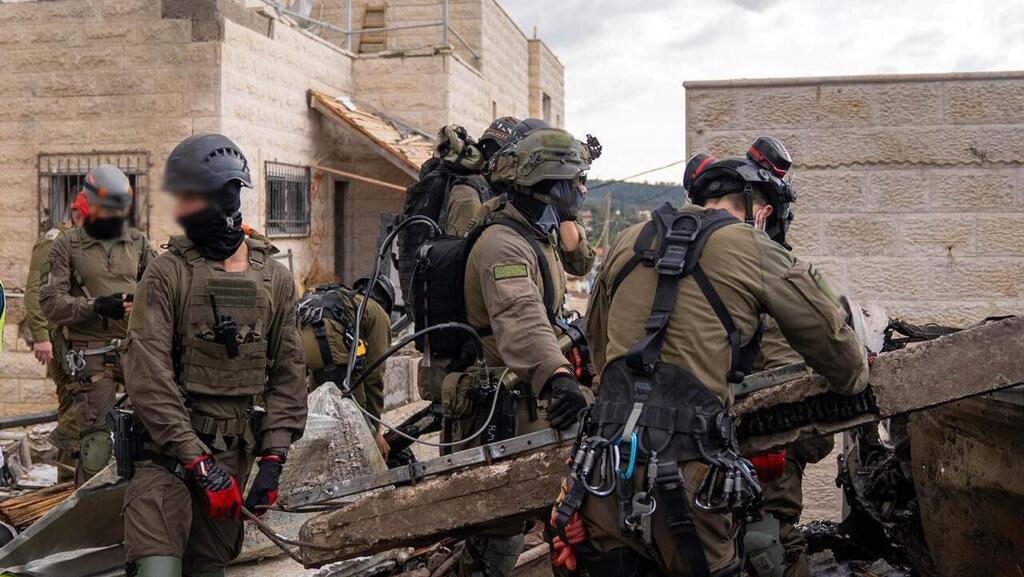
(Photo: IDF)
The fighting in the north is not characterized by close-quarters combat. While there have been some encounters, there are relatively few instances in which troops see the enemy directly. “On one hand, it’s combat under fire — you’re being shot at constantly, whether direct or indirect fire,” Maj. N. said. “But on the other hand, you don’t encounter militants around every corner (known in military slang as a ‘zig,’ meaning a corner). You’re fighting an enemy that can close the loop on you. They can identify where we are and direct fire there. It’s a much weaker enemy than what we faced during ‘Northern Arrows’” — an Israeli operation in the north — “but it is still firing.”
According to the unit’s fighters, the nature of the fighting in the north requires rapid judgment and decision-making by commanders in the field before every mission. “We have defined time frames for each mission, depending on factors like weather and enemy deployment,” Maj. N. said. “Because of the nature of the fighting, things change instantly. There have been many times I set out with my troops to seize a target and saw Hezbollah attacking it with heavy rocket fire. So we shift to a reverse slope, recalculate direction and re-enter, attacking from an area the enemy didn’t anticipate. That’s happened to me several times.
“I’ve learned here in southern Lebanon that pre-mission planning and attention to detail — understanding the terrain, reaching the objective, the method of the raid and demolishing the structure — are critical to mission success. The terrain here is being leveled. Anything identified as having been used by Hezbollah is demolished.”
The unit’s expertise has also been evident in responding to missile impact sites in central Israel. Their ability to access complex locations using specialized methods has led the Home Front Command — the military body responsible for civilian defense — to rely on them at some of the most difficult scenes during the war so far. “Since the start of the operation, all of our breaching and drone teams have been on standby,” said Staff Sgt. R., a commander in the unit’s training company. “We arrived at a site in Beit Shemesh and quickly overcame obstacles to rescue wounded people and recover the dead. We were among the first to arrive, descending into collapsed floors to extract them as quickly as possible.”
Staff Sgt. R. emphasized that alongside frontline fighting in Lebanon and assistance at complex impact sites, the unit continues to train fighters from the IDF’s special units. “The training courses are critically important. They ensure operational continuity and readiness of the special units,” he said.