

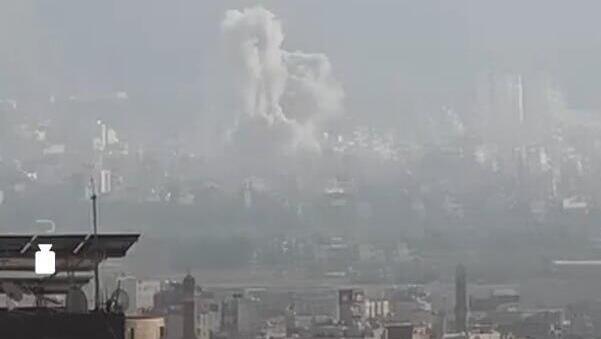
The Israeli Air Force struck Houthi targets in Sanaa on Thursday, just hours after intercepting two drones launched from Yemen and during a speech by Houthi leader Abdul-Malik Badreddin al-Houthi, which continued without interruption. Israel says that among the targets of the attacks was also a meeting of senior Houthi officials.
IDF forces attack on Sanaa


Lebanon’s Al-Mayadeen network, affiliated with Hezbollah, reported that more than 10 strikes hit the Yemeni capital, Sanaa, and attacks were reported in the provinces of Amran and Hajjah. Sources told the Saudi Al-Hadath TV channel that the attacks "targeted Houthi positions in the Hajjah area. They targeted houses where Houthi leaders were hiding."
The attacks were approved by Defense Minister Israel Katz, along with IDF Chief of Staff Lt. Gen. Eyal Zamir and the IDF's senior command, who spoke with Prime Minister Benjamin Netanyahu on the red line.
Earlier in the day, air raid sirens were activated in the southern Israeli communities of Bnei Netzarim and Naveh, near the border with Egypt, amid concerns about a possible hostile aircraft incursion.
The drone was intercepted successfully by the Air Force. About 90 minutes later, the Israeli military announced it had downed a second drone, which had not entered Israeli territory.

Houthi leader Abdul-Malik Badreddin al-Houthi
The Israeli Air Force carried out strikes Sunday on several sites in Sanaa, including the abandoned presidential palace, a fuel depot and power stations. More than 10 fighter jets took part in the operation, using about 35 munitions, the military said. The farthest target struck was more than 2,000 kilometers (1,240 miles) away, requiring about five and a half hours of flight and multiple midair refuelings.
The strikes in Sanaa came shortly after the Israeli military released initial findings from its investigation into a missile fired from Yemen on Friday. The probe confirmed an earlier Ynet report that the missile carried a cluster warhead—the first time Houthi forces have launched such a missile at Israel.
The missile struck a home in the village of Ginaton, near Lod. The Israel Defense Forces said the interception failure is under review but added it was not related to the type of missile used. “Air defense systems, especially the upper-tier layer, are capable of intercepting such missiles, as they have done in the past,” the military said.
Ynet reported before the findings were published that the military was examining whether the missile carried submunitions similar to those used by Iran in the 12-day war, which spread small bomblets over a wide area.