

Dr. Edith Eger, a psychologist, author and Auschwitz survivor, died Monday at 99.
Eger lost her entire family in the Holocaust except for her sisters, Magda and Klara, and turned her life story into a journey of healing, freedom and humanity.
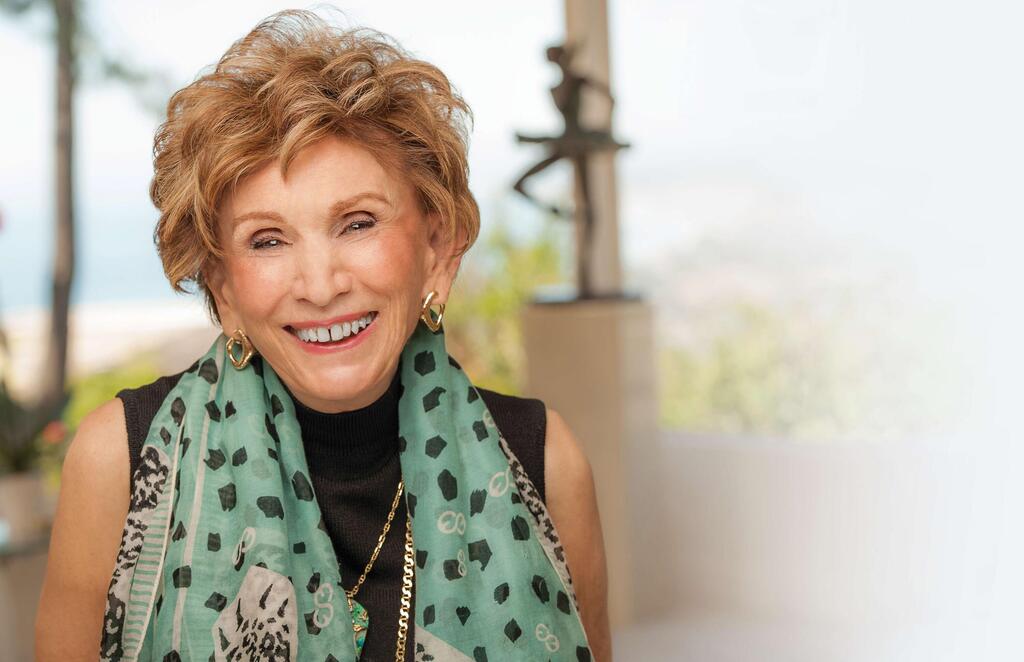
Dr. Edith Eger
(Photo: Jordan Engle)
In her books, The Choice, The Gift and The Ballerina of Auschwitz, Eger combined personal memory with deep insights into the human mind, writing about the ability to choose life even after profound trauma. In her writing and therapeutic work, she repeatedly stressed that while people cannot change what happened to them, they can always choose how to live afterward. Against all odds, she chose to build a life of meaning, compassion and hope.
Eger was a dancer. At 16, she and her family were forced onto a train to Auschwitz. Hours after her parents were murdered in the gas chambers, Dr. Josef Mengele forced her to dance for him. A young prisoner and newly orphaned, Eger danced to The Blue Danube to entertain Mengele — and to save herself.
In her autobiographical book The Choice, she described the shattering yet consoling realization that came to her in that moment: “[W]hile Mengele had all the power, while day after day he chose with his grotesquely wagging finger who would live and who would die, he was more a prisoner than I was. I was innocent. And free.”
Eger and her sisters were the only members of their family to survive the horrors of Auschwitz. Many years later, she said that surviving the death camp was only the first stage in her journey to freedom. In interviews, she often said she remained a prisoner of the past for decades.
She went on to build a wide-ranging career, teaching and lecturing, including in TED talks, and treating individuals and couples. She also worked with wounded veterans and survivors of physical trauma, and trained hundreds of therapists in her method.
Revital Yakin Krakovsky, CEO of March of the Living in Israel, told ynet that “in the past week, close to Holocaust Remembrance Day, we have said goodbye to three Holocaust survivors in Canada, the United States and Israel.”
“Each of them was an entire world, with an inspiring life story,” she said. “The pain is immense, and the understanding is becoming sharper that our time with Holocaust survivors is limited. The memory of the Holocaust lives in their souls. We have only a few years left to listen to them, embrace them, march with them and ensure their story continues to live through us. Every such encounter is a gift, and every moment is sacred.”