

The internal crisis caused by Ukraine’s relentless drone attacks on energy facilities in Russia worsened significantly Sunday, as authorities in the Crimean Peninsula, which Russia seized and annexed from Ukraine in 2014, announced a total ban on fuel sales to the general public amid the growing shortages caused by those attacks.
Crimea is of major strategic importance to Moscow and, since the February 2022 invasion deep into Ukraine, it has served as a logistical base from which Putin’s army also launches a range of missile and drone attacks. But Kyiv is now managing to choke off oil supplies to the peninsula, which is itself facing intensifying drone attacks, mainly targeting energy facilities, roads and bridges through which Moscow transports fuel.
Gallery
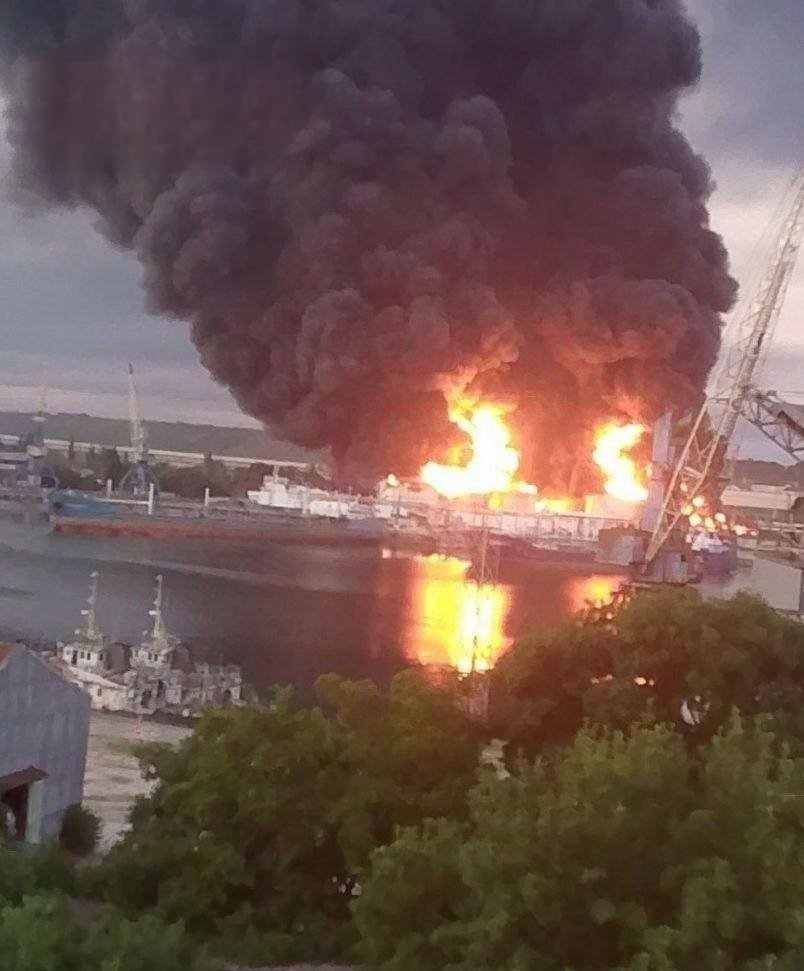
Photo circulated by the Ukrainians purporting to show a huge fire at an oil facility that was attacked in Crimea
Among other targets, Kyiv has repeatedly struck a main road running through southern Ukraine, in territories occupied by Russia, connecting Crimea to the Russian city of Rostov via the occupied Ukrainian city of Mariupol.
Although fuel shortages have also been reported in other parts of Russia, the crisis has been felt especially acutely in Crimea since last month, when consumption was capped at 20 liters per car owner per week and residents were required to use prepaid vouchers. Those vouchers were snapped up quickly, and huge lines formed at gas stations across Crimea. Requests and recommendations on ways to find fuel spread on social media, while the authorities set up a hotline for tourists who found themselves trapped on the peninsula with no way to drive back to their homes in other parts of Russia.
But the shortage has only grown since then, and on Sunday morning Crimea’s Moscow-appointed governor, Sergei Aksyonov, announced that fuel sales would be completely banned for civilians and would now be allowed only for emergency and rescue services and other government bodies providing essential services. He said all sales at gas stations to nongovernmental entities would be banned until further notice. “I ask everyone to remain calm and rely only on official sources of information,” he said in his statement.
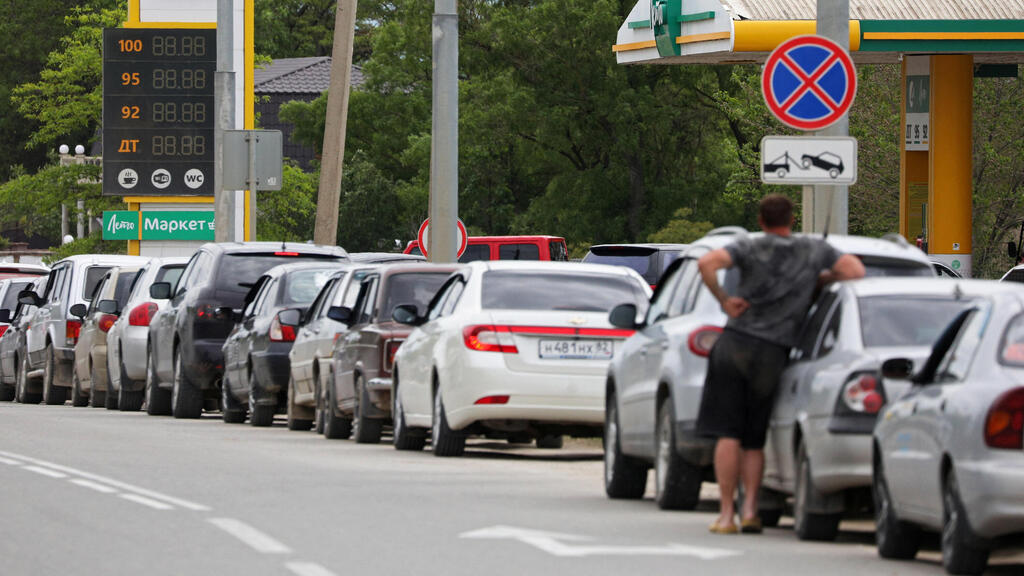
A line at a gas station in Crimea, earlier this month
(Photo: Alexey Pavlishak/Reuters)
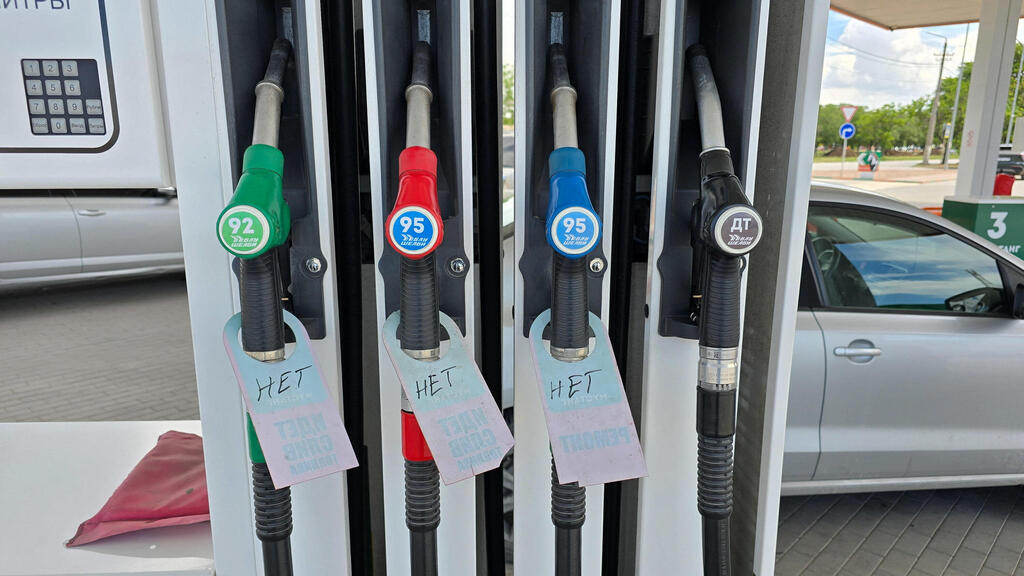
Signs indicating no available fuel at Crimea gas stations
(Photo: Alexey Pavlishak/Reuters)
The dramatic ban comes after the governor said four people were killed and 28 others wounded overnight in another Ukrainian drone attack in Crimea. He did not say what the target of the attack was, but Ukrainian President Volodymyr Zelensky said the strike was aimed at an oil depot in the Kerch area of the peninsula. He said the overnight attack also hit an oil terminal in the Krasnodar region, a Russian region near Crimea on the other side of the Kerch Strait in the Black Sea. Authorities in Krasnodar confirmed there had indeed been an attack overnight, saying one person was killed on a passenger ferry that was hit.
Zelensky again called his country’s drone attacks “long-range sanctions,” and claimed that S-400 and Pantsir air defense systems were also hit in the Crimea area. In a statement posted on social media, he added: “I thank all our warriors for their precision and professionalism. Russia understands only force, and our long-range force is definitely working for peace.”
Roof of a gas tank blown off in Ukrainian attack on Moscow


The Ukrainian attacks are, of course, not aimed only at Crimea. Kyiv has recently stepped up its strikes on energy infrastructure deep inside Russian territory, stunning Moscow just last Thursday with a massive attack that triggered major panic there after thick smoke rose from a hit on an oil facility, with residents reporting “oil rain.” The attacks are intended not only to disrupt Russia’s oil industry, thereby denying the Kremlin enormous revenues that enable it to continue funding the war against Ukraine, but also to make Russian civilians feel the war firsthand.
Zelensky admitted as much openly when he said, for example, in an interview last month with the British newspaper The Guardian: “Victory in this war will come when Russian society recognizes that war is terrible, that war is a tragedy not for someone, somewhere, but for them. And I think that is what creates momentum.”
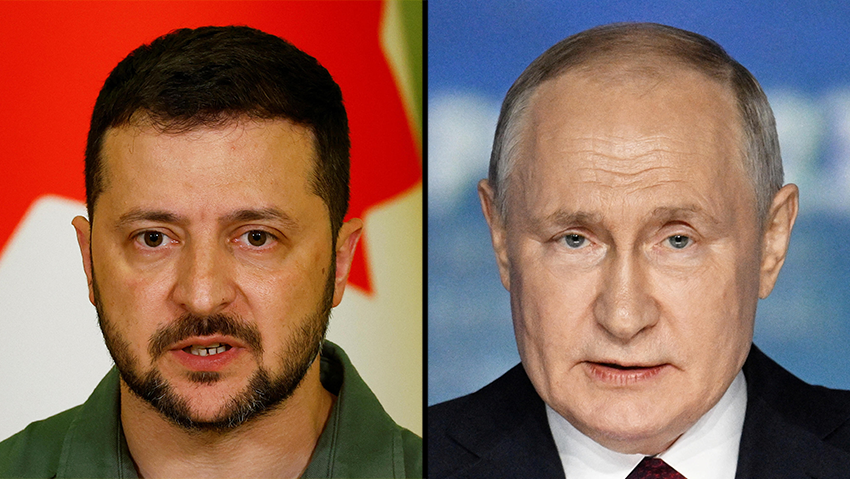
Zelensky and Putin
(Photo: Reuters)
Kyiv appears to be succeeding to some extent in undermining Putin’s standing with these attacks and, according to polls, his popularity has been damaged by the disruptions to Russians’ daily lives. The Kremlin itself unusually acknowledged the existence of “problems” in the energy sector and promised to act to address the situation.
Russia is the world’s third-largest oil producer and a major exporter of oil and fuel. Nevertheless, it is expected to be forced to import fuel by sea this month to cope with the fuel shortages caused by Ukraine’s extensive drone attacks on its refineries, according to recent confirmations from sources in Russia’s oil industry.
The Ukrainian attacks are also having a tangible impact on the battlefield, hitting supply lines for Russian forces at the front. NATO Secretary-General Mark Rutte said last week that “Ukraine is in a very good position” and claimed that Russia is losing between 30,000 and 35,000 soldiers a month. He said talks were underway “with all allies” to ensure Kyiv receives the equipment it needs, including interceptors and weapons systems. U.S. President Donald Trump also said Russia is losing more soldiers than Ukraine.