

Iran has rejected a U.S.-backed proposal for a temporary ceasefire, instead demanding a permanent end to the war and broader regional changes, according to the state news agency IRNA and officials familiar with the negotiations.
U.S. President Donald Trump said Monday that a Tuesday deadline he set for Iran to reach a deal is final, adding that Tehran’s proposal was “significant” but “not good enough.”
Gallery
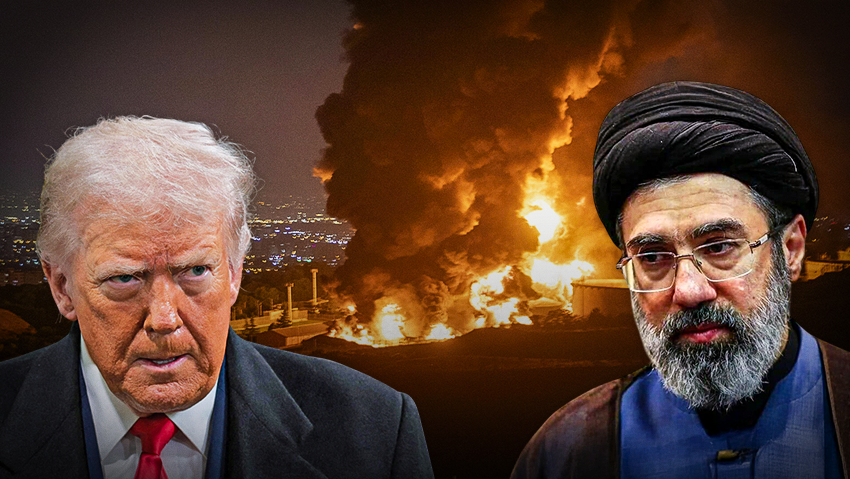
Iran demands a permanent end to the war and broader regional changes
(Photo: Anna Moneymaker/ AFP, Stringer/ Getty Images)
“They made a proposal, and it’s a significant proposal. It’s a significant step. It’s not good enough,” Trump said at a White House event.
“It could end very quickly, the war, if they do what they have to do,” he said. “They know that.”
Trump also signaled frustration with the situation while stopping short of committing to a prolonged military engagement.
“If I had my choice, I would take the oil,” Trump said, adding that “unfortunately, the American people want to see us come home.”
He warned Tehran would face consequences. “I am very upset. They are going to pay a big price for that,” he said, adding that Iran still retains “some missiles and drones.”
“They got a lucky shot,” Trump said, without specifying the incident.
At the same time, Trump expressed hope the conflict would end soon. “Hopefully it will be over with quickly,” he said.
“We could leave right now, but I want to finish it up,” he added.
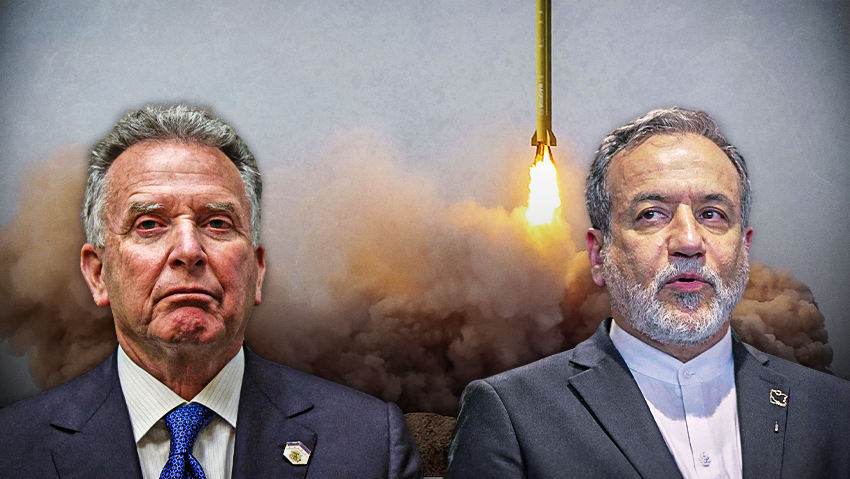
US envoy Witkoff and Iranian Foreign Minister Araghchi. The IRGC refuse to give up closing the Strait of Hormuz
(Photo: RS/Dawoud Abu Alkas, Reuters/Evelyn Hockstein, AP/Hassan Ammar)
After two weeks of deliberations, Tehran conveyed a formal response through Pakistan, a key mediator in the talks. The reply, outlined in 10 clauses, rejects a proposed 45-day ceasefire and calls for a full and lasting end to the conflict.
Iran’s response also includes demands to end “conflicts in the region,” a reference Israeli officials interpret as linking any deal to the war with Hezbollah in Lebanon. Tehran is also insisting on a new framework for safe passage through the Strait of Hormuz, along with sanctions relief and reconstruction commitments.
Messages reaching Israel indicate that the United States is eager to secure a temporary ceasefire, in line with its timeline for the war and following what it views as the completion of key military objectives.
Prime Minister Benjamin Netanyahu spoke overnight with Trump for about 30 minutes, as Washington’s envoy Steve Witkoff continues to update Israel on contacts with Pakistani mediators and Iranian Foreign Minister Abbas Araghchi.
A senior Israeli official said shortly before Iran’s response was delivered that Washington’s main difficulty was the lack of a clear answer from Tehran.
“It could go either way,” the official said. “Our assessment is that it will end in an explosion. Mojtaba Khamenei has not provided a response, and the Revolutionary Guards are difficult to move away from their extremist ideology. They are not willing to open the Strait of Hormuz.”
Sources familiar with the matter said Khamenei’s son has been injured and has not responded quickly. Israeli officials also say Trump’s final decision remains unclear, and Israel is preparing for both scenarios: a temporary ceasefire followed by negotiations, or a significant escalation.
Another Israeli official said, “It’s heading toward an explosion,” attributing the assessment to Iranian conduct in the talks.
At the same time, Israeli officials assess that Iran is struggling to accurately target critical infrastructure inside Israel, including energy and national systems, and has so far failed to inflict significant damage on key assets.
Separately, The Associated Press reported that Iran and the United States received a draft proposal for a 45-day ceasefire, under which the Strait of Hormuz would be reopened and both sides would enter negotiations aimed at ending the war by agreement.
The proposal was put forward by Egyptian, Pakistani and Turkish mediators, who hope the temporary pause would allow time for broader talks toward a permanent ceasefire.
The draft was delivered overnight to Witkoff and Araghchi. A White House official confirmed to NBC that such a proposal had been presented but cautioned that it remains one of several options under discussion and has not yet been approved by the president.
First published: 18:09, 04.06.26