

U.S. Secretary of State Marco Rubio said Thursday that the United States has imposed sanctions on two judges of the International Criminal Court, accusing them of targeting Israel by taking part in proceedings against Israeli officials.
Rubio said the judges, Gocha Lordkipanidze of Georgia and Erdenebalsuren Damdin of Mongolia, were sanctioned under an executive order signed by President Donald Trump earlier this year that authorizes punitive measures against ICC officials involved in actions against the United States and its allies.
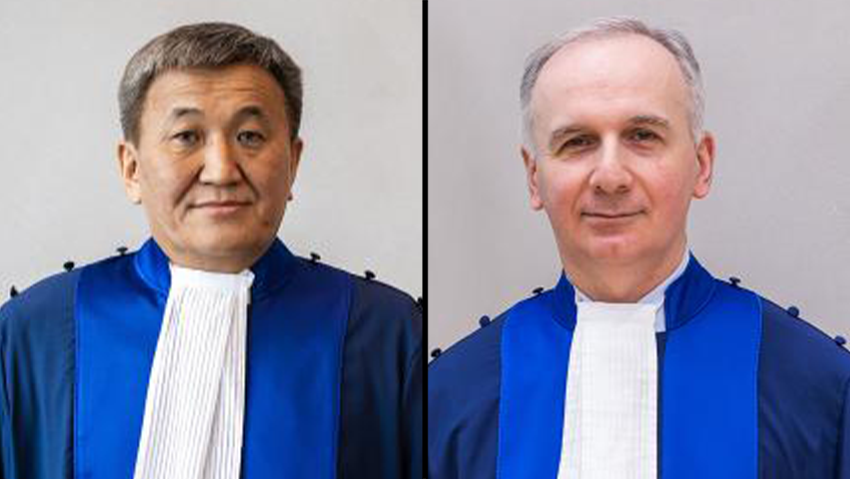
Erdenebalsuren Damdin and Gocha Lordkipanidze
(Photo: ICC)
According to the State Department, the two judges were among those who voted to reject an Israeli appeal filed Dec. 15 challenging the court’s jurisdiction in cases that led to arrest warrants issued last year against Prime Minister Benjamin Netanyahu and former Defense Minister Yoav Gallant. The ICC has accused the two of war crimes and crimes against humanity related to Israel’s military operations in Gaza.
“These individuals have directly engaged in efforts by the ICC to investigate, arrest, detain or prosecute Israeli nationals without Israel’s consent,” Rubio said. He said the court was pursuing what he described as politically motivated actions against Israel and warned that the United States would continue to respond to what it views as abuse of the court’s authority.
Neither the United States nor Israel is a member of the ICC, which is based in The Hague and operates under the Rome Statute.
The sanctions include freezing any assets the judges may hold in the United States and banning transactions with them. They also bar the judges and their immediate family members from entering the United States, according to U.S. officials.
Rubio’s announcement brings to six the number of ICC judges sanctioned by the Trump administration in connection with cases involving Israel. The United States has also imposed sanctions on two deputy prosecutors at the court.
The ICC strongly condemned the move, calling the sanctions a serious attack on the independence of the court and the rule of law. In a statement, the court said it stands behind its judges and prosecutors and will continue its work to deliver justice for victims of serious crimes, despite what it described as external pressure.