

A diver was attacked by a shark on Monday off the "Orot Rabin" power station in Hadera, in an area that's become a seasonal gathering spot for sharks in recent years.
The incident, caught on video, marks the first confirmed attack in the area, aside from a previous case in which a female shark attempted to snatch a catch from a spearfisher. Emergency teams have resumed the search for the missing diver on Tuesday.
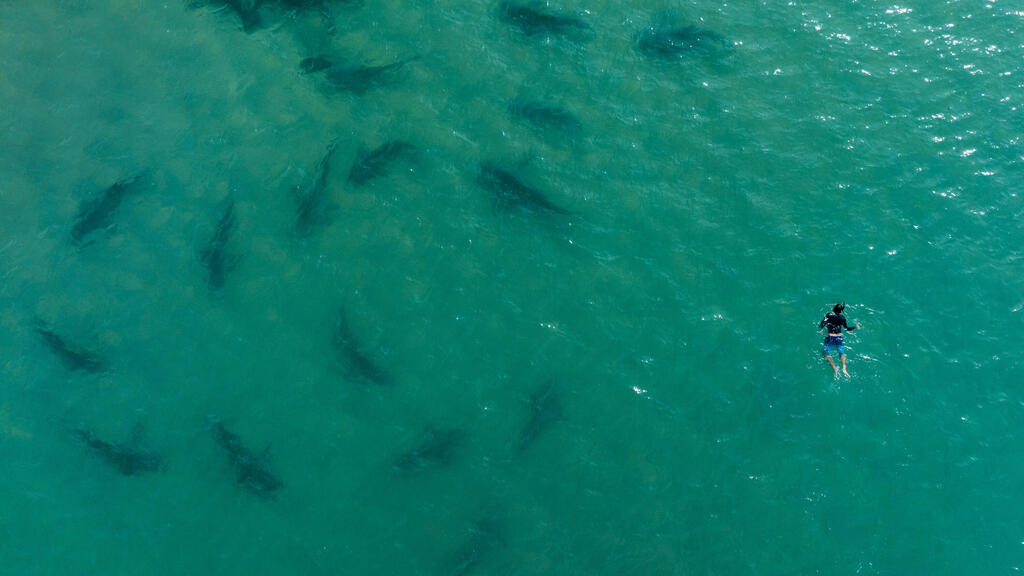
Sharks off Hadera coast
(Video: Guy Levian, Nature and Parks Authority)


The majority of sharks spotted near Hadera are dusky sharks (Carcharhinus obscurus), a species that primarily feeds on small fish and is not typically aggressive toward humans. However, they may bite if provoked or threatened.
Dozens of these sharks are seen each winter close to shore, drawn by the warm seawater discharged from the nearby power plant. The plant uses seawater to cool its turbines and returns it to the sea roughly 10°C (18°F) warmer, creating a strong current that can be felt up to 2 kilometers (1.2 miles) from the outflow.
"The warm water creates a current as strong as the Jordan River," explained Prof. Dov Zviely from the Ruppin Academic Center’s School of Marine Sciences. "The sharks come because of the heat but also because many fish wash down from the Alexander Stream, providing a steady food source."
He added that the nearby desalination plant also discharges water with double the salinity, another potential factor in the area's marine dynamics. Zviely criticized the diver's decision to enter the water there: "The currents are strong and visibility is low. It’s not a safe spot for diving."
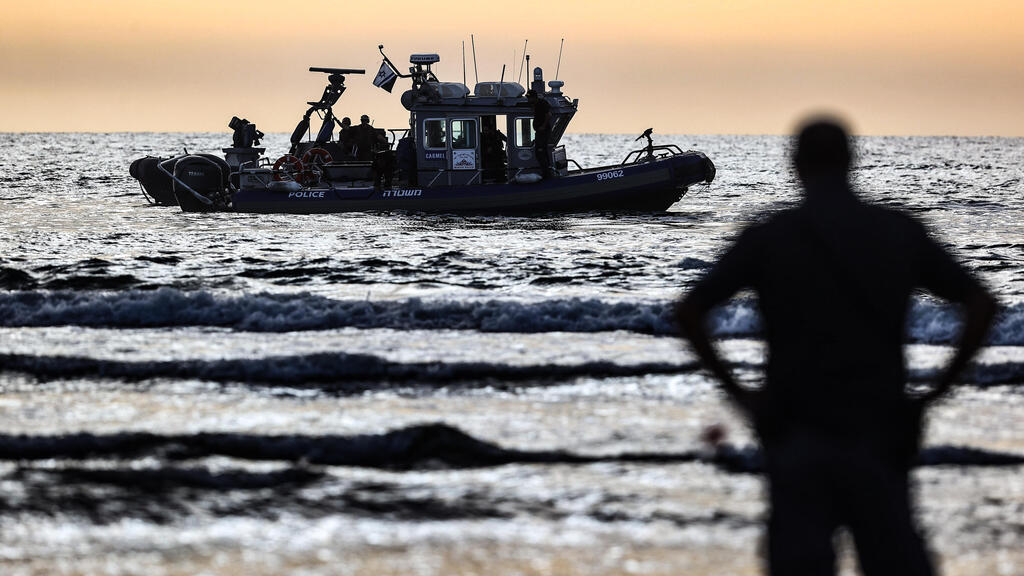
Searches for missing diver attacked by shark near Hadera
(Photo: Gil Nechushtan )
Similar shark sightings have occurred near in other power stations in Ashkelon and Ashdod though monitoring in those locations is more difficult due to infrastructure and access limitations.
Dusky sharks are found in tropical and subtropical waters around the world. They can reach lengths of up to 4.2 meters (13.8 feet) and weigh as much as 347 kilograms (765 pounds), though the average adult measures about 3.2 meters (10.5 feet) and weighs 160–180 kilograms (353–397 pounds).
Get the Ynetnews app on your smartphone: Google Play: https://bit.ly/4eJ37pE | Apple App Store: https://bit.ly/3ZL7iNv
As opportunistic predators, they feed on a wide range of marine life, including barracuda, tuna, grouper, rays, crustaceans and mollusks. They can live up to 40 years. Many dusky sharks — mostly adult females — congregate near the Hadera power station between December and April.
Hadera’s accessible beaches draw large crowds, especially on sunny weekends and during holidays. Following the attack, the Nature and Parks Authority issued warnings against swimming at several area beaches where sharks have been spotted. Just last week, a video showed sharks swimming just meters from beachgoers at Beit Yanai Beach.

Sharks off Hadera shore
(Photo: Gil Nechushtan)
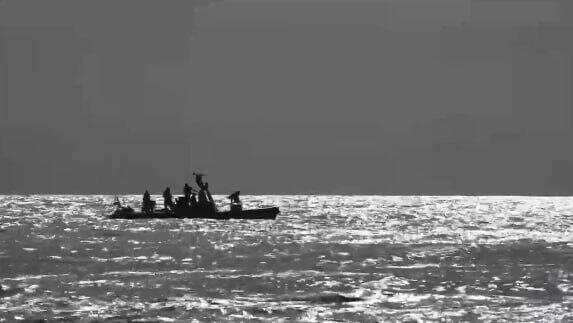
Search for shark attack victim off Hadera shore
(Photo: Gil Nechushtan)
"The site is unsuitable for diving, especially for inexperienced swimmers, due to strong currents and underwater hazards," said Dr. Adi Barash, a marine biologist with the Sharks in Israel nonprofit and the Steinhardt Museum of Natural History at Tel Aviv University. She's also a member of the IUCN's Shark Specialist Group.
"Children should not be allowed into the water in these current zones — certainly not alone," she said. "Heavy human presence stresses the sharks. People must avoid touching or feeding them — they are not pets."
Barash emphasized that the Hadera incident was largely due to human behavior: "The water conditions — depth, current, visibility — were unsuitable for swimming and a large number of people clustered around the sharks, which is dangerous and prohibited."
She noted repeated instances in which swimmers pulled sharks’ tails or entered the water holding children to “play” with them. While the exact species involved in Monday's incident hasn't been confirmed, she said it's likely a dusky shark, given how common they are in the area.
"This is peak feeding season for the sharks, due to increased fish mortality from warming waters and recent holiday rains," Barash said. "Authorities must take steps to prevent harmful interactions and ensure the safety of these protected animals."