

U.S. Senate Republicans backed President Donald Trump's military campaign against Iran on Wednesday, voting to block a bipartisan resolution that sought to halt the air war and require congressional authorization for any hostilities against Iran.
The Senate voted 53 to 47 not to advance the resolution, largely along party lines. All but one Republican voted against the procedural motion, while all but one Democrat supported it.

The war powers resolution, introduced by Democrats and a few Republicans seeking to rein in Trump's repeated foreign troop deployments, was described by its sponsors as an effort to reclaim Congress’ constitutional authority to declare war.
Opponents rejected that argument, insisting Trump's actions were legal and within his authority as commander in chief to protect the United States by ordering limited strikes. They accused supporters of the resolution of endangering U.S. forces.
"This is not a forever war, indeed not even close to it. This is going to end very quickly," Republican Senator Jim Risch of Idaho, chairman of the Senate Foreign Relations Committee, said in a speech opposing the resolution.
The measure had not been expected to succeed. Republicans hold slim majorities in both the Senate and the House of Representatives and have blocked previous resolutions aimed at limiting Trump's war powers.
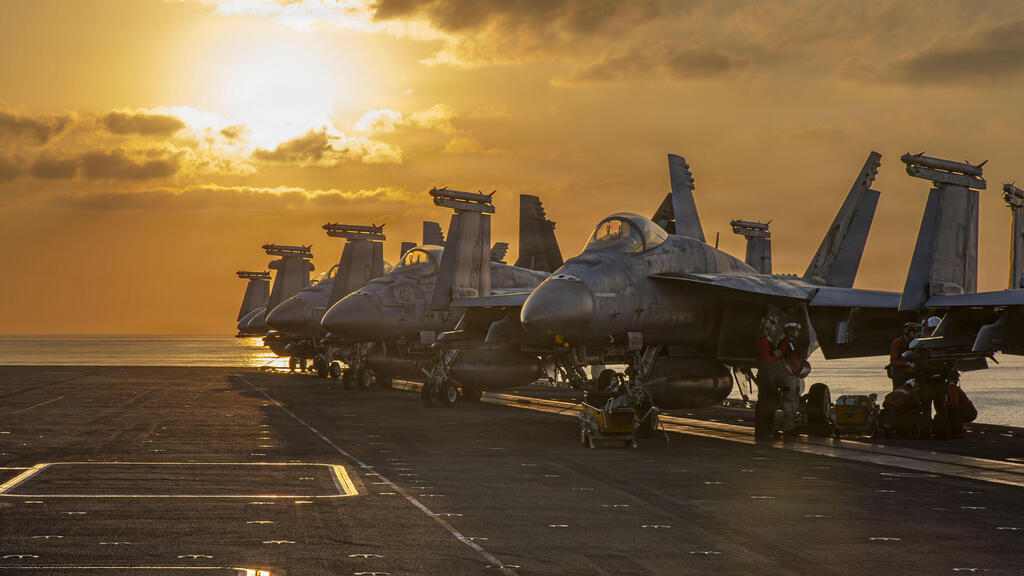
USS Gerald R. Ford, the U.S. Navy’s newest aircraft carrier
(Photo: US Navy via Getty Images)
Backers of the resolution said they would continue pressing the issue. Even some Republicans who voted to block it said they would push for public testimony from Trump administration officials about the administration's Iran strategy, especially if the conflict lasts for weeks, as Trump has predicted.
Debate over Trump's buildup of military assets in the Middle East, along with U.S. and Israeli strikes on Iran, has focused on whether the United States is being drawn into another "forever war" similar to the long conflicts in Iraq and Afghanistan.
"Today senators face a choice, stand with the American people who are tired of war in the Middle East, or side with Donald Trump, who bumbled America into another war most Americans fiercely oppose," said Senate Democratic Leader Chuck Schumer of New York, a co-sponsor of the resolution.
With control of Congress potentially shifting to Democrats in November's midterm elections, a prolonged war with Iran could become a political liability. A Reuters/Ipsos poll released Tuesday found only one in four Americans approves of U.S. strikes on Iran, while about half believe Trump is too willing to use military force.
Beyond the Iran campaign, U.S. forces have been firing since September at boats in the southern Caribbean and eastern Pacific in what the administration says is an effort to deter Venezuelan drug trafficking. Trump also sent U.S. troops into Venezuela in January to capture Venezuelan President Nicolas Maduro.
‘It's a war’
The U.S.-Israel war with Iran has already caused damage across Iran, Israel and other parts of the Middle East, and has resulted in U.S. casualties.
"It's a war," said Democratic Senator Tim Kaine of Virginia, a lead sponsor of the resolution, urging senators to support the measure.
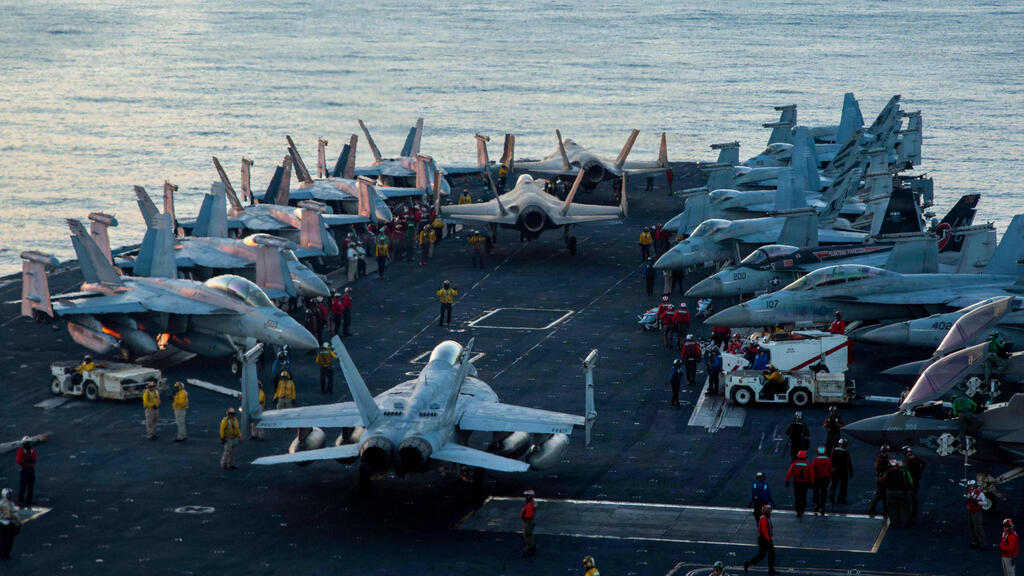
The USS Abraham Lincoln aircraft carrier
(Photo: AFP/ US NAVY and US CENTRAL COMMAND)
Kaine said he had asked Trump administration officials during a classified briefing on Tuesday to seek congressional authorization for the conflict.
"Your escalating pattern of military action without seeking our approval convinces me that you believe you never need to come to Congress to wage war against anyone anywhere," Kaine said.
The House of Representatives is expected to vote Thursday on a similar Iran war powers resolution.
On Tuesday, House Speaker Mike Johnson, a Republican from Louisiana, said he believed there were enough votes to defeat the measure in the House, describing it as an attempt that could endanger U.S. troops and embolden Iranian forces.
"Imagine a scenario where Congress would vote to tell the commander in chief that he was no longer allowed to complete this mission. That would be a very dangerous thing," Johnson told reporters after a classified briefing on the Iran conflict by senior administration officials.
Even if the resolution passed both the Senate and the House, it would not take effect unless it secured two-thirds majorities in both chambers to override an expected veto from Trump.