


Gadi Eisenkot with Yair Golan, Likud with Religious Zionism, Naftali Bennett with Avigdor Lieberman, Shas with United Torah Judaism, Ra'am with the Joint List, and perhaps Itamar Ben Gvir with Ofer Winter? Since Israel's founding, political parties have routinely signed agreements designed to maximize their electoral strength and prevent votes from going to waste in Knesset elections.
Known as surplus-vote agreements, these arrangements allow two parties, usually ideologically aligned or belonging to the same political camp, to combine their votes for the final allocation of parliamentary seats. The goal is to ensure that votes left over after the initial count can help secure additional representation. So how does the system work, who benefits, and what could it mean for the October 27 election? Here's a guide.
Gallery
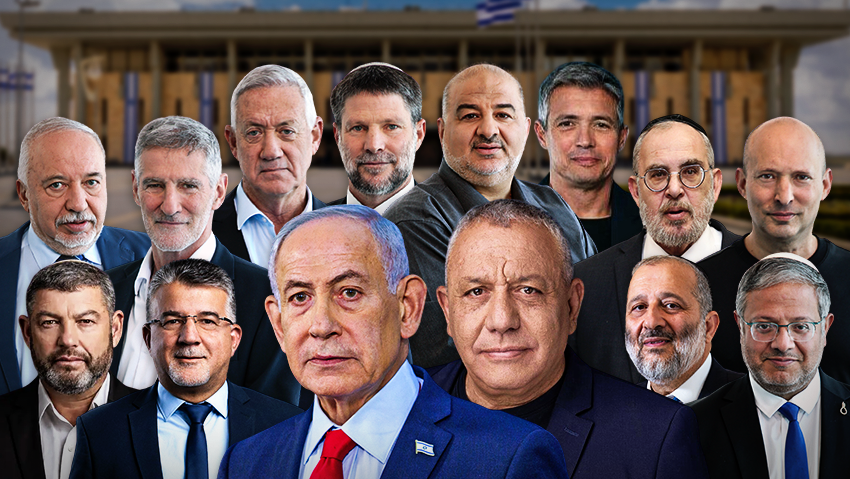
(Photo: Shutterstock, Shalev Shalom, Elad Malka, Joint List Spokesperson's Office, Ryan Preuss, Alex Kolomoisky)
Why are surplus-vote agreements necessary?
After polling stations close and all valid votes in a Knesset election are counted, seats are allocated among the parties that have passed the electoral threshold, based on the 120 seats in Israel's parliament. This begins the process of distributing Knesset seats.
The electoral threshold currently stands at 3.25% of valid votes, roughly equivalent to four Knesset seats. The number of votes needed to cross that threshold changes from one election to another, depending on turnout and the number of invalid ballots. In the previous election in 2022, a party needed at least 154,855 votes to qualify for representation.
The valid votes received by each qualifying party are then converted into a whole number of seats. The electoral quota represents the number of votes required for one Knesset seat. It is calculated by dividing the total number of valid votes cast for parties that crossed the electoral threshold by 120. In the 2022 election, the quota was 36,227 votes, meaning that approximately 36,227 votes were equivalent to one seat.
In most cases, however, parties are left with surplus votes that are insufficient to secure another full seat. These represent fractions of seats that remain unallocated after the initial distribution. This is where surplus-vote agreements come into play.
How does the system work?
Under the Bader-Ofer method, introduced in 1973, two parties that have signed a surplus-vote agreement are treated as a single list for the purpose of allocating the remaining seats. After all valid votes have been counted and the initial allocation of whole seats is completed, the remaining seats are distributed using a mathematical formula.
The calculation takes the combined number of votes received by the two parties and divides it by the number of seats they have already been allocated, plus one. For example, if two parties receive a combined 400,000 votes and are initially awarded 11 seats, their joint quotient would be 400,000 divided by 12, or approximately 33,333 votes.
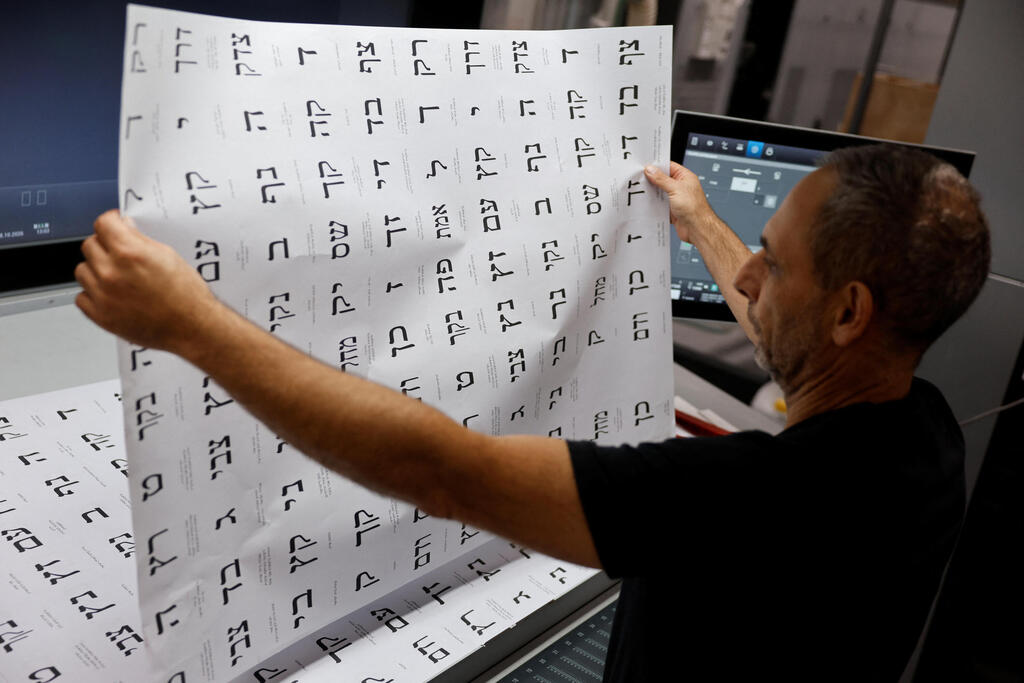
Ballots are prepared ahead of the opening of polling stations. The Bader-Ofer method generally favors larger parties
(Photo: REUTERS/Amir Cohen)
That figure is then compared with the quotients calculated for all other parties or pairs of parties. The party or pair with the highest quotient receives the next available seat. The calculation is then repeated for the following seat, with the number of seats already awarded adjusted accordingly.
If a pair of parties that signed a surplus-vote agreement wins an additional seat, a separate calculation determines which of the two receives it.
That internal allocation is also carried out under the Bader-Ofer formula. In practice, the larger of the two parties often has an advantage, even if it does not have the largest number of leftover votes. However, the smaller party can also receive the additional seat, as has happened in previous elections.
The system generally favors larger parties, but a surplus-vote agreement can improve the chances of either partner securing an additional seat.
Which parties benefit from signing, and what happens to those that don't?
Surplus-vote agreements are signed between two electoral lists and may be submitted, under Israeli law, until 11 days before election day, subject to approval by the Central Elections Committee.
With the next election scheduled for October 27, just 16 days away, parties have until October 16 to decide whether to enter into such agreements. As a rule, the parties that sign these agreements are ideologically close or belong to the same political camp. Their shared objective is to maximize the number of seats their camp receives.
The electoral threshold is particularly important because a surplus-vote agreement is valid only if both parties cross it. Signing an agreement with a party that may fail to enter the Knesset therefore carries a significant risk.
If one of the two parties fails to cross the threshold, the agreement becomes ineffective, and the votes cast for the unsuccessful party are excluded from the allocation of Knesset seats.
The mechanism is not unique to Israel. Similar systems for distributing remaining parliamentary seats are used, or have been used, in other democracies. The Bader-Ofer method takes its name from former Knesset members Yohanan Bader of Gahal and Avraham Ofer of the Alignment, who initiated the legislation.
It replaced an earlier system under which the party with the largest remainder of unused votes received the next available seat, a method that tended to benefit smaller parties.
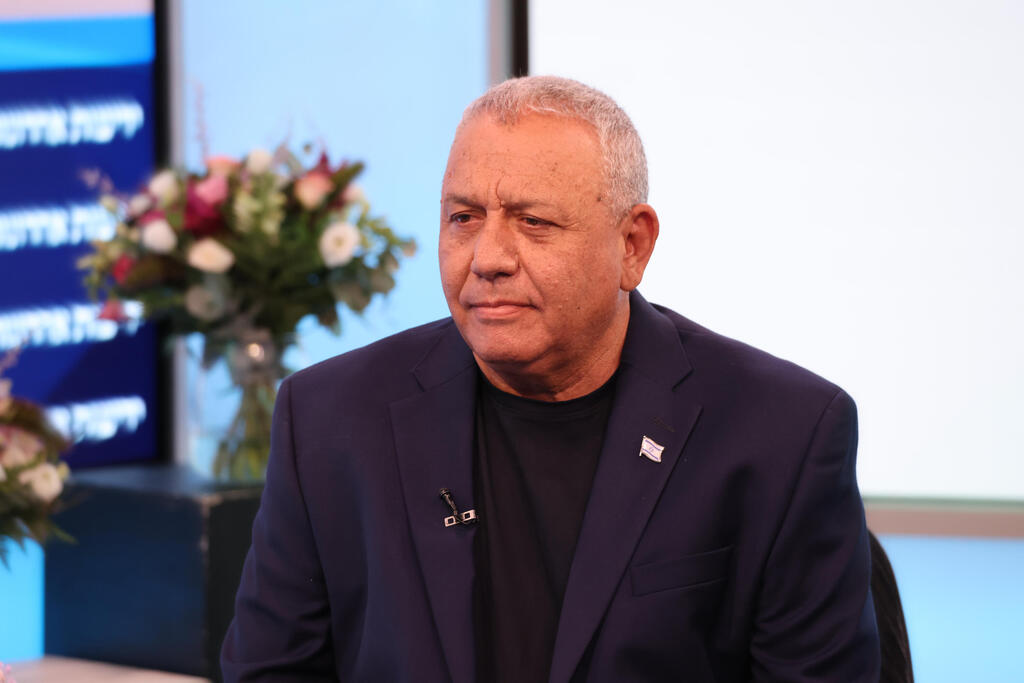
Gadi Eisenkot
(Photo: Yariv Katz)
A party that does not sign a surplus-vote agreement can still compete independently for additional seats under the Bader-Ofer formula, but it cannot benefit from combining its votes with another party.
Such a decision can also expose a party to criticism from within its political camp, particularly if its refusal to cooperate is perceived as weakening the bloc's overall chances of gaining seats.
Who has signed with whom?
About a month ago, four parties opposed to another term for Prime Minister Benjamin Netanyahu announced that they had signed surplus-vote agreements. The first agreement was announced by former Prime Minister Naftali Bennett, chairman of the Together party, and Avigdor Lieberman, chairman of Yisrael Beytenu.
Gadi Eisenkot, chairman of the Yashar! party, had preferred to sign an agreement with another party in the anti-Netanyahu camp but ultimately found himself paired with Yair Golan and his Democrats party.
In a statement, Eisenkot's party took credit for organizing the opposition camp, saying he had "worked in various ways to organize the camp of change and hope as effectively as possible."
"The camp's consolidation into four parties has, fortunately, created the possibility of signing mutual, internal surplus-vote agreements, drawing lessons from previous election campaigns," the statement said.
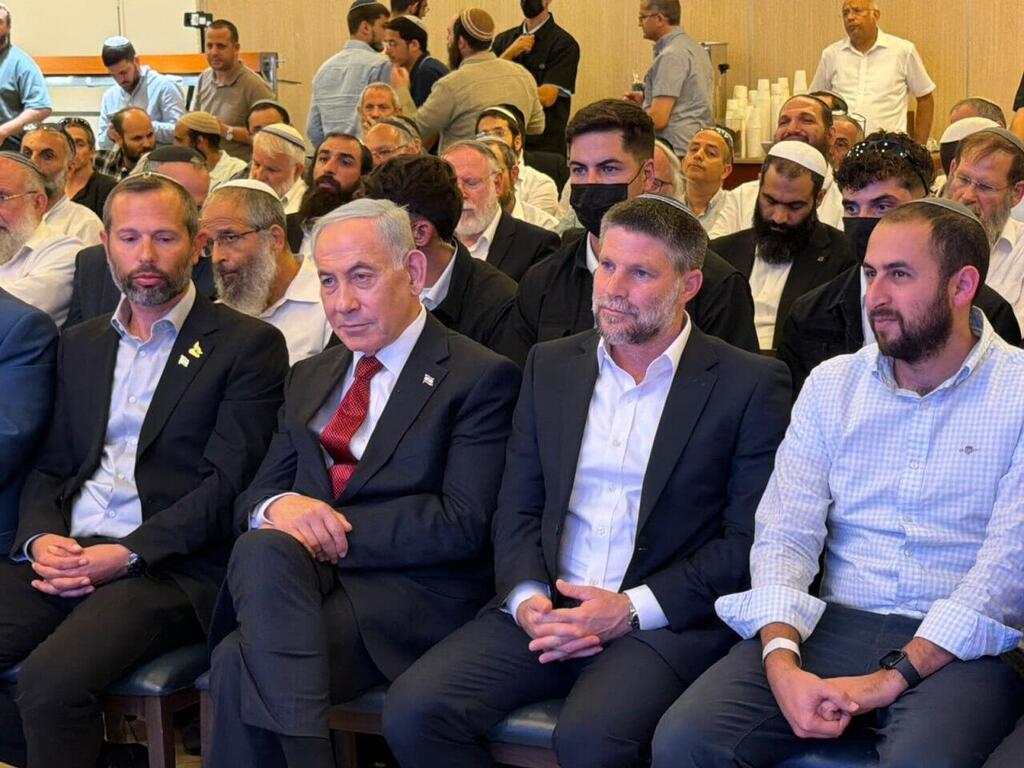
Netanyahu and Smotrich
The Joint List and Ra'am, the United Arab List, subsequently signed their own surplus-vote agreement, seeking to prevent votes from being wasted in the election. As part of the agreement, the two Arab-led lists committed to conducting a "fair and clean election campaign, without personal attacks, defamation, incitement or falsification."
They also called on activists and supporters to maintain respectful political discourse despite their disagreements.
In the previous election, three Arab lists ran separately: Ra'am, Hadash-Ta'al and Balad. None signed surplus-vote agreements with the others, and Balad ultimately failed to cross the electoral threshold.
The next agreement was between Likud and Religious Zionism. The deal between Netanyahu and Religious Zionism chairman Bezalel Smotrich left Itamar Ben Gvir's Otzma Yehudit party with the option of signing an agreement with Ofer Winter's Amcha Yisrael party or remaining without a partner.
That dilemma comes as Likud has intensified its campaign against Winter. The party led by Yoaz Hendel and Yaron Zelekha also offered Winter a surplus-vote agreement, but he did not respond.
"Unfortunately, Likud refused to sign a surplus-vote agreement with us as part of an attempt to weaken our party and leave Ben Gvir outside the unity government Likud is planning with Eisenkot," Otzma Yehudit said after the Netanyahu-Smotrich agreement was announced.

Itamar Ben Gvir
(Photo: REUTERS/Amir Cohen)
The prospect of an agreement with Winter carries its own risk for Ben Gvir. If Amcha Yisrael fails to cross the electoral threshold, the agreement would have no effect.
Either way, the latest parties to sign a surplus-vote agreement were the ultra-Orthodox Shas and United Torah Judaism.
The two parties emphasized that their agreement reflected the "continuation of cooperation between the factions, in accordance with the instructions of the leading rabbis and sages of the generation."
In a joint statement, the parties led by Aryeh Deri and Yaakov Asher said: "In the next Knesset, too, we will continue to cooperate fully on the core issues concerning the preservation of the Torah world and the status of yeshiva students."