


Israel is growing increasingly frustrated with what officials describe as Hamas’ deliberate “drip-feed” of hostages’ bodies, accusing the terror group of exploiting the ceasefire to regroup, settle internal scores, and profit from humanitarian aid.
Senior Israeli sources said Hamas is intentionally dragging out the process, calculating that U.S. President Donald Trump will not allow Israel to jeopardize the ceasefire deal he brokered. “Israel’s hands are tied,” one official said. “The Americans view the release of 20 living hostages as a major achievement and want to move to the next phase. For them, retrieving the bodies is important, but not worth derailing the agreement.”
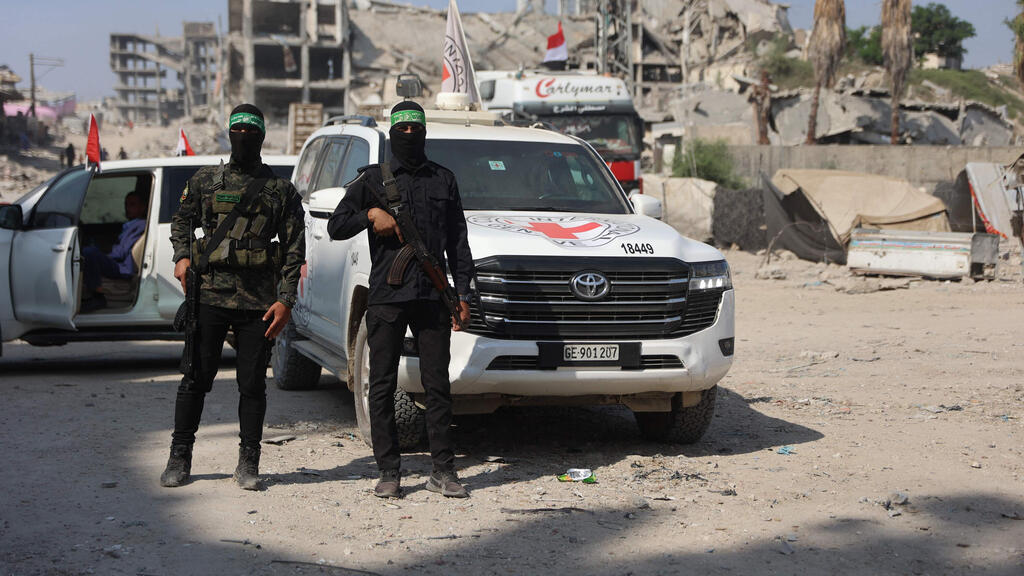
In coordination with Washington, Israel has kept the Rafah crossing closed for two weeks — the only sanction the U.S. has permitted. Jerusalem had sought to expand its military-controlled zone inside Gaza in response to Hamas’ delays, but the White House vetoed the plan.
Behind the scenes, American officials are pressuring mediators to demand that Hamas uphold its commitments.
“Hamas is stalling on purpose,” said one Israeli security source. “We know they could return several of the bodies immediately with minimal effort. Their strategy is to buy time, rebuild their positions, and cash in on international aid. This is not goodwill — it’s calculated manipulation.”
Israeli intelligence estimates Hamas could quickly return the remains of five more hostages, while others will require more effort to locate. On Sunday, Hamas transferred three more bodies, one later identified as Capt. Omer Neutra. If confirmed, eight Israeli hostages’ bodies are still believed to be held in Gaza.
Despite the frustration, Israeli officials say they are trying to preserve coordination with Washington. “We knew Hamas would behave this way,” one official said. “We’re waiting for the Americans to realize who they’re dealing with and give us the green light for tougher measures.”
U.S.-led stabilization force takes shape
As part of the broader post-war framework, U.S. Joint Chiefs Chairman Gen. Dan Kane visited Israel’s American Civil-Military Coordination Center (CMCC) in Kiryat Gat, which will oversee humanitarian efforts in Gaza beginning November 7.
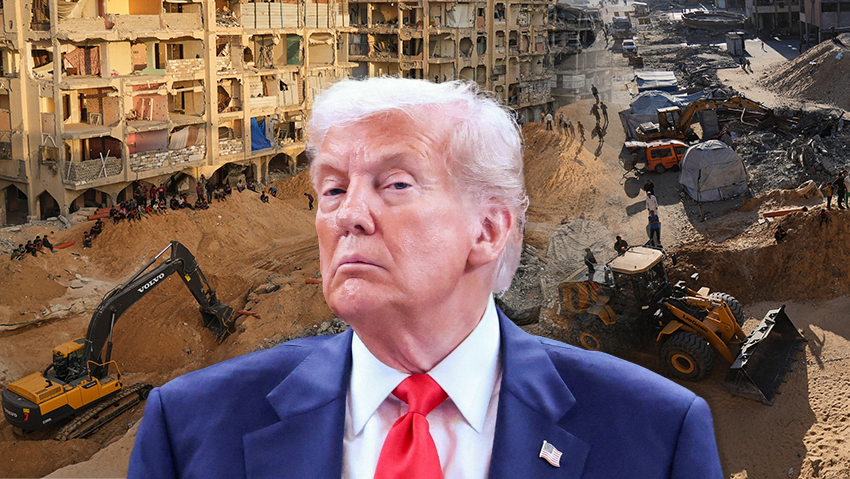
U.S. President Donald Trump
(Photo: Reuters/Evelyn Hockstein, AP/ Jehad Alshrafi)
The emerging International Stabilization Force (ISF) is expected to consist solely of troops from Muslim and Arab nations, including Indonesia, Azerbaijan, the UAE, and Pakistan. The U.S. hopes this composition will prevent the force from being viewed by Gazans as a “foreign occupation.”
However, Israeli officials fear that without clear safeguards, the force’s weapons could eventually be turned against Israel rather than Hamas. “There are serious discussions about its mandate and deployment zones,” one diplomat said, noting Israeli concern that Hamas is using the ceasefire to rebuild tunnels and infrastructure under the guise of calm.
The U.S. is expected to submit a Security Council resolution outlining the ISF mandate in the coming weeks. Washington is pushing for some Palestinian Authority participation, though Israel opposes the use of PA uniforms. Egypt and Saudi Arabia have already declined to send troops, wary of Qatar and Turkey’s involvement — a sticking point for Israel, which vetoed Turkish participation.
Netanyahu: Iran’s axis 'licking its wounds'
At Sunday’s Cabinet meeting, Prime Minister Benjamin Netanyahu said Iran’s regional network of proxies has been dealt a “massive blow” but remains dangerous.
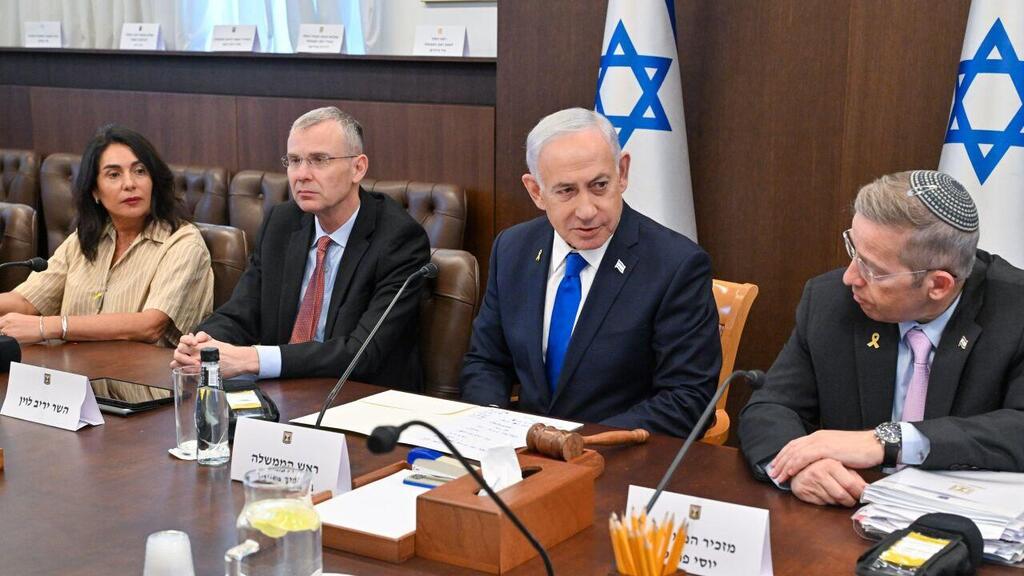
Prime Minister Benjamin Netanyahu during the Cabinet meeting
(Photo: Kobi Gideon/ GPO)
“The Iranian axis is licking its wounds and trying to recover,” Netanyahu said. “Our goal is to deny it that ability. In Gaza, Hamas has taken crushing blows but is attempting to regroup. We will finish the job in Rafah and Khan Younis.”
Turning to Lebanon, Netanyahu warned that Hezbollah continues to rearm and that Israel “will exercise its right to self-defense” if the Lebanese government fails to enforce disarmament in the south.
Regarding Yemen’s Houthis, Netanyahu said: “They may seem a minor nuisance, but they are a major threat — a fanatical movement armed with ballistic missiles and committed to Israel’s destruction. We will act to eliminate that threat as well.”
He concluded, “Despite its heavy losses, the Iranian axis is still trying to rebuild its capacity to destroy Israel. We will make sure — to put it mildly — that it cannot.”