



Muhammad Abd al-Karim al-Ghamari, the chief of staff of Yemen’s Houthi forces, was long considered one of the most important figures in the Iran-backed movement.
The Yemeni rebel group announced his death Thursday, and Israel confirmed the same day that he had been killed in an airstrike that targeted senior Houthi leaders in late August. Yemeni opposition sources described him as “almost the most senior Houthi to be eliminated so far,” underscoring the significance of the strike.
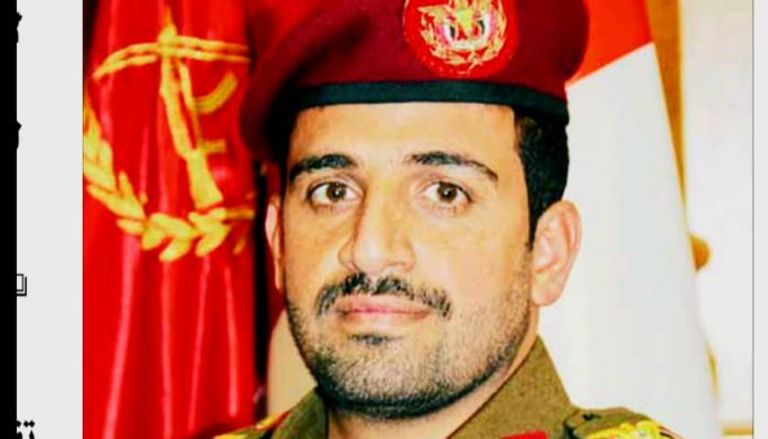
According to the IDF, al-Ghamari was killed in an Israeli Air Force strike on August 28 that also eliminated the Houthis’ prime minister and several ministers. Military officials said the operation reflected Israel’s precise intelligence and operational capability—one that even the United States and Saudi Arabia, which have fought the Houthis for years, had not demonstrated.
A Yemeni source said al-Ghamari’s death was an achievement not only for Israel but also for Yemen’s internationally recognized government and for the broader Arab world, since he was one of the Houthis’ most prominent military commanders and was responsible for directing missile and drone attacks toward Israel.
A Yemeni political and military analyst told Ynet that al-Ghamari was the second-most senior Houthi figure eliminated to date, describing the operation as a “clear Israeli success.” The analyst noted that Houthi media outlets, including the rebel group’s Almasirah channel, had continued to issue statements in al-Ghamari’s name in recent weeks while Houthi supporters shared old photos and videos of him from last year’s Prophet’s Birthday celebrations in Sanaa.
From field commander to chief of staff
According to the IDF, al-Ghamari was appointed the Houthis’ chief of staff in 2016 after holding a series of senior positions within the organization. Over the years, he was deeply involved in building the Houthis’ military force, establishing their missile system, and setting up weapons-production facilities.
The army said al-Ghamari had been trained by Hezbollah operatives and Iran’s Revolutionary Guard in Syria, Lebanon and Iran. Over the past two years, he planned and oversaw the launch of ballistic missiles, drones and cruise missiles toward Israel and against international commercial vessels sailing in the Red Sea, disrupting global trade.
The IDF described his killing as a major blow to the Houthi military establishment and to the command network that had directed hundreds of attacks on Israel during the war.
A powerful successor
The Houthis announced that al-Ghamari would be succeeded by Yousef Hassan al-Madani, commander of the group’s Fifth Regional Corps, which controls Yemen’s Red Sea coastal areas and directs its naval forces.
A Yemeni source said al-Madani was even more important than al-Ghamari and belonged to one of the Houthis’ most prominent families. Following the Israeli strike that wiped out most of the Houthi government, the movement, described as “confused,” brought key figures into the open who had previously remained in the shadows. The source added that the Houthis chose to announce al-Madani’s appointment now, given the situation in Gaza and the pause in Israeli strikes, because they believe Israel is unlikely to target him at this stage.
According to the Yemeni anti-Houthi website Defense Line, al-Madani—known by his nom de guerre Abu Hussein—was appointed in 2017 as commander of the Western Military Region, which includes the Red Sea coast. He is reported to be married to the daughter of Hussein al-Houthi, the founder of the movement, linking him directly to the group’s ruling family.

Yousef Hassan al-Madani
He was among the first Houthis to receive military and ideological training in Iran and Lebanon and helped shape the group’s early military structure. A Yemeni court in anti-Houthi territory has sentenced him to death in absentia. Al-Madani also oversaw the Houthis’ western coastal fronts and their naval attacks, which began in November 2023.
The US campaign and Washington’s frustrations
In March, the United States joined the campaign against the Houthis after President Donald Trump described their actions as piratical and violent attacks of terror against ships.
A New York Times investigation published on May 13 reported that President Trump demanded results within 30 days of the campaign’s start. On the 31st day, he asked for a detailed progress report, but it never arrived, according to administration officials cited in the report.
The investigation found that the U.S. military failed to achieve air superiority over the Houthis. After a month of intensive operations, Washington found itself drawn into another costly, inconclusive regional campaign. The Houthis shot down several MQ-9 Reaper drones and continued firing on ships in the Red Sea, including an American aircraft carrier.
The report said U.S. strikes consumed weapons and equipment worth about $1 billion during the first month alone. Two F/A-18 fighter jets, valued together at $120 million, also accidentally crashed into the sea from a U.S. aircraft carrier conducting the strikes.
By that point, according to the Times, President Trump had grown frustrated. His Middle East envoy, Steve Witkoff, who was in Oman for nuclear talks with Iran, received an offer from Omani officials described as a perfect exit route for the president on the Houthi issue.