

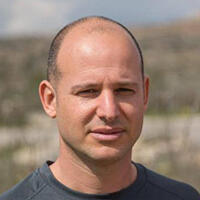
Israel's Military Advocate General, Maj. Gen. Itai Ofir, made an unusual public statement about the documentary NAZA, which accuses the IDF of committing war crimes in Gaza, saying its descriptions were "disconnected from reality" and that "the film distorts the meaning of the very term from which it takes its name."
Addressing Jewish extremist violence in the West Bank, Ofir said: "We have not yet succeeded in stopping the violence. Soldiers who encounter violence are not permitted to stand by. They must intervene." The military's chief legal officer made the remarks at an international conference of the International Association of Jewish Lawyers and Jurists (IJL).
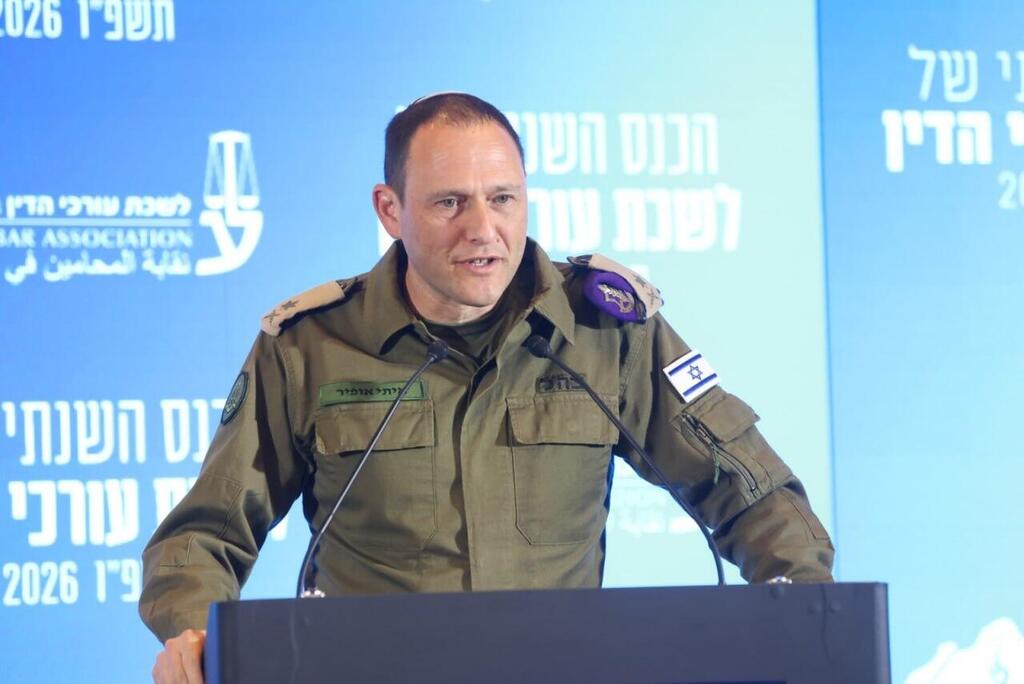
"The film accuses the IDF of authorizing strikes in which hundreds of civilians were expected to be killed, out of indifference to their lives or even with the intention of harming them," Ofir said. "But my officers are involved in the process of validating targets and drafting IDF orders, so I can say that this description is disconnected from reality. The film distorts the meaning of the very term from which it takes its name. NAZA means 'collateral damage.' A collateral damage assessment is intended to estimate the expected harm to civilians. Its entire purpose is to prevent that harm, or at the very least minimize it as much as possible under the circumstances."
"That is why collateral damage assessments are a fundamental tool used by law-abiding militaries around the world," Ofir continued. "They help commanders estimate how many people are in an area, assess the legality of a strike and determine which precautions are required, including whether to modify or cancel the strike plan, as happened many times during this war. The film takes this protective mechanism and portrays it as an expression of indifference. An indifferent army would not count. It would simply strike."
Israeli Consulate campaign against the first New York screening of NAZA


Ofir also addressed accusations that Israel had committed genocide in Gaza. "As early as October 13, 2023, Israel was accused of committing 'a textbook case of genocide,' just six days after the massacre, before a single IDF soldier had entered the Gaza Strip, while we were still identifying our dead. That fact alone demonstrates how hollow the accusation is. It was not true then, and it is not true today.
"The war's central objectives were defined in the days following the outbreak of fighting: dismantling Hamas' military and governing capabilities and creating the conditions for the hostages' return. Harming Gaza's civilian population was never an objective of the war. On the contrary, countless directives, orders and actions were intended to protect them as much as possible, while Hamas deliberately positioned its weapons and conducted military operations among the civilian population, showing utter disregard for their lives. My officers helped draft many of those directives, which distinguish between Hamas and the civilian population."
Ofir said the laws of armed conflict do not guarantee a war without tragedies, but require restraint, respect for human life and accountability for decisions made. "The tragedy of war does not make lawful and moral conduct impossible. It makes it essential," he said.
Ofir went on to discuss the IDF's review and investigation mechanisms for incidents during the war. According to him, the Military Advocate General's Corps examines every report and complaint, and when reasonable suspicion of a criminal offense arises, such as abuse of a detainee or looting, a criminal investigation is opened. In operational incidents where the circumstances must first be established, a factual assessment is conducted to determine whether a criminal investigation is warranted. Ofir said the General Staff's Fact-Finding Assessment Mechanism initially identified more than 1,000 incidents requiring examination. More than 150 factual assessments have been completed so far, while hundreds more remain underway. Since the beginning of the war, dozens of criminal investigations have been opened into incidents in the Gaza Strip, most of which remain ongoing, and indictments have been filed in several cases before military courts, he said.
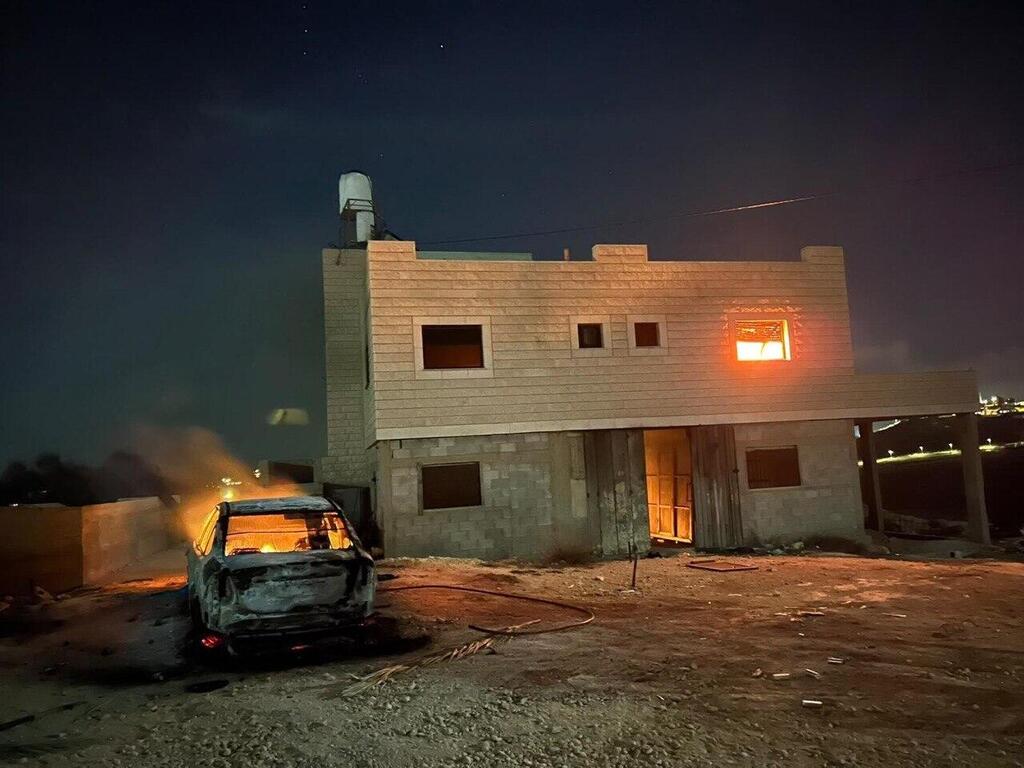
‘Soldiers must not stand by’: A Palestinian home attacked and set on fire in a West Bank village
Turning to Jewish extremists responsible for violence in the West Bank, Ofir said: "The fact that the arrest and investigation of Israeli civilians fall under the responsibility of the Israel Police does not absolve IDF soldiers of their duty to act on the ground, in real time. Our orders are clear: Soldiers who encounter violence are not permitted to stand by. They must intervene, stop the violence, detain the suspects and hand them over to the police. We are not shirking our responsibility. When soldiers are involved in violence of this kind, including reservists serving in regional defense units, the policy is unequivocal: Their reserve service is terminated, their weapons are taken away, and where appropriate, the matter is referred to the competent authorities, either the Military Police or the Israel Police.
"We will not hesitate to use every measure available to us, including enforcement measures, when the circumstances justify doing so. Nevertheless, despite all the steps taken, we have not yet succeeded in stopping the violence. Much work remains ahead of us, and we will work tirelessly to fulfill our mission and meet the responsibility entrusted to us."
Ofir also detailed measures adopted by the defense establishment to confront the phenomenon. These include a ban on covering faces in public spaces, restraining orders involving electronic monitoring against individuals involved in violence, and the designation of closed military zones in areas where confrontations occur.
First published: 10:53, 11.03.26