

U.S. President Donald Trump ordered the war against Iran six months ago, promising it would be short and decisive. But now, with the country under tightening sanctions, the Iranian leadership that was killed has been replaced by a hard-line core of generals and clerics with deep roots in the theocratic system. They repeatedly say they are prepared for a prolonged confrontation with the United States, while also showing they are willing to do whatever it takes to prevent any uprising at home.
All of this is far removed from Trump’s hopes at the outset of the campaign that the Islamic Republic would collapse, and from his later claims that “regime change” had brought more moderate and compromise-minded figures to the forefront.
Gallery
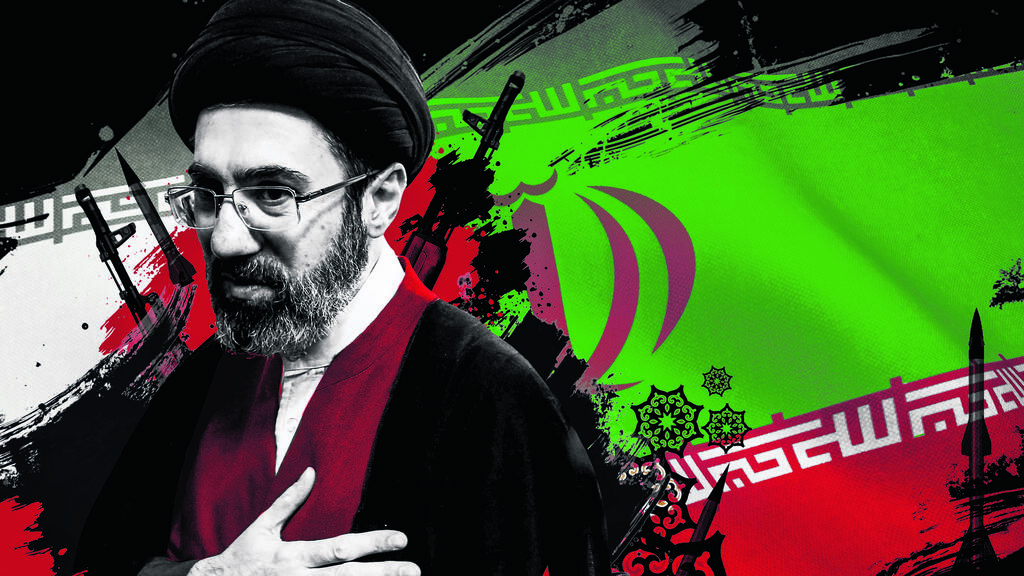
The younger Khamenei; out of public view and surrounding himself with hard-line allies
(Photo: Rouhollah Vahdati/ISNA/WANA (West Asia News Agency)/AFP, illustration: Yaniv Shahar)
Iran’s new leaders show little confidence that they can reach any agreement with Trump, after Iran was attacked twice while talks with the United States were underway. They also believe they could be attacked again once the Americans replenish their interceptor missile stocks.
Iranian officials have even threatened to escalate the war, while the continuing U.S. blockade and Trump’s plans to impose new sanctions threaten to choke an Iranian economy that is already deteriorating.
“If Trump wants to take action, we will retaliate in an earthquake-like manner,” Mohsen Rezaei, a former adviser to Iran’s supreme leader, Mojtaba Khamenei, said late last week. Rezaei was appointed earlier this month as secretary of Iran’s Supreme National Security Council.
In a post on X, he wrote that “if the economic war continues, not a single drop of oil will be exported” from the Persian Gulf.
In a statement carried by Iranian state media Friday morning, the government vowed to stand firm against U.S. sanctions and what it called U.S.-Israeli “conspiracies.” It said diplomacy and defense were “complementary, coordinated and inseparable” tools for protecting the country’s national interests, security and territorial integrity.
The government said it would pursue both tracks simultaneously while focusing on curbing inflation, creating jobs, supporting domestic production and gradually reducing dependence on the U.S. dollar.
Determined to suppress domestic opposition
Rezaei’s appointment was part of a series of decrees recently signed by the supreme leader, who has not appeared in public since his father was killed. The decrees formally established Iran’s new senior leadership, including its top military posts, after their predecessors were killed at the start of the war.
Perhaps the most significant appointment was that of the commander of the Basij, the volunteer force affiliated with the Revolutionary Guard that maintains a feared presence in the streets and played a central role in suppressing the wave of protests that swept the country in January, during which tens of thousands were killed.
The post went to Hossein Taeb, a conservative cleric and former head of the Revolutionary Guard’s intelligence organization. Taeb led one of the first major crackdowns on protests in 2009, before being removed in June 2022 after the exposure of an Iranian plot to attack Israeli targets in Turkey.
His appointment is seen as a sign that the leadership is determined to prevent renewed unrest amid growing dissatisfaction over the state of the economy.
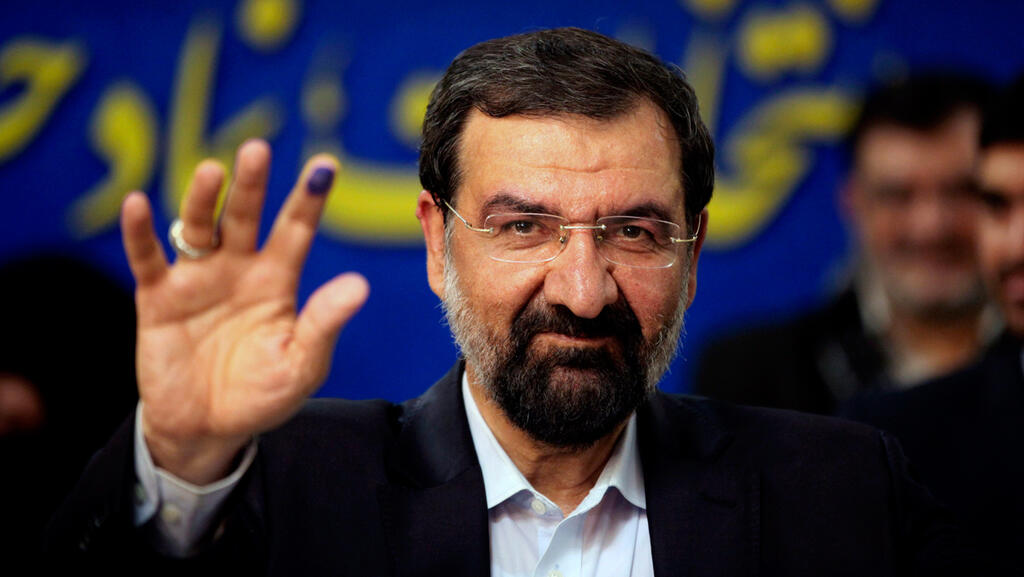
Rezaei; a Khamenei ally appointed to one of Iran’s most important posts
(Photo: AP)
Khamenei, 56, has not appeared in public, in video or in audio recordings since his father, who served as Iran’s supreme leader for about 37 years, was killed in Israeli strikes. Mojtaba Khamenei is believed to have been wounded, and his absence from public view may reflect either the intense security surrounding him, given that he is likely an Israeli target, or the severity of his injuries.
In the meantime, he has surrounded himself with hard-line allies. In appointments announced Aug. 11 and 12, Khamenei elevated longtime associates with whom he had worked in the past.
“They are a clique of older senior officers who've served together over the last decades,” Sascha Bruchmann, an analyst at the International Institute for Strategic Studies’ Middle East office in Bahrain, told The Associated Press.
Rezaei, 71, led the Revolutionary Guard through its formative years, throughout the 1980-1988 Iran-Iraq War and until 1997. Since 2009, he has run for president several times as a hard-line candidate.
Ahmad Vahidi, 68, was appointed commander of the Revolutionary Guard after serving as acting commander since his predecessor was killed alongside the elder Khamenei.
In recent months, Gen. Ali Ozmaei was also appointed commander of the Revolutionary Guard navy and Ali Abdollahi was named chief of staff.
Bruchmann, who noted that Rezaei had been Vahidi’s commander for many years, said the appointments appear designed above all to ensure unity. “It looks like internal cohesion, as in hard core people are being pulled into the inner circle,” he said.
Moderates urge restraint
A senior oil analyst at Kpler, a company that provides data to international markets, said the appointments of Vahidi and Rezaei indicate “greater influence for officials associated with a tougher stance.”
Still, the analyst said escalation was not inevitable, and Iran could struggle to “escalate enough to restore deterrence without triggering retaliation that leaves it worse off.”
President Masoud Pezeshkian remains one of the most prominent voices calling for a negotiated solution. His allies argue that Iran risks pushing too far by continuing the war as its economy collapses.
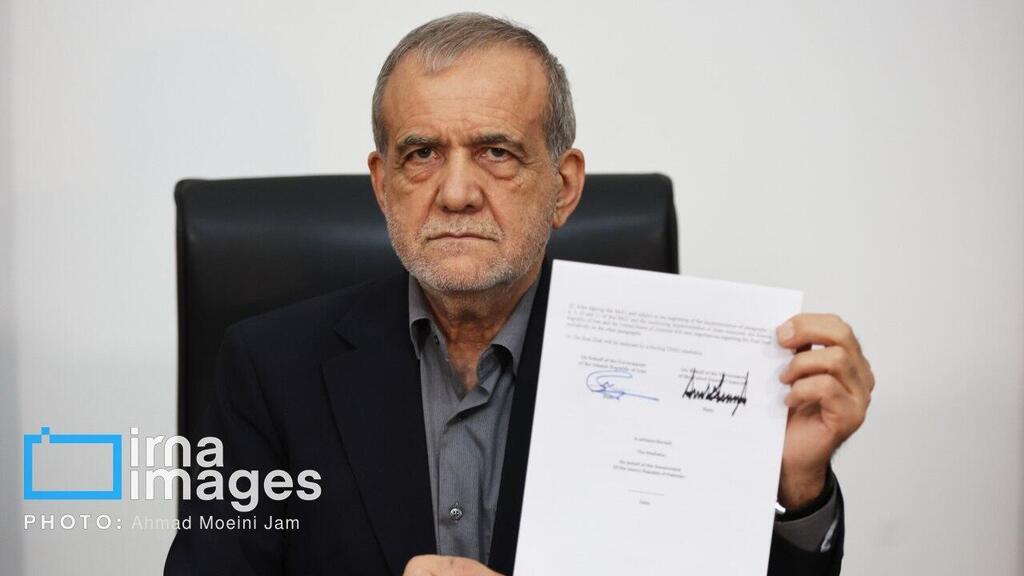
Pezeshkian with the memorandum of understanding signed in June
“It is better to end the war today, when we are powerful and respected and the whole world acknowledges our victory,” Pezeshkian said last week.
He also defended a memorandum of understanding signed in June against criticism from hard-liners who argued that Iran had conceded too much.
Unlike ultra-hard-liners who reject any possibility of talks, Rezaei has left the door open to an agreement if the United States changes its position.
On Monday, he told Pakistani army chief Asim Munir, who is serving as a mediator, that the United States must “change its behavior and take practical steps to implement the terms” of a ceasefire agreement.
Ahmad Zeidabadi, a political analyst based in Tehran, wrote in a newspaper aligned with Pezeshkian that there are “serious differences over the future path of the country.” Hard-liners oppose normalization with the United States, he wrote, because “their survival depends on the existence of confrontation and hostility.”
A powerful figure atop the Basij
Despite hopes in the United States and Israel, there have so far been no signs of new protests, even as it becomes increasingly difficult for Iranians to afford basic goods.
Taeb’s appointment as Basij commander is a sign that the leadership wants to head off any possible uprising “before it even manifests,” Bruchmann told the AP. “Putting someone from an intelligence background in charge of the people that would do the crackdown makes sense,” he said.
Taeb, a 63-year-old cleric, headed the Basij when the force played a central role in suppressing the mass protests that erupted over Mahmoud Ahmadinejad’s reelection in 2009, when dozens were killed.
He developed a reputation for ruthlessness and was soon afterward appointed head of the Revolutionary Guard’s intelligence apparatus. He led the organization for nearly 13 years until he was removed in 2022, reportedly as part of an internal shake-up following a series of Israeli intelligence successes.
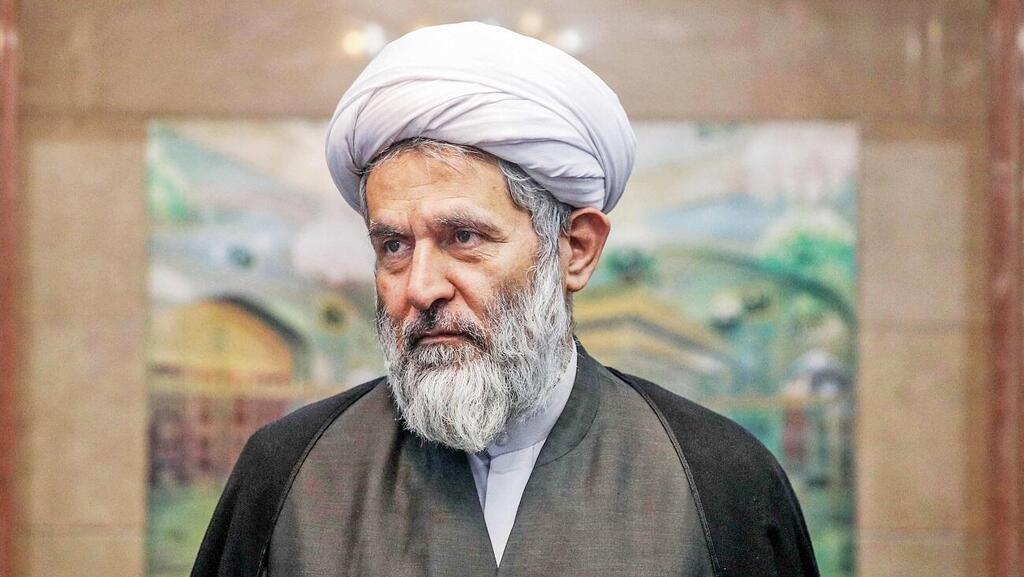
Taeb; brought back to restore order in the streets
(Photo: AFP)
The Basij operates a nationwide network of volunteers who maintain a presence in streets, government offices and cultural institutions, with the aim of ensuring loyalty and ideological conformity to Iran’s theocratic system.
In the decree appointing Taeb, Khamenei ordered him to deepen the Basij’s presence in Iranian social life, use new technologies and “expand Basij activity worldwide against Zionist-American arrogance,” suggesting the organization could begin forging closer ties with Iranian proxies abroad.
The Basij has increased its presence during the war, while hard-liners have held nightly rallies in Tehran and other cities to mobilize support and deter anyone who might voice opposition.
It is not clear exactly how Taeb intends to strengthen the force, but in a recent speech he hinted that he plans to tighten control over society further. He warned that U.S. economic pressure is intended to create divisions inside Iran. “If the mosque becomes the center of the neighborhood, the nation will protect its unity, which will be a greater deterrent than any missile.”