


The IDF’s Paran and Yoav brigades are responsible for vast stretches of Israel’s borders with Egypt and Jordan, where commanders have spent recent years confronting a growing threat from drones used to smuggle weapons and drugs into the country.
Military estimates indicate that thousands of drones crossed the borders over the past two years, while hundreds of smuggling attempts were recorded last year. During the recent holiday period, as Israelis traveled across the south, troops remained on alert.
Gallery
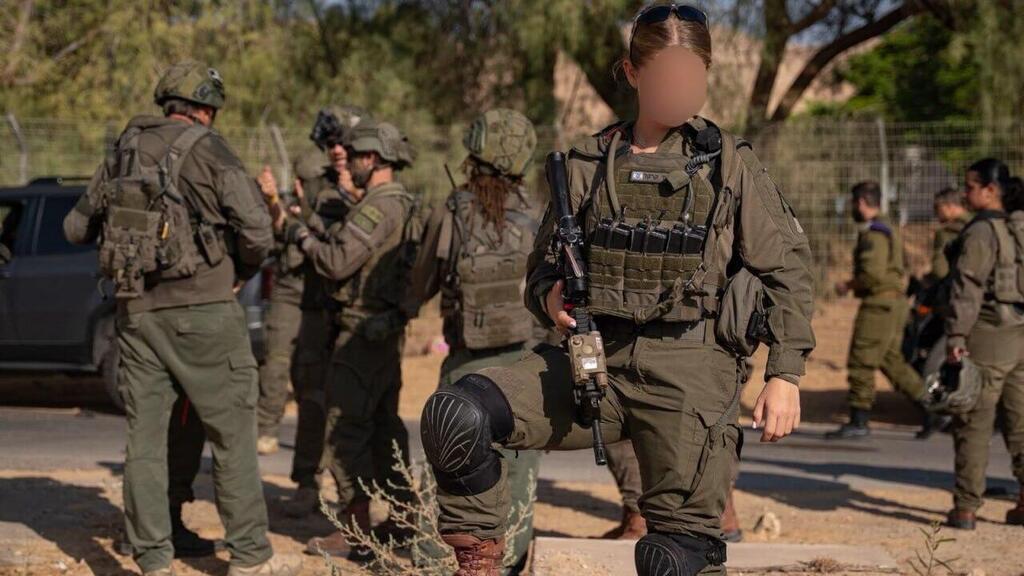
Maj. S., deputy commander of the Caracal Battalion, with male and female troops from the southern Paran Brigade
(Photo: IDF)
The IDF’s 80th Division includes the mixed-gender Caracal and Bardelas battalions, whose male and female combat soldiers fought during the Oct. 7 Hamas attack. Travelers along Route 10, through the Arava and even near Eilat may encounter troops from the units deployed along the border.
Maj. S., 26, deputy commander of the Caracal Battalion, immigrated to Israel from Belgium a decade ago. She said her family made aliyah for two reasons: Zionism and antisemitism. Her father had served as a lone soldier in the Golani Brigade and became an inspiration for her own military service.
“When I became an officer, it fulfilled a dream of my great-grandmother, a Holocaust survivor, who saw it as a kind of victory over the Nazis,” she said. “Although she did not live to see me wearing the rank, I’m sure she would be proud of me.”
On Oct. 7, S. left her home in central Israel with her driver, joined her brigade command post and went to fight in Kibbutz Holit. She remained in the Gaza border area for about a month as the commander responsible for the community of Pri Gan before returning to her original sector.
She is expected to begin academic studies this summer as part of the IDF’s Ofek program, designed for senior combat officers and generally intended for officers being groomed for battalion command.
“I arrived in the Gaza border area with my soldiers and we fought in Holit,” she said. “We took part in the battle alongside Caracal’s female tank crews and Bardelas.”
The debate over women serving in combat roles, she said, is answered by what the units have already done in the field.
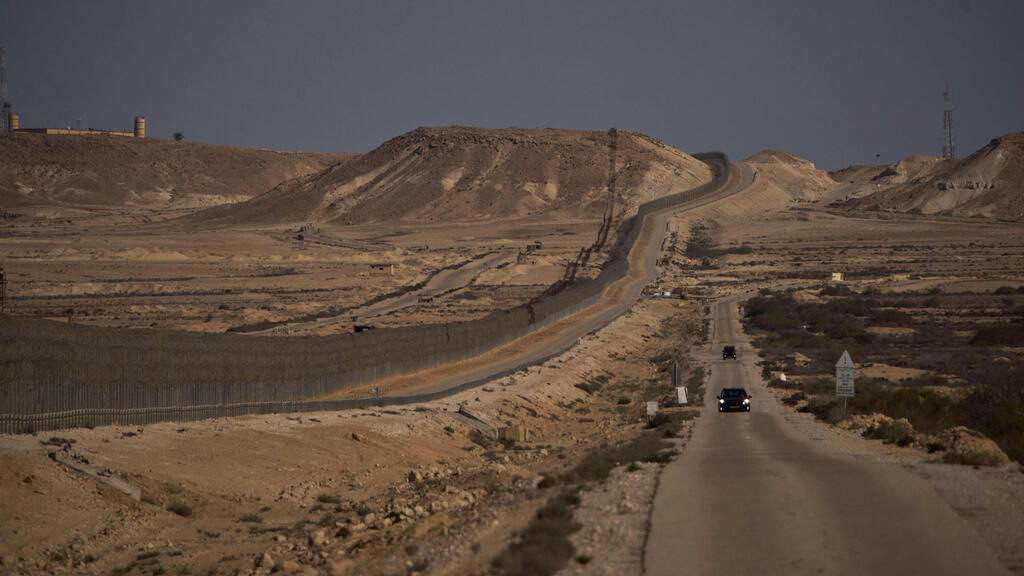
Israel-Egypt border
(Photo: AP Photo/Leo Correa)
“I think the proof is right in front of us,” she said. “In the Border Defense Corps, and in Caracal in particular, we have some of the best female officers there are. Women are serving as combat soldiers in key positions and doing good work. We are proving to everyone that it can work.”
“In Caracal, we all carry out the same missions, live shoulder to shoulder, fight shoulder to shoulder and train shoulder to shoulder,” she added.
Lt. Col. D., 37, deputy commander of the Paran Brigade, said the desert terrain presents challenges of its own, while the threats along the sector continue to evolve. Drones, he said, have emerged as one of the most prominent.
“They were always there in one form or another, and the enemy used them in wars,” he said. “We understand that the threat developed further over the past two years. We began seeing and identifying them being used more frequently.”
According to Israeli prosecutors, thousands of smuggling attempts involving drones have been carried out since 2025, including with aircraft capable of carrying tens of kilograms. The cargo has consisted primarily of weapons and drugs.
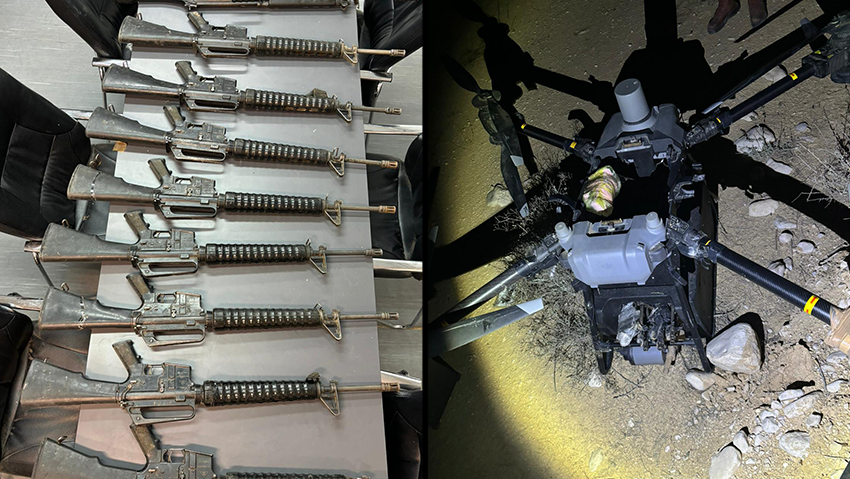
Foiling a drone weapons-smuggling attempt at the Egypt border
(Photo: IDF)
D. said the number of smuggling attempts has now fallen dramatically. Officials in the Ramat Negev Regional Council, which previously experienced hundreds of such incidents, likewise say the numbers have dropped and are no longer disrupting everyday life.
“We are preparing for terrorist activity,” D. said.
Asked whether the Israel-Egypt border has become less violent, he said the situation remains fluid.
“It changes. I can’t reveal too much, but I can say that in the past there were quite a few incidents here. Today we are identifying fewer and fewer of them along the border,” he said.
“The drones were hit, and we are more proactive and aggressive wherever we can be. It has a direct effect, and you can clearly see it along the border.”
For troops watching the skies, he said, there is no way to assume that an unidentified drone is carrying contraband rather than posing a security threat.
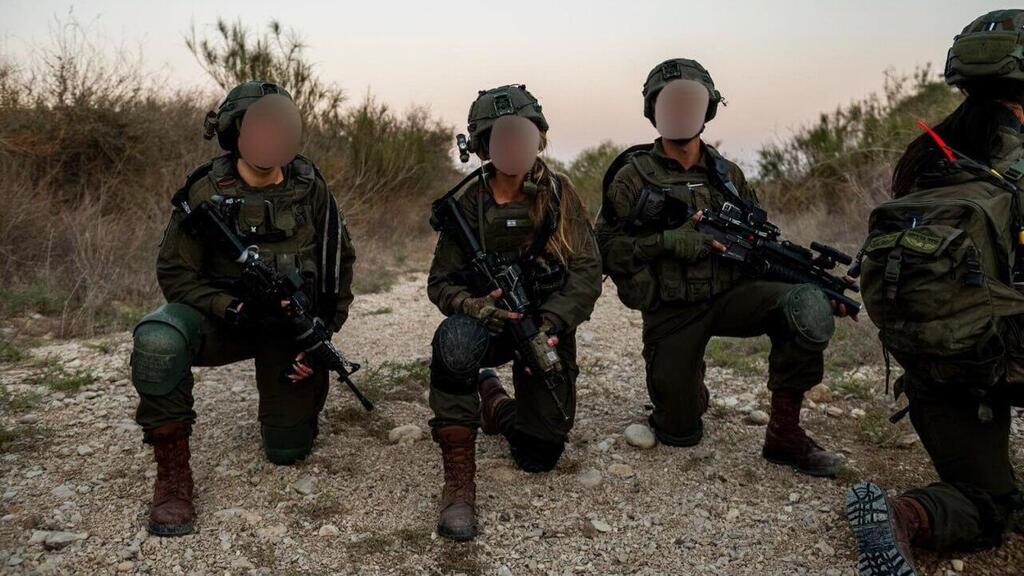
(Photo: IDF)
“When something is spotted by surveillance, I don’t know whether it’s a drone smuggling drugs to Tel Aviv,” he said. “As far as I’m concerned, it is an enemy drone, and I have to do everything I can to prevent it from reaching its destination.”
“And even though this is a border of peace, we prepare for any incident or extreme scenario,” he added.
The Yoav Brigade, responsible for the border area near Eilat and along the Jordanian frontier in the Arava, is confronting the same aerial threat.
Its deputy commander, Lt. Col. A., 35, originally from Mitzpe Ramon and now living in Eilat, was serving with the IDF’s School for Infantry Corps Professions and Squad Commanders when the war broke out. He and other troops headed to the Gaza border area in Namer armored personnel carriers, deploying to Kibbutz Kissufim and Nahal Oz to reinforce the Golani Brigade’s 51st Battalion.
He moved to Eilat only two weeks ago for his new role, after previously serving as operations officer in the 80th Division, where he became closely familiar with its mixed-gender battalions.
“The integration of women and men creates something special,” he said. “It makes operations more effective. The synergy between male and female combat soldiers is ultimately a good one.”
“There is a difference between a combat battalion made up entirely of men and the mixed battalions,” he added. “Integrating women into combat brings professionalism and attention to detail. That is what I experienced.”
“We will be there to guard and protect Israel’s civilians in Eilat and the Arava,” he said.