

The government has effectively nullified the disengagement law that had prohibited settlements in the northern West Bank, clearing the way for a renewed civilian presence in the evacuated site of Sa‑Nur, officials said Monday.
Defense Minister Israel Katz and Finance Minister Bezalel Smotrich, in coordination with the IDF Central Command, agreed that a core group of settler families will begin moving into Sa‑Nur as early as the Jewish holiday of Purim, according to government and military sources. Sa‑Nur was evacuated in 2005 under the disengagement from the northern West Bank.

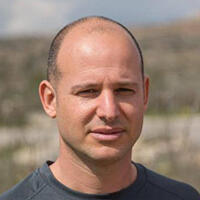
Samaria Regional Council head Yossi Dagan at a Hanukkah candlelighting in Sa-Nur
(Photo: Samaria Regional Council)
The move has been long advocated by Samaria Regional Council head Yossi Dagan, who on Sunday lit a Hanukkah candle with members of the group now preparing to settle the area.
The decision was finalized earlier this month after discussions with the military, which initially resisted a Hanukkah timeline on security grounds. Central Command chief Maj. Gen. Avi Blot is now preparing the site for the settlers’ arrival at the direction of the political echelon.
As part of the preparations, a bypass road known as the “Silat Bypass” is being built with roughly 20 million shekels in funding from Smotrich’s Finance Ministry. The headquarters of the Menashe Brigade is also being relocated to the Sa‑Nur area — a move first reported during budget discussions earlier this month. A platoon of soldiers is expected to be positioned there by Jan. 15, 2026, to stabilize the area ahead of the settlers’ arrival.
The developments mark another significant step in Smotrich’s efforts to expand Israeli civilian and military presence beyond the pre‑1967 Green Line. Along with Katz and Dagan, Smotrich has effectively overridden much of the disengagement framework that once governed settlement policy in the region.
The re‑establishment of the community of Homesh has previously been approved, and now settlers will return to Sa‑Nur. Plans for new communities at Ganin and Kidim were also approved at the most recent Cabinet meeting, along with 17 other settlement initiatives.
Smotrich’s broader campaign in the West Bank, known to supporters as Judea and Samaria, has led to the establishment of about 70 new communities, the authorization of more than 120 agricultural farms and the allocation of thousands of dunams of state land for development.
First published: 23:13, 12.22.25