

Militiamen brought in from Iraq are patrolling Iranian cities to support local security forces battered in the war and help suppress opposition to the regime, Britain’s Telegraph reported Saturday. Videos circulated on social media showed members of Hashd al-Shaabi, a pro-Iranian militia from Iraq that takes orders from Tehran, searching vehicles at checkpoints in Tehran and other cities.
According to the report, the militiamen are also enforcing strict hijab laws and patrolling neighborhoods alongside Iranian security forces. Some locals say the new arrangement “feels like an occupation.” A Tehran resident told The Telegraph: “Right now, for several nights here, there are people at our neighbourhood checkpoint who don’t speak Persian. They wear Hashd al-Shaabi uniforms and only communicate with gestures and a few broken words of Arabic or Persian.”
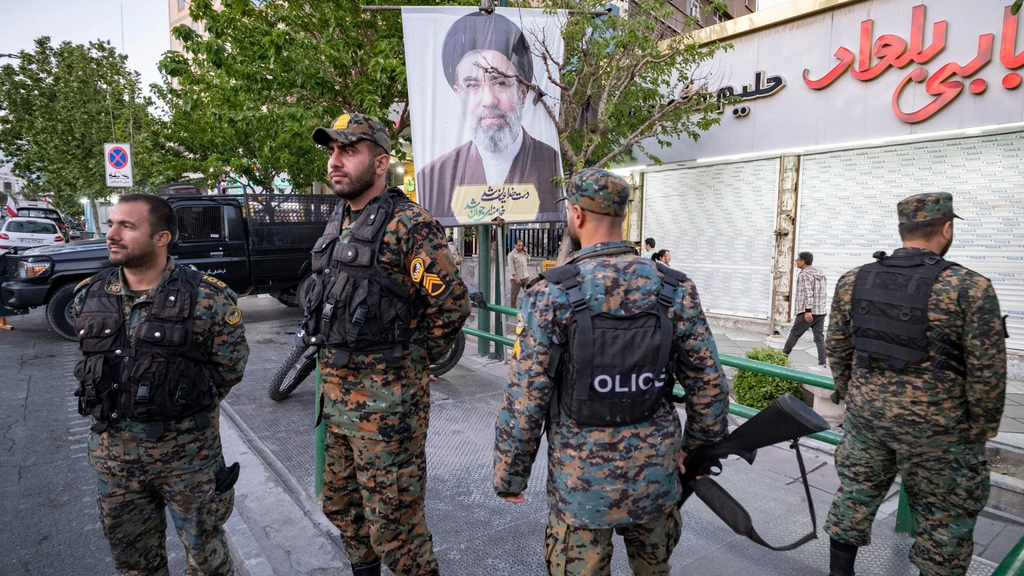
The Revolutionary Guards, local police and Basij forces suffered heavy losses in the recent war, whether from assassinations, injuries or desertions. The Telegraph reported that small numbers of Iraqi forces arrived in the final days of the war, ostensibly to provide humanitarian aid, but took on security roles at checkpoints, on night patrols and at regime rallies.
Hashd al-Shaabi was founded in Iraq in 2014 with Iranian support to fight ISIS. The militia is made up mainly of Shiite Muslim groups overseen by the Revolutionary Guards’ Quds Force. However, the report noted that deploying the militia inside Iran is the complete opposite of the vision of Qassem Soleimani, who commanded the Quds Force until he was killed by the United States in 2020.
Iraq faced a severe crisis as ISIS advanced through its territory, and Soleimani recruited Shiite militias to expand Iran’s influence in the neighboring country. The militia network was meant to project Iranian power outward, suppressing threats in Syria, Iraq and elsewhere while Iran itself remained untouched. The fact that these forces are now patrolling Tehran to control civilians suggests the failure of that doctrine, as tools of control intended for use beyond Iran’s borders have become necessary for domestic control.
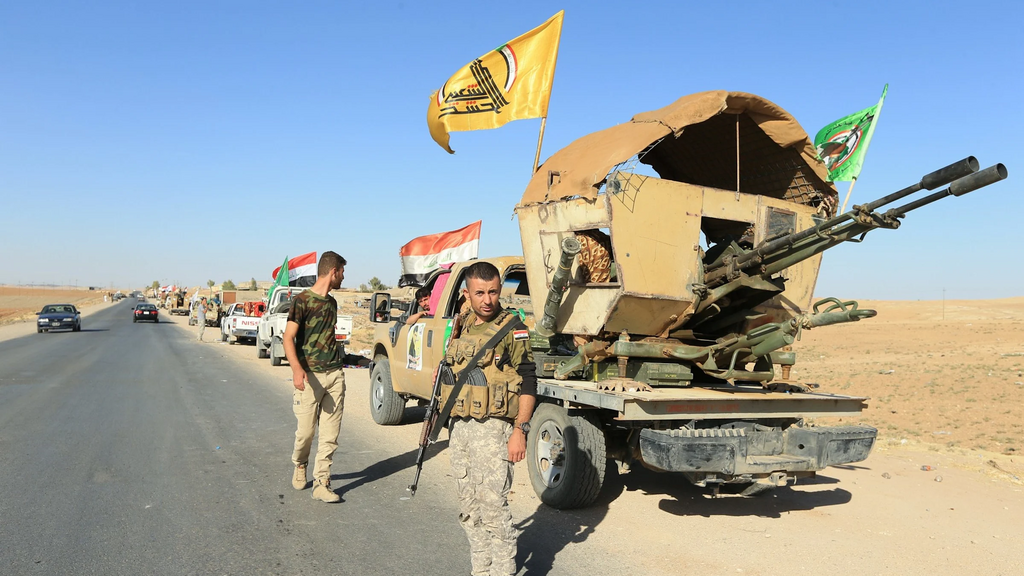
Hashd al-Shaabi members in Iraq
(Photo: Reuters)
According to reports, Afghan fighters from Fatemiyoun, another militia backed by the Revolutionary Guards, are also present alongside the Iraqis. A Tehran resident who passes through several checkpoints each day told The Telegraph that the presence of foreign forces has fundamentally changed security activity in the streets.
“Before it was just Basij [militia], but now the composition has changed. Several people with clear Arabic military uniforms are standing there, and they behave much more harshly. It’s like they have no restrictions. Even the Iranians don’t say anything to them,” he said.
In a video filmed at Azadi Square in Tehran, a member of one of the militias is seen saying in Arabic: “This is Azadi Square, it’s ours, for Iraq.” Similar reports also came from Karaj, west of Tehran, where residents said security personnel at checkpoints communicate with gestures and in Arabic. Locals said the foreign forces show less restraint than Iranian forces, act violently and carry out arbitrary arrests.
Unlike Iranian security forces, who have families and social ties that create at least some degree of restraint, the foreigners have no connection to locals. They do not speak the language or understand local customs, and residents say they act with an aggression that even Iranian forces view as excessive.