

In early September, it was reported that Israel was seeking to advance efforts to locate and repatriate the remains of leaders of Lebanon's Jewish community as part of negotiations with Lebanon. The men, regarded as Jewish martyrs, were abducted and murdered by terrorist organizations in the neighboring country in the mid-1980s.
Behind the names of the 12 community members are families who have waited decades to learn the fate of their loved ones and are closely following the slow-moving negotiations.
One of those families is the Jamous family. Miriam (Maro) Jamous, wife of Salim Mourad Jamous, a leader of Lebanon's Jewish community, will never learn what happened to her husband. Miriam lived with him and their three children in Lebanon until his abduction in August 1984. She later immigrated to Israel, where she eagerly awaited any developments in the case. She died on Yom Kippur, the Jewish Day of Atonement.
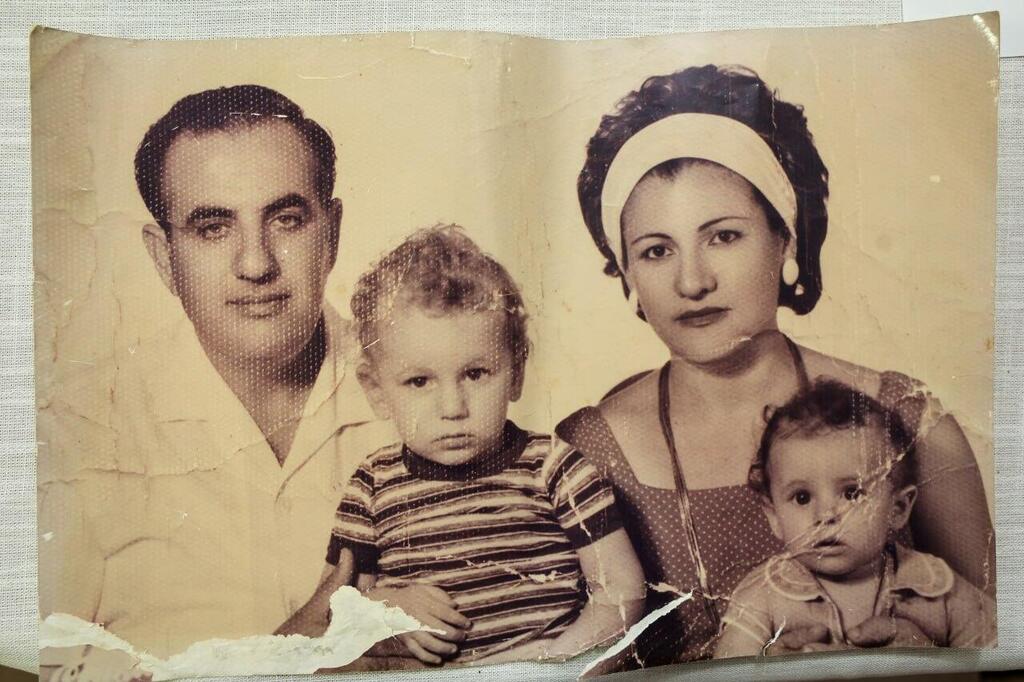
Speaking to ynet and Yedioth Ahronoth, their son Moshe Jamous says his mother's life story and courage deserve recognition in their own right.
Miriam was born in Damascus, Syria, and grew up in a synagogue in one of the city's neighborhoods. The Jewish community allowed her family to live there on the condition that all family members help maintain the building. Over the years, she grew close to Rabbi Nissim Indibo, the chief rabbi of Damascus.
According to her son, Miriam worked several jobs in Damascus, including as a nurse who visited people's homes to administer injections. That work gave her special permission to move around at night.
Jamous says she eventually became an operative who helped smuggle young Jewish women out of Syria and into Israel.
"She would go out at night under the cover of being a nurse and work as a seamstress during the day," he recalls. "She became deeply involved in smuggling Jewish women out of Syria and persuading them to immigrate to Israel."
Jamous says his mother tried twice to immigrate to Israel herself but was caught and imprisoned in Syria for several months each time.
The smuggling operations took a turn after a tragedy in which a group of Jewish girls was murdered while being smuggled out of the country.
"It caused profound grief and led members of the Jewish community to blame the leadership responsible for the smuggling operations," he says. "A decision was made to continue the mission, but this time to try something different: Send the daughters of prominent families out of Syria to restore the community's trust."
Escape from Syria and love in Lebanon
That group of young women, which now included Miriam Jamous, managed to reach Lebanon, from where they were supposed to continue to Israel. But Miriam and a handful of others remained in Lebanon.
"My father fell in love with her, and she decided to stay," her son says. "From that point, my mother's life took a glamorous turn. She met a man who was one of the leaders of the Jewish community, someone who was supposed to take care of her, and he did. She had a lavish wedding and rose in social status. All of this happened during Lebanon's civil war, a bloody conflict that spared no community."
The couple married in Lebanon in 1975. They later lived in Beirut with their three children, Moshe, Moti and Shalom, all of whom were born at the American University Hospital in the city.
"When their eldest son was born, my parents made sure to bring him to Israel for his brit milah," Jamous says, referring to the Jewish circumcision ceremony. "It was my mother's first visit to Israel. They crossed through Rosh Hanikra and then returned to Lebanon. My younger brother's circumcision and mine were held at the Magen Abraham Synagogue in Beirut."
The family says Miriam also played a role in smuggling Torah scrolls from Lebanon to Israel.
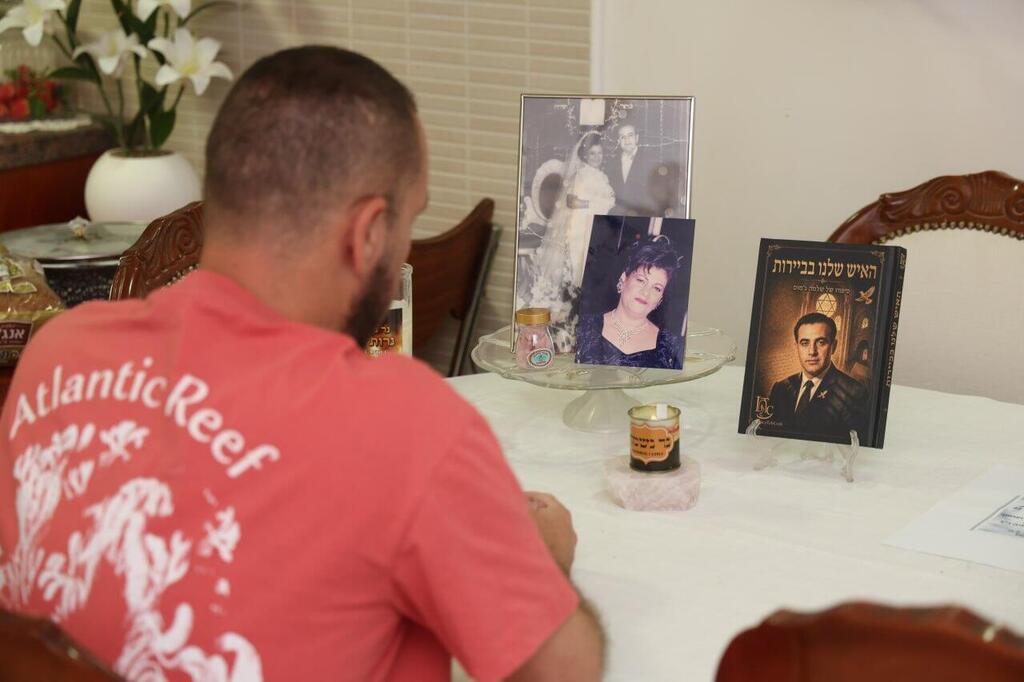
'After the abduction, my mother took charge of the community.' Shalom Jamous
(Photo: Yariv Katz)
According to published reports, Shlomo was a textile and real estate merchant who maintained an office inside the synagogue in the Wadi al-Yahoud quarter of western Beirut. After his abduction, his office was set on fire and the word "Jew" was spray-painted on its walls.
"My father was one of the leaders of the Jewish community in Lebanon and was involved in smuggling operations," his son says. "My mother accepted my father's instructions: Don't ask what I'm doing, don't ask where the money comes from and don't ask when I'll be home. She didn't understand it at the time, but over the years, after his abduction, she came to understand what he meant. From the moment he was abducted, she took charge of everything connected to Lebanon's Jewish community."
'They would dump bodies near our house'
"When my father was abducted, my mother immediately stepped into his shoes because she was the wife of the last chairman of the Jewish community," Jamous says.
"Everyone turned to her, including terrorist organizations. Whenever a body was dumped near our house, my mother was the one who had to arrange the burial and determine whether the person was Jewish. During the civil war, if people thought someone who had been killed was Jewish, they would leave the body near our home in Lebanon because everyone knew where we lived. She became consumed by this responsibility. She had no choice."
Jamous says his mother eventually realized that she had to get him and his brothers to Israel. According to him, they were smuggled into the country in October 1986, two years after their father's abduction, and lived in various institutions in Israel.
The family says Miriam entered Israel with the children, left the two older brothers there and returned to Lebanon with the youngest.
"She was far away, but she always made sure to call," her son recalls. "Who connected her to a telephone? There are so many unanswered questions. What telephone was she calling from?"
Why was it so urgent to smuggle you out that year?
"First, there was the situation in Lebanon. The second reason was a telephone call from the kidnappers saying they wanted the eldest son. They were willing to release my father in exchange for him," he says.
According to Jamous, his mother immediately understood that her children were now in danger.
"Mom came to Israel every few months and then returned to Lebanon. We lived in various institutions and boarding schools in Israel. Questions arose about who gave her permission to go back. Everything went through Rosh Hanikra. What's more, she received money so she could continue supporting herself there."
According to a publication by Israel's National Insurance Institute, Miriam immigrated to Israel in 1989.
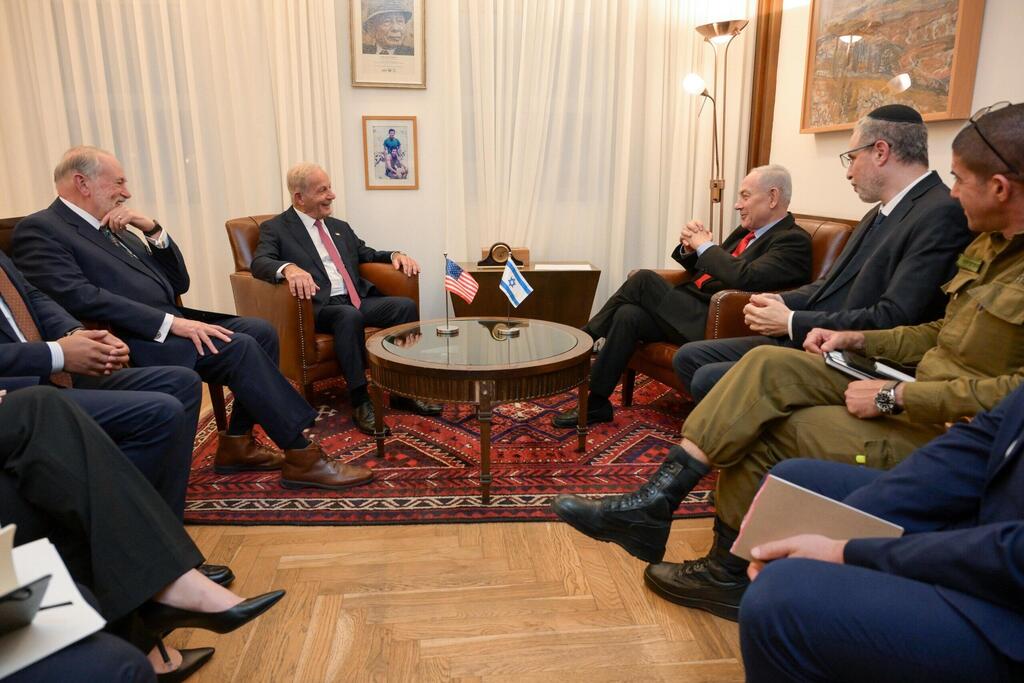
Prime Minister Benjamin Netanyahu with the US ambassadors involved in negotiations with Lebanon
(Photo: Maayan Toaf/GPO)
Jamous says that when his mother finally settled in Israel and decided to close the chapter of her life in Lebanon, she lost her identity and social standing.
He believes she never received the recognition and support she deserved.
"She lived a hard life, without financial assistance. She could not afford to raise us at home. We lived in boarding schools and would go out to visit her. She worked manual labor jobs," he recalls.
And throughout all those years, what was happening with your father's abduction case?
"It came up several times over the years, but not much in the Israeli media," he says. "It didn't receive attention. They told my mother, 'Stay home, and if there's any news, we'll let you know.' But my mother was involved in the entire process, including the preliminary contacts concerning negotiations."
Israel and Lebanon are approaching an eighth round of talks in the current negotiations. At what point did your family become involved?
"At first, it wasn't discussed, but we had also asked that it not be discussed. My father is at the top of the list. We were involved throughout these rounds of talks. My mother met many times with Gal Hirsch, the Prime Minister's Office coordinator for hostages and missing persons.
"When I told her that the issue had officially been placed on the negotiating table with Lebanon, she began to fade. She withdrew into herself. She kept saying, 'My husband will come back to me.'"
Jamous says that when his mother began seeing media reports confirming that the fate of the missing Jews was among the issues being negotiated, she became overwhelmed by longing for her husband.
“Some time later, she fell ill and asked her children to come to the hospital. She died on Yom Kippur.
"In her final moments, she received special attention at the hospital once the staff understood the significance of the situation. I encouraged her, spoke to her and told her the negotiations were progressing.
"She would ask me every time, ‘Have they held talks yet?’ And I would tell her, ‘Yes, they have, but there’s been a slight delay.’
"She kept asking to see Dad, to see his belongings and touch them.
"In her final moments, when I was with her, she said something for the first time: 'Moshe, I can let go now. I'm tired.'"