

Iran’s attacks are continuing not only against Israel but also against several Gulf states, despite an “apology” issued yesterday by President Masoud Pezeshkian, who is widely believed not to hold the real levers of power in Tehran. Other senior officials later said the strikes would continue, arguing that the United States is using the territory of those countries for the war.
In a statement this afternoon, the US military stressed that Iran is launching missiles and drones not only at American military targets in the Gulf, but also at civilian airports, hotels and residential neighborhoods.
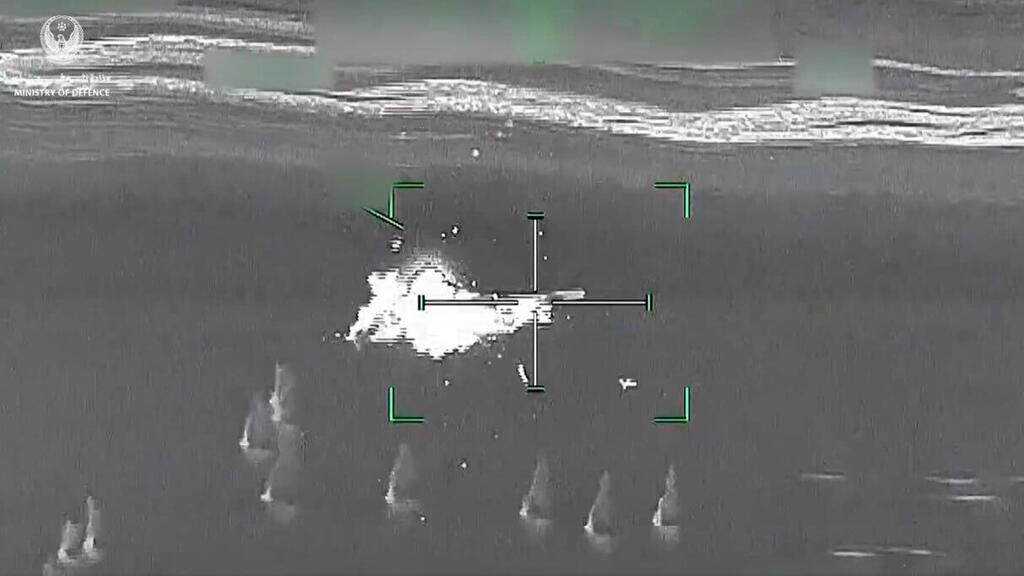
Footage of interceptions by Emirati attack helicopters: 'Target destroyed!'
(Video: MOD UAE)


Footage released by Iran showing the launch of a Khorramshahr-4 missile, allegedly toward Israel
So far, according to an updated analysis by the Institute for National Security Studies (INSS), Iran has launched 2,520 missiles and drones at Gulf states. At least 25 people have been killed in the attacks, including six American soldiers hit by a drone in Kuwait, and another 284 have been wounded.
Kuwait reported today that two additional officers from its Interior Ministry were killed “in the line of duty,” though it did not specify how. In Bahrain, authorities reported that an Iranian drone strike caused damage to a desalination facility.
The United Arab Emirates, which had carried out its first warning strike against Iran, also hitting a desalination facility — said it intercepted 16 ballistic missiles and another 113 drones today.
The UAE Defense Ministry later released dramatic and unusual footage showing Emirati aircraft — apparently attack helicopters — firing at Iranian drones. The video shows several interceptions, and each time a drone is hit, the pilot can be heard over the radio declaring: “Target destroyed.”
“There will be no compromise when it comes to the nation’s security and sovereignty,” the Defense Ministry in Abu Dhabi said. “The UAE Armed Forces stand ready to deter any threat.” An Emirati official told CNN this afternoon that the most dangerous phase of the conflict may end soon, but warned that the crisis of trust between the Gulf states and Iran will last for decades. “Ultimately, this war will end, and my understanding is that the danger in it will end sooner rather than later. But the formal end of the war could take much longer,” the official said.
Despite the major surprise caused by the Iranian attacks on Gulf states, which had hoped to remain outside the conflict, the official said formal relations with Tehran will likely be normalized after the war “because in the end we are neighbors.” However, he added, “this war has created an enormous crisis of trust that I believe will last for decades.”
Similar to a report published yesterday by Reuters, the Emirati official stressed that any new agreement with Iran will also have to address its missile program. “The missiles are now center stage, because missiles are no longer perceived as part of self-defense,” he said.
Gallery
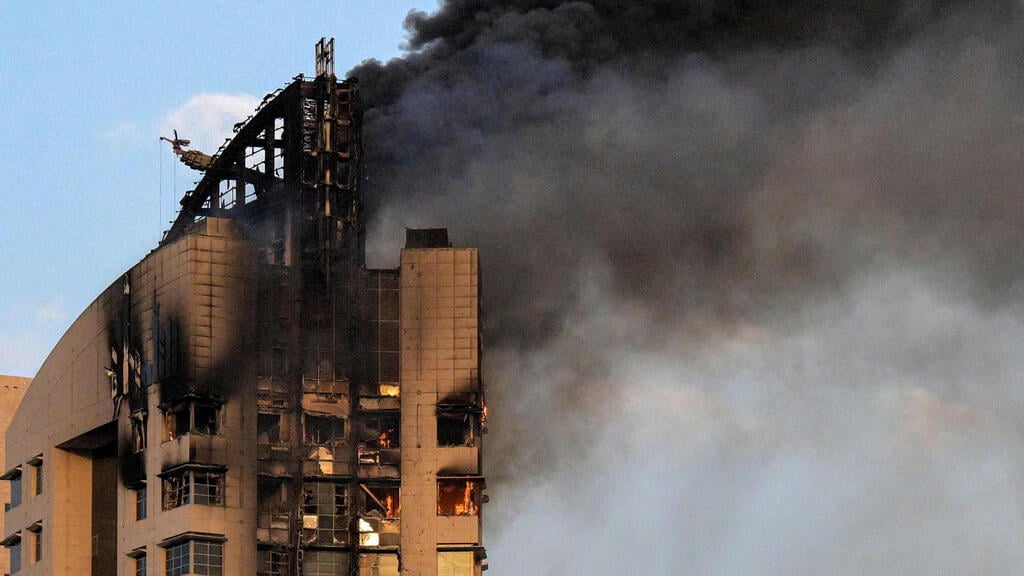
A high-rise building in Kuwait City struck in today’s Iranian attack and set ablaze
(Photo: AFP)
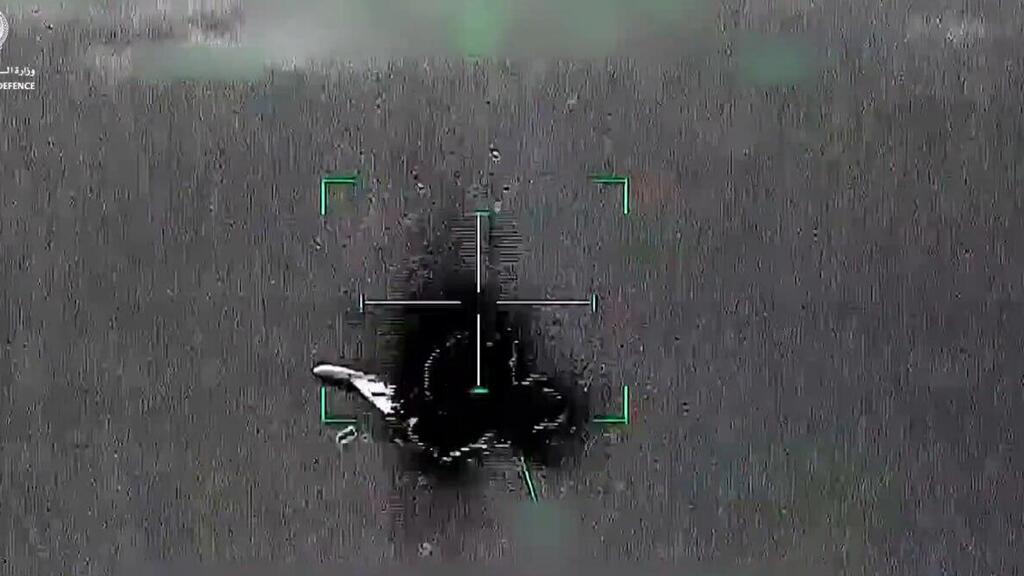
One of the drones that exploded after being shot down by UAE fighter jets.
(Photo: MOD UAE)
(Photo: MOD UAE)
Earlier today ynet reported for the first time that the UAE struck a desalination facility in Iran. In Israel, officials believe the move is currently intended as a signal to the regime, but if Iranian attacks escalate there is a real possibility Abu Dhabi could join the campaign, even if in a limited way.
The UAE Foreign Ministry said this afternoon: “The United Arab Emirates stresses that it does not seek to be drawn into any conflict or escalation, but affirms its full right to take all necessary measures to protect its sovereignty, national security and territorial integrity, and to ensure the safety and security of its citizens and residents, based on its right to self-defense in accordance with international law and the UN Charter.”
Reuters reported yesterday that Saudi Arabia has also threatened to strike inside Iran if Tehran continues attacking oil and energy facilities in the kingdom.
Against that backdrop, Saudi Arabia announced today that two people were killed and 12 others wounded in another Iranian attack, after a missile struck the city of Al-Kharj in central Saudi Arabia. The victims were citizens of India and Bangladesh, the first fatalities reported in Saudi Arabia since the war began.
Iran’s Islamic Revolutionary Guard Corps earlier claimed it had struck radar systems deployed in the area. Al-Kharj is located near Prince Sultan Air Base, a major Saudi air force base southeast of Riyadh that has been repeatedly targeted by Iran in recent days.
U.S. Central Command also issued a warning to civilians in Iran, accusing the regime of launching drones and ballistic missiles from heavily populated areas in cities including Dezful, Esfahan and Shiraz. The command urged residents to remain in their homes and said sites used for military operations could lose protected status under international law and become legitimate targets.
CENTCOM said Iran has launched hundreds of ballistic missiles and thousands of one-way attack drones since Feb. 28, though launch rates have recently declined as U.S. and partner forces continue striking Iranian military capabilities. Adm. Brad Cooper, the head of CENTCOM, accused Tehran of “blatantly disregarding civilian lives” while attacking Gulf partners.