

Thirty families moved Thursday to reestablish the Kadim settlement in the northern West Bank, 21 years after it was evacuated under Israel’s 2005 disengagement plan.
The move marked another step in efforts led by settler leaders to reverse the disengagement from northern West Bank communities, following renewed settlement activity at Ganim, Sa-Nur and Homesh.
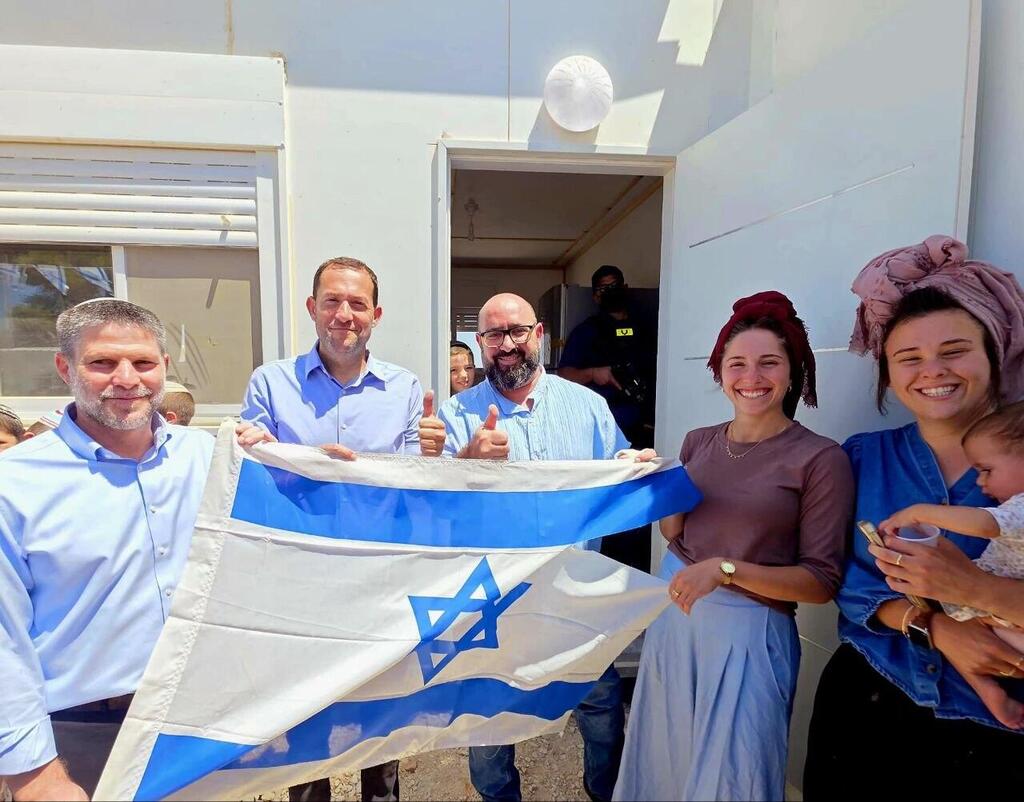
Bezalel Smotrich at the Kadim settlement in the northern West Bank
(Photo: Samaria Regional Council)
Finance Minister Bezalel Smotrich joined the families at Kadim alongside Samaria Regional Council head Yossi Dagan for an official ceremony marking the return.
“The revolution we led, establishing 104 communities and more than 160 farms, is not irreversible,” Smotrich said, warning that a future government “could harm the settlement enterprise.”
The effort has been promoted by Dagan, the Amana settlement movement and other activists, and gained significant momentum over the past three years under Smotrich, who has transferred many powers previously held by the Civil Administration in the West Bank.
During his tenure, Smotrich also advanced the repeal of provisions of the Disengagement Law, as agreed in coalition agreements between Likud and Religious Zionism. The amendment allows Israelis to remain in areas of the northern West Bank evacuated 21 years ago.
Kadim is the sixth settlement established within the Samaria Regional Council area in less than a year, following Cabinet approval granted during Operation Roaring Lion against Iran.
The rapid expansion of settlement territory at multiple points across the West Bank has also forced the IDF’s Central Command to adjust its deployments and prioritize missions aimed at protecting Israeli residents.
The growing Israeli presence has led the military to relocate several bases to the northern West Bank and build infrastructure intended to improve access to the area.
According to the Samaria Regional Council, most of the families moving to Kadim come from central Israel and Tel Aviv. The council said the group was formed at the initiative of graduates of religious Zionist yeshivas and reservists discharged after serving in the Swords of Iron war.
“The spirit of settlement and the people of Israel are stronger than any withdrawal,” Dagan said. “We are not only bringing life back to Kadim, but rewriting the future of northern Samaria through construction, expansion and a firm hold on our land.”
“This is a determined Zionist response that makes clear: We have returned home, and this time to stay and grow twentyfold,” he added. “We are raising the flag again, closing the circle and continuing to build Samaria with full force.”
Oz Tzohar, chairman of the group moving into the settlement, called Thursday “a festive day for the people of Israel.”
“Twenty-one years after the expulsion from Gush Katif and northern Samaria, the people of Israel are returning to their land and country,” he said. “It is an expression of our eternal connection to the Land of Israel, a connection that can never be severed.”