

The Israeli military estimates that within two to three days it will be able to significantly reduce rocket fire from Iran, following an intensive campaign targeting launchers and missiles. At the same time, Israeli Air Force officials believe that if they are given two weeks, they will be able to maximize the impact of strikes in Iran and achieve the main operational objectives, provided Israel maintains aerial freedom of action.
Strikes on launchers in Iran
(Footage: IDF)


On the main front in Iran, the IDF has struck dozens of headquarters belonging to the Iranian regime. Some of the attacks were intended to disrupt command and control of the fighting, while others were designed to send a deeper message, both domestically and abroad, that the regime is vulnerable. Symbols of power, centers of control and repression hubs that once operated without interference are now being exposed and hit.
In this context, there have also been reports of Israeli strikes along the Iran-Iraq border, in what appears to be an attempt to undermine Iranian control in the area and open operational space for Kurdish opposition groups consolidating their presence on the Iraqi side. It is still too early to determine how Israel and the United States might leverage the military achievements into regime change, but it is clear that a significant portion of the activity is intended to create the conditions for such a possibility.
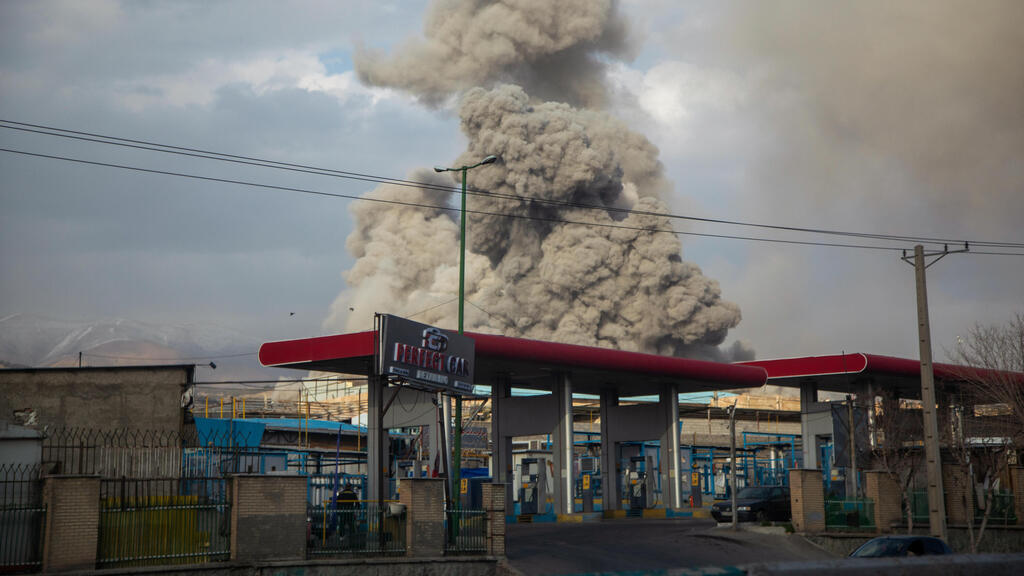
Smoke over Tehran
(Photo: Majid Saeedi/Getty Images)
One of the most striking aspects of the operation has been the continued hunt for launchers deep inside Iran, about 1,300 kilometers, roughly 800 miles, from Israel. The footage recalls familiar scenes from the Gaza Strip. The effort represents a vast intelligence and operational undertaking, generating a clear psychological effect of pursuit, aimed at forcing Iranian operatives into mistakes and making them pay for them immediately.
According to a senior IDF official, the assessment remains that within up to three days rocket fire from Iran will be significantly reduced. “The Iranians are struggling to produce coordinated barrages,” the official said. “The broad opening wave, the pace and continuity of the strikes, and the Air Force’s hunt for fire arrays and Iranian operatives are creating a sense of being pursued. This is suppressing and reducing the fire toward the State of Israel. “The assessment is that as we advance in the coming days and continue striking the fire arrays, the volume of Iranian fire will decline even further, potentially down to isolated launches.”
This is precisely what occurred in the opening phase of the operation. The head of Military Intelligence, Maj. Gen. Shlomi Binder, put it simply on Sunday: “Whoever chooses to act against the State of Israel and its citizens will be found and eliminated.” The aerial freedom of action Israel has established over Tehran makes it possible to continue that effort and, it is hoped, further reduce the scope of barrages targeting the Israeli home front.
Meanwhile, at the strategic level, Israel’s political leadership and U.S. President Donald Trump, now serving his second term, have chosen to focus on a message to the region and to the Iranian people: There is readiness to continue for as long as necessary. This campaign, they say, will end in only one way, with victory.
First published: 21:05, 03.02.26