

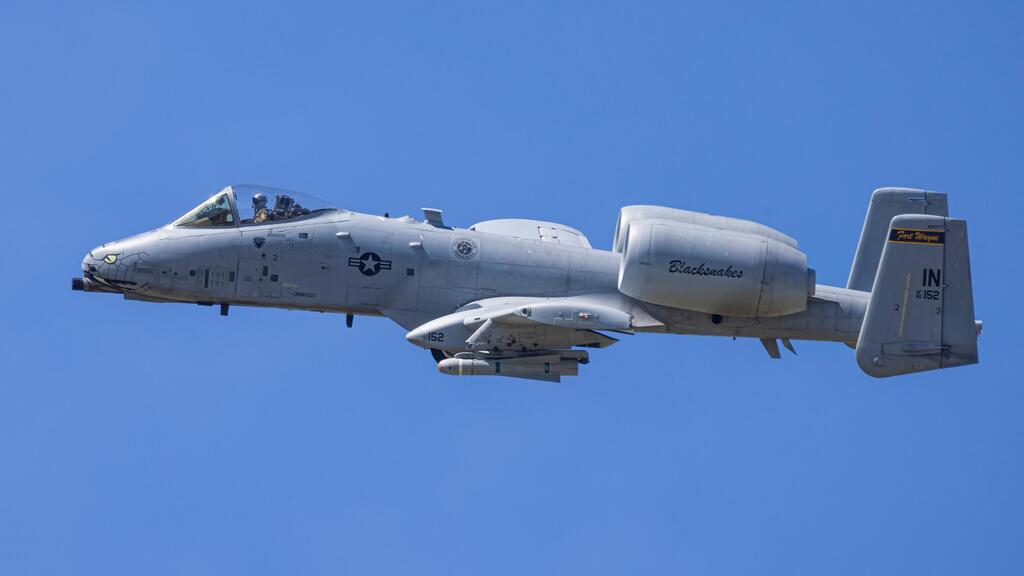
The United States has intensified military operations in the Strait of Hormuz, deploying A-10 “Thunderbolt” aircraft and Apache helicopters to target Iranian attack boats and drones threatening commercial shipping, according to U.S. officials cited by The Wall Street Journal.
The effort is part of a broader, multi-phase Pentagon plan to reduce risks posed by Iranian naval forces, sea mines and cruise missiles that have disrupted traffic through the strait since early March. Roughly one-fifth of the world’s oil supply passes through the narrow corridor.
US strikes on Iranian naval targets near the Strait of Hormuz
(Video: CENTCOM)


Only once those threats are sufficiently degraded, officials say, will the U.S. be able to send warships to escort oil tankers and commercial vessels into and out of the Persian Gulf.
Chairman of the Joint Chiefs of Staff Gen. Dan Caine confirmed the operation, saying A-10 aircraft and Apache helicopters are conducting missions over the strait and along Iran’s southern coast. Some U.S. allies, he added without naming them, are also using Apache helicopters to counter Iranian drones, one of Tehran’s most effective tools against regional infrastructure.
A U.S. official told the Journal that A-10 jets and Apaches have already destroyed several Iranian fast attack boats that targeted commercial vessels in recent days.
Despite these operations, Iran is believed to retain significant capabilities, including sea mines, truck-mounted cruise missiles and hundreds of attack boats, many concealed in hardened facilities and tunnel networks along the coast and nearby islands.
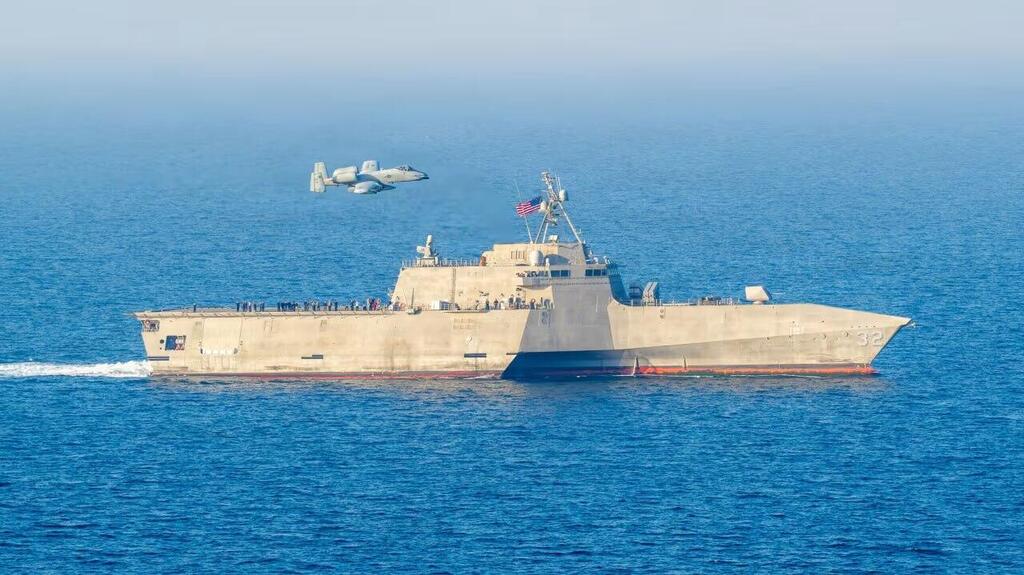
A U.S. Air Force A-10 Thunderbolt aircraft alongside a US destroyer in the Persian Gulf on February 2
(Photo: Getty Officer 2nd Class Iain Page/U.S. Naval Forces Central Command)
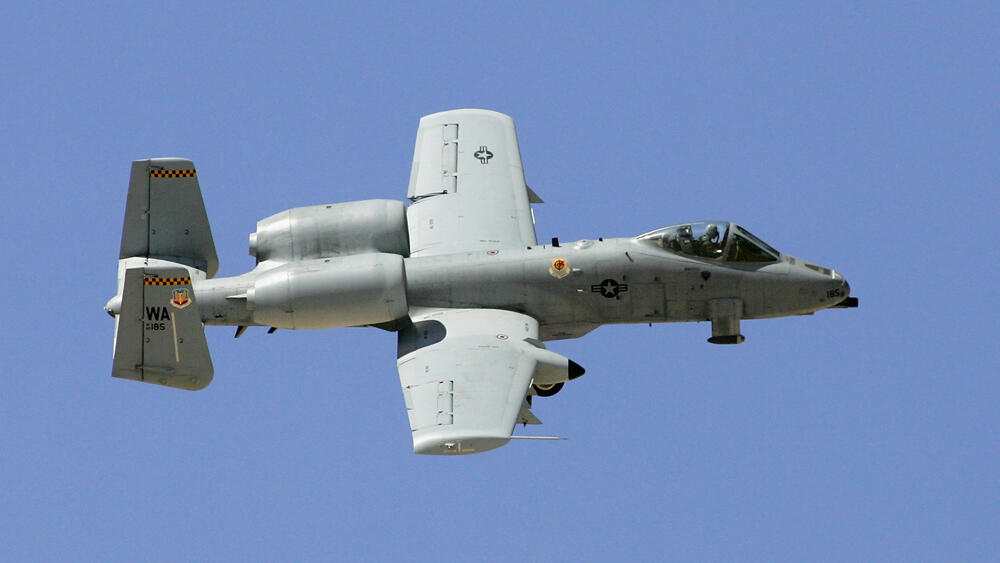
“The A-10 is flying in the southern sector now, hunting and destroying fast attack boats in the Strait of Hormuz,” Caine said. Originally designed for close air support, the nearly 50-year-old aircraft has been repurposed for maritime strikes. The Pentagon had planned to retire the platform this year, but Congress pushed to keep it in service, and it is now emerging as a key asset in the campaign.
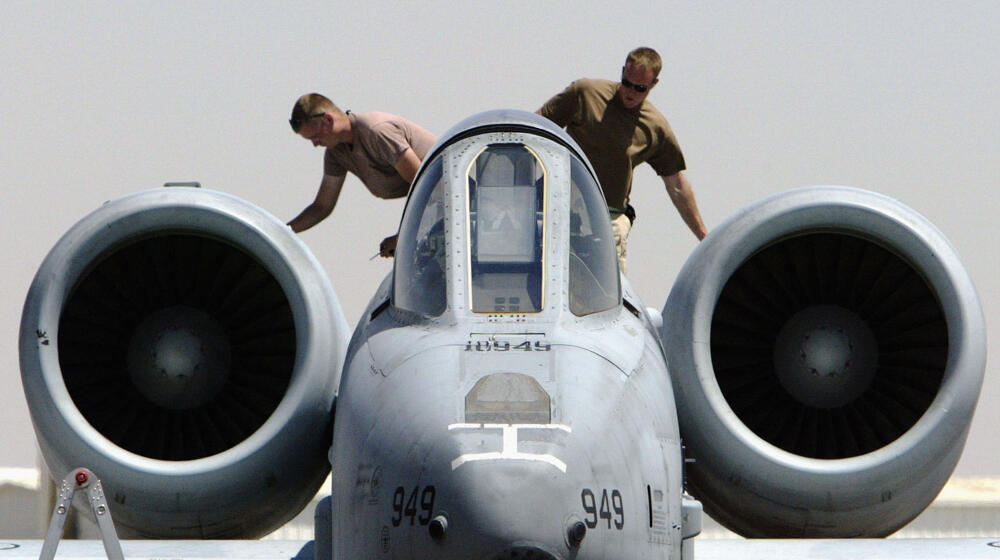
Nicknamed the “Warthog,” the twin-engine jet is heavily armored, equipped with a seven-barrel 30mm cannon and capable of carrying missiles, bombs and laser-guided munitions. Its titanium armor protects the pilot, and the aircraft can continue flying even after sustaining significant damage.
Still, analysts warn the effort to fully reopen the strait could take weeks.
Farzin Nadimi, an Iran expert at the Washington Institute for Near East Policy, told the Journal that it will take time to reduce threats to a level that allows safe naval escort operations. “And even then, many Iranian assets will survive,” he said.
The challenge mirrors previous U.S. operations in the region. During last year’s campaign against the Houthis in the Red Sea, the U.S. struck more than 1,000 targets in Yemen but failed to completely halt attacks until a ceasefire was reached.
Meanwhile, U.S. allies remain hesitant to join direct military operations.
(Photo: Getty Images)
(Photo: Getty Images)
Six countries, including France, Britain, Germany, Italy, the Netherlands and Japan, said they are “ready to contribute” to securing navigation in the strait but stopped short of committing warships.
French President Emmanuel Macron suggested that any future maritime security mission should take place under a United Nations framework and only after the war ends. “France is ready, with others, to take responsibility for escorting ships in the strait, as part of a mission that is not intended to be a military operation,” he said, adding that France would not participate in forcibly reopening the strait during active hostilities.
Germany and Italy issued similar positions, emphasizing that any involvement would require a ceasefire, an international mandate and parliamentary approval.
Britain said it is working with European, Gulf and U.S. partners on a plan to restore maritime traffic.
The near-total disruption of Hormuz has already sent shockwaves through global energy markets, with oil prices rising above $100 per barrel. Saudi officials have warned that if the war continues into late April, prices could surge to $180 per barrel.
European powers and Japan said they are considering additional steps to stabilize energy markets, including coordination with producing countries to increase output.
At sea, the situation remains tense. According to AFP, about 20,000 sailors are currently stranded aboard roughly 3,200 vessels in the strait.
Iranian attacks on energy infrastructure across the Gulf have also continued. Bahrain reported a fire at an energy facility following falling debris from an Iranian strike, while Kuwait said drones hit a refinery at the port of Al-Ahmadi, causing a blaze but no casualties.
Earlier, air defense systems were activated in Dubai to intercept an aerial threat during Eid al-Fitr celebrations, while Saudi Arabia said it shot down a drone in the kingdom’s east.
For now, the waterway remains effectively choked, and despite growing U.S. military pressure, a full reopening appears to be weeks away.