

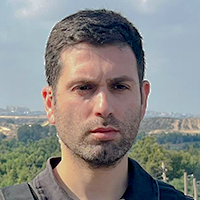
One of IDF’s main goals in its Gideon Chariots II operation is to reach Hamas’ current leader in Gaza City, Izz al-Din al-Haddad. He commands the city’s brigade, which the army believes has rebuilt much of its command and control capacity over the past year. His base of operations is in a western Gaza tunnel network partly damaged during Israel’s December 2023 maneuver, but since restored.
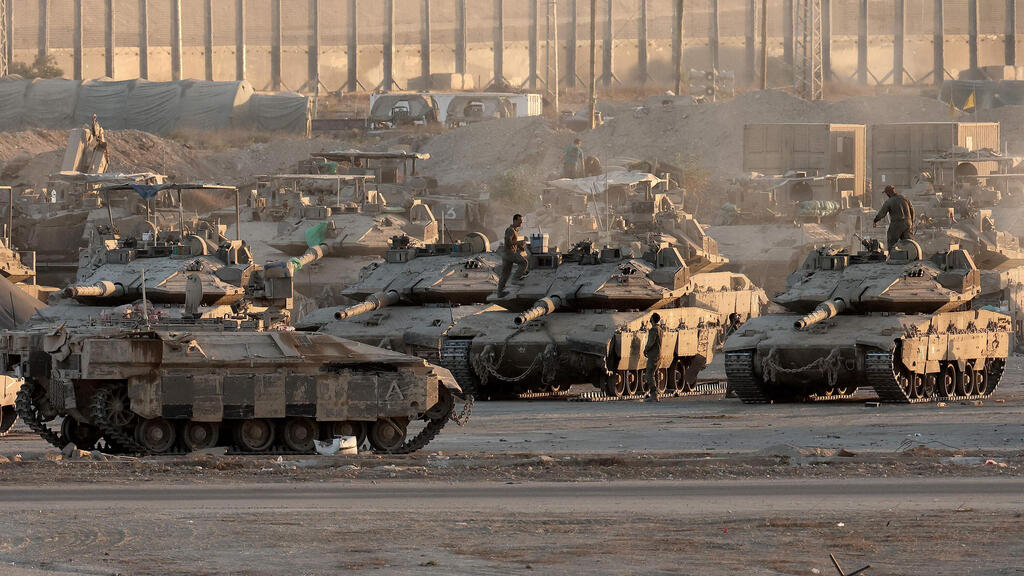
Military officials believe Haddad will again order roughly 10,000 of his men to retreat south alongside civilians as part of Hamas’ survival strategy. Left behind are expected to be several dozen guerrilla cells for ambushes and hundreds of booby-trapped sites, mainly along roads and alleys.
Hamas also holds one of its most strategic assets inside Gaza City: between eight and 10 Israeli hostages. This forces the IDF to operate with caution in areas where they may be held, relying on precise intelligence to guide brigades and battalions entering the city.
Some Hamas guerrilla cells are already deployed near strongholds, particularly hospitals, which have received Israeli evacuation warnings but remain operational. Foremost among them is Shifa Hospital. The IDF expects Hamas to intensify efforts to block the evacuation of thousands of patients, as it did both on Oct. 7 and during the first ground maneuver. The army says it is prepared to transfer those patients to new humanitarian facilities built in recent weeks near the growing displacement city in Al-Mawasi.
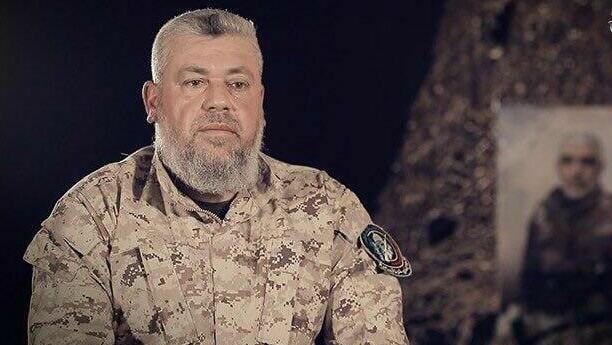
Izz al-Din al-Haddad
The “displacement rectangle”
The new humanitarian zone—what the army calls the “displacement rectangle”—stretches from south of the Gaza River’s western section near the Netzarim axis, east to Salah al-Din Road, and down to the Morag axis between Khan Younis and Rafah. Within this narrow strip lie towns such as Deir al-Balah and Nuseirat, which have not yet seen major ground operations.
Israel expects as many as 1.7 million Gazans to crowd into this rectangle over the coming year. By comparison, officials estimate 200,000 to 300,000 Palestinians will refuse to leave northern Gaza. The last time such numbers were concentrated in this area was during last year’s Rafah operation, when 1.4 million people gathered.
“It’s like telling the entire population of greater Tel Aviv to keep living there, but without the towers or buildings—just tents and shacks,” said one officer.
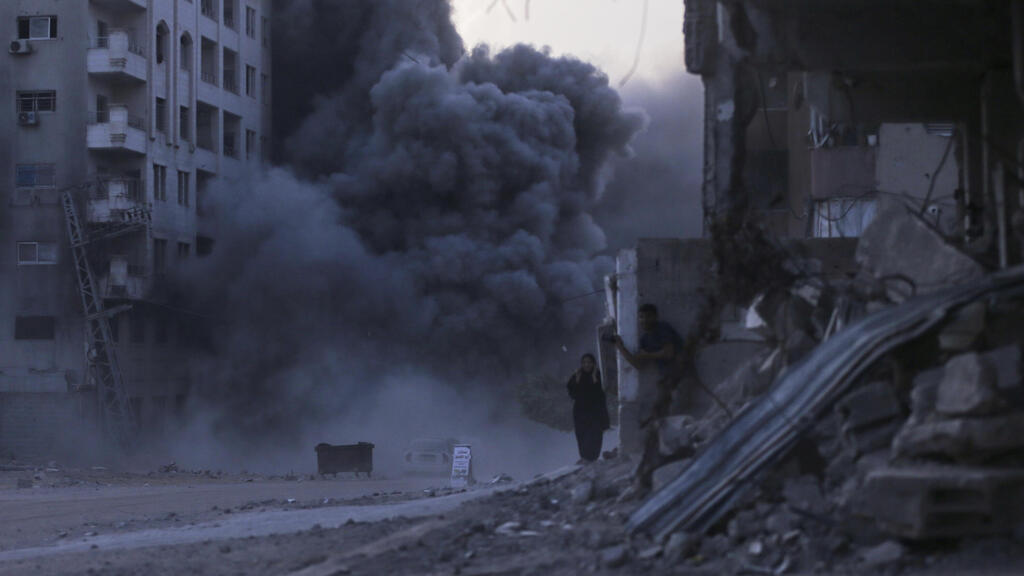
Bombings on Gaza City
(צילום: AP/ Yousef Al Zanoun)
So far, the IDF estimates that about 100,000 people have fled south from Gaza City, mainly along the coastal evacuation route. But with the ground maneuver imminent, far more are expected to leave in the coming days.
The race for 100,000 tents
The army is scrambling to prepare the expanded displacement zone adjacent to Al-Mawasi. Its most pressing challenge: tents. Defense officials want to bring in roughly 100,000 tents for the evacuees. Only a few thousand have arrived so far, though Jordan has a shipment of tens of thousands waiting to be transferred as part of international aid.
But security concerns complicate delivery. Tent components are considered dual-use: larger-diameter poles can be turned into bomb casings or improvised rockets. The IDF has demanded that suppliers replace certain materials, such as aluminum poles, before shipments are approved.
As a last resort, Israel may release old army tents, each housing up to 12 people, from emergency storage. The army also holds a few thousand larger refugee-style tents, designed for dozens of occupants, though most are currently used to house reservists.
IDF destroys targets in northern Gaza
(Video: IDF)


“If the pace of tent arrivals doesn’t match the pace of population movement, we may have to use this option. For now, we’re not there yet,” a security official said.
Food, water, and hospitals
Food deliveries are being redirected south to encourage civilians to move there. Israel currently allows about 300 trucks of food into Gaza daily, mainly through Kerem Shalom crossing, far above the 120 trucks international law requires to sustain the population, according to the Coordination of Government Activities in the Territories (COGAT). Officials admit Hamas takes a significant share but say stockpiling is necessary for a long conflict.
Water infrastructure is also being restored. Israel has approved repairs to damaged lines in central Gaza and increased fuel shipments to power wells. Electricity is flowing to two of the enclave’s three desalination plants, while a new Emirati-funded pipeline from Sinai has already reached northern Khan Younis.
Medical support is being expanded as well. Nine new field hospitals have been established in the Al-Mawasi zone alongside the three main hospitals in Khan Younis. Israel has also coordinated with the UN to reopen the European Hospital in the city, which was shut after the IDF sealed Hamas tunnels beneath it.