

U.S. President Donald Trump threatened additional strikes on Iran’s Kharg Island oil export hub and urged allies to deploy warships to secure the Strait of Hormuz, a vital route for global energy supplies, as Tehran vowed to intensify its response.
With the U.S.-Israel war with Iran entering its third week, Trump said U.S. strikes had “totally demolished” much of the island and warned that further attacks could follow. In an interview with NBC News on Saturday, he said, “We may hit it a few more times just for fun.”
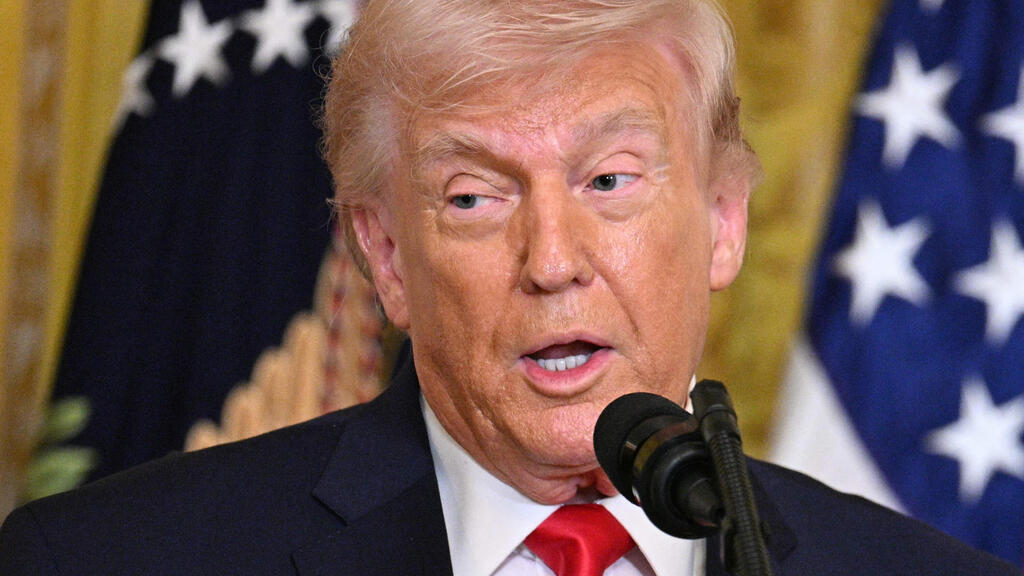
Donald Trump
(Photo: Jim WATSON / AFP)
The remarks marked a sharp escalation in Trump’s rhetoric. He had previously said the United States was targeting only military sites on Kharg Island, and the comments appeared to undercut diplomatic efforts. His administration has rebuffed attempts by Middle Eastern allies to launch negotiations, three sources told Reuters.
War and energy crisis expected to continue
The conflict showed no immediate signs of ending. Trump said Tehran appeared ready to negotiate an end to the fighting but that “the terms aren’t good enough yet.”
Iran’s ability to halt shipping through the Strait of Hormuz — a narrow waterway through which about one-fifth of the world’s oil passes — poses a major challenge for the United States and its allies. Energy prices have surged as the war has triggered what analysts describe as the largest disruption to global oil supplies on record, raising fears the energy crisis could persist.
“The countries of the world that receive oil through the Hormuz Strait must take care of that passage, and we will help — A LOT!” Trump wrote Saturday on his Truth Social platform. “The U.S. will also coordinate with those countries so that everything goes quickly, smoothly and well.”
Iranian Foreign Minister Abbas Araqchi said Tehran would respond to any attack on the country’s energy facilities.
Iran’s Islamic Revolutionary Guard Corps said Sunday it had carried out missile and drone strikes against targets in Israel and three U.S. bases in the region, calling the attacks the first round of retaliation for workers killed in Iran’s industrial areas. The Israeli military said it was intercepting incoming launches.
Saudi Arabia’s defense ministry said its air defenses intercepted and destroyed 10 drones over Riyadh and the country’s eastern region. Iran’s Revolutionary Guards said they were not connected to that attack, according to the semi-official Fars news agency.
A drone strike also disrupted a major energy hub in the United Arab Emirates on Saturday. The United States separately warned its citizens to leave Iraq.
Allies cautious about naval deployments
Trump also called on China, France, Japan, South Korea and Britain, among others, to send warships to the Strait of Hormuz. None of the countries immediately signaled they would do so.
Takayuki Kobayashi, policy chief of Japan’s ruling party, did not rule out the possibility but told public broadcaster NHK that the legal threshold for such a deployment was “very high.”
Japan interprets its pacifist post-World War II constitution as allowing military action only if the country’s survival is threatened. Deploying forces to the region would likely require invoking a 2015 security law that has never been used.
France is seeking to assemble a coalition to secure the Strait of Hormuz once the security situation stabilizes, while Britain is discussing a range of options with allies to ensure the safety of shipping, officials said.
Iran’s Supreme Leader Ayatollah Mojtaba Khamenei, who succeeded his father after he was killed, has said the Strait of Hormuz should remain closed.