

White House officials said late Monday that U.S. President Donald Trump’s envoys, Steve Witkoff and Jared Kushner, are heading to Qatar, even as Iran insists the contacts expected in Doha will be technical in nature and will not include direct negotiations with the United States.
In Washington, officials framed the contacts as senior-level meetings aimed at addressing the crisis in the Strait of Hormuz, which recently led to two days of brief fighting and a slowdown in shipping traffic through the strategic passage, only recently reopened.
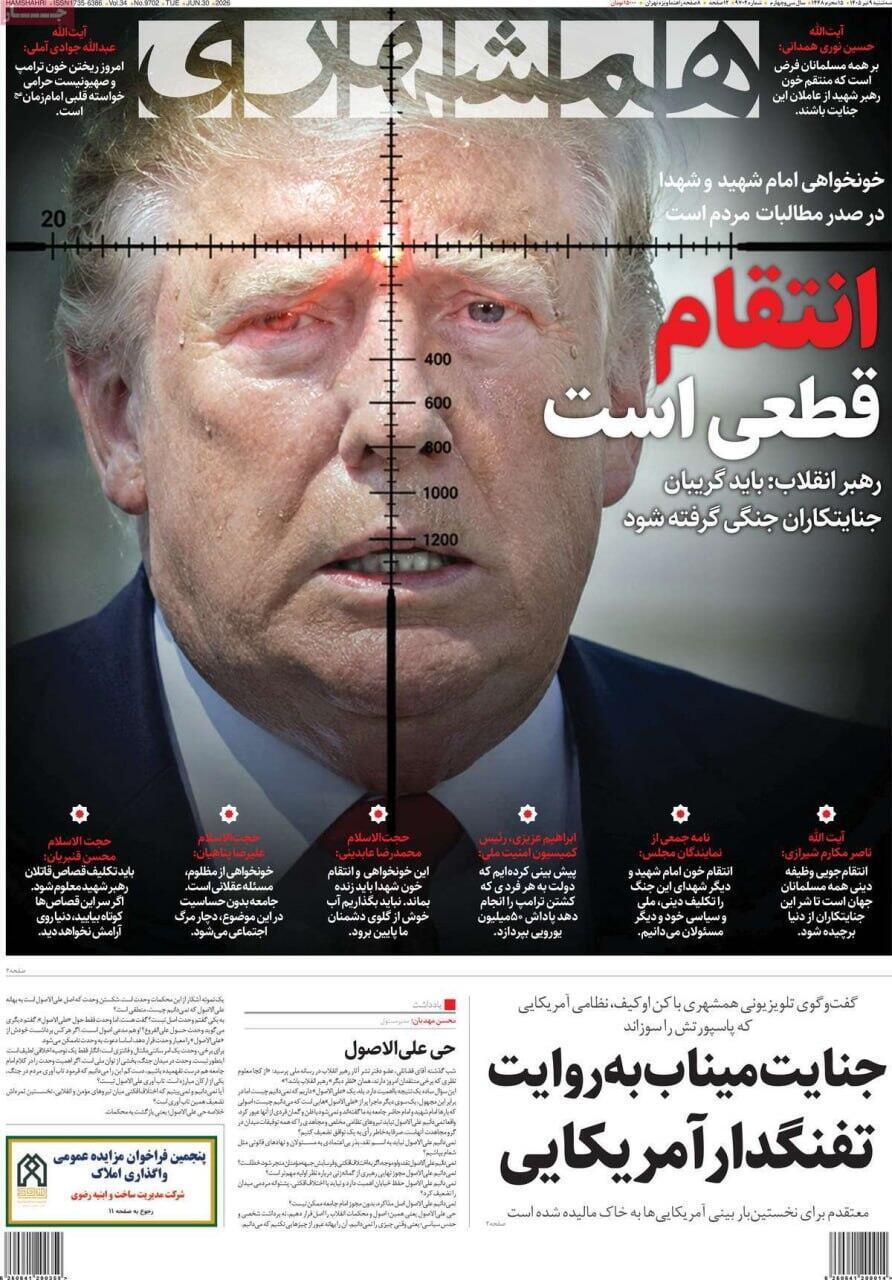
Trump said Monday that Iran had requested the meeting and that it would take place Tuesday in Doha. Iranian officials, however, denied that direct negotiations with Washington were planned.
While the United States has adopted a more diplomatic tone, the mood in Iran remains confrontational. On Tuesday morning, the widely circulated Iranian newspaper Hamshahri published a front-page image of Trump with the words “revenge is certain” and a target placed over his forehead.
A diplomat familiar with the contacts said a meeting of technical teams was expected in the coming days, adding that communication channels meant to lower tensions remained active.
Iran initially denied that any meeting would take place, but later confirmed it had sent an expert delegation to the Qatari capital. Tehran, however, insisted that it would not hold negotiations with the American side at any level in the coming days.
According to maritime tracking company Kpler, traffic through the Strait of Hormuz has dropped sharply in recent days. On Saturday, 29 ships carrying raw materials crossed the strait, compared with 12 on Sunday.
For weeks, Iran has said there will be no return to the prewar status quo, when passage through the strait was free of charge, despite U.S. opposition. Tehran has also threatened ships that attempt to bypass the “authorized route” it declared along its coast.
The United States, which accused Tehran of damaging two ships last week, struck Iran in response. Iran then attacked neighboring Gulf states Kuwait and Bahrain. Alongside Oman, Tehran claims sovereignty over the passage through the strait and is seeking to collect what it describes as service fees. The UN Convention on the Law of the Sea, which Iran has not ratified, protects freedom of navigation for vessels passing through straits used for international navigation.
Iranian Foreign Minister Abbas Araghchi said that under understandings with Trump, responsibility for managing traffic in the Strait of Hormuz belongs exclusively to Tehran. U.S. officials reject that interpretation, saying the agreement does not grant Tehran control over the strait and that navigation through the international route must continue without interference.
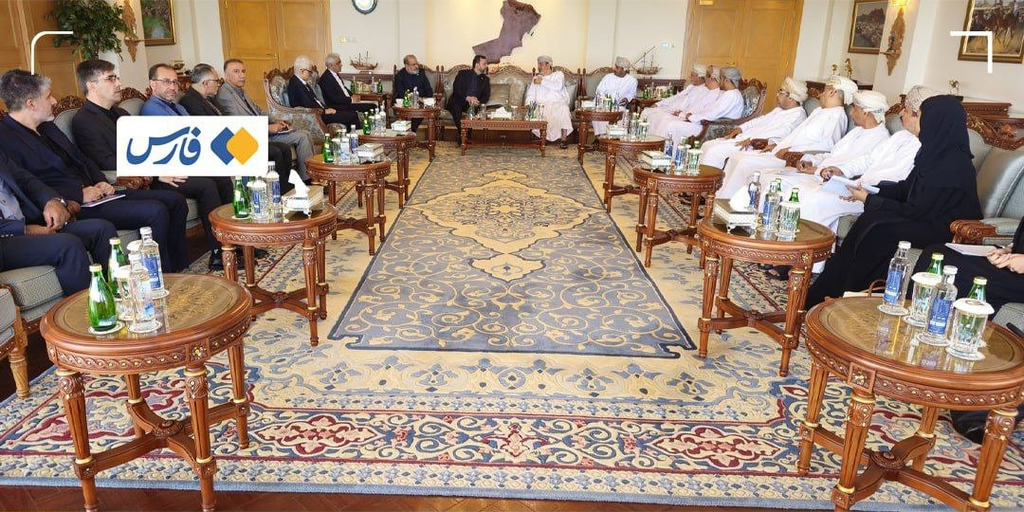
Meeting between Omani and Iranian representatives on the future of the Strait of Hormuz
Experts say Iran’s newly demonstrated ability to disrupt traffic through the Strait of Hormuz, and by extension the global economy, is a vital bargaining chip that Tehran cannot afford to lose, either at the negotiating table or in the event of renewed fighting.
Oman, for its part, has maintained relative ambiguity. It has announced the opening of a temporary alternative shipping route, presented as a UN-coordinated initiative to evacuate stranded sailors and vessels. Omani Sultan Haitham bin Tariq and French President Emmanuel Macron called Monday for unrestricted freedom of navigation and agreed to carry out joint mine-clearing efforts in the area. Iran responded by urging France not to further complicate the situation.
Representatives from Oman and Iran held the first meeting Monday of a joint committee on the Strait of Hormuz, discussing issues related to the waterway and its future management. Omani Foreign Minister Badr al-Busaidi said Muscat does not support imposing fees in the strait.
Iranian Deputy Foreign Minister Kazem Gharibabadi later said that if Oman does not want to establish a joint system for the future of the Strait of Hormuz, the Islamic Republic would continue implementing its policy alone. He then appeared to contradict Oman’s announcement, claiming the two countries had reached understandings on collecting fees from ships passing through the strait and on forming joint technical committees.